 Stefani Reynolds/AFP via Getty Images
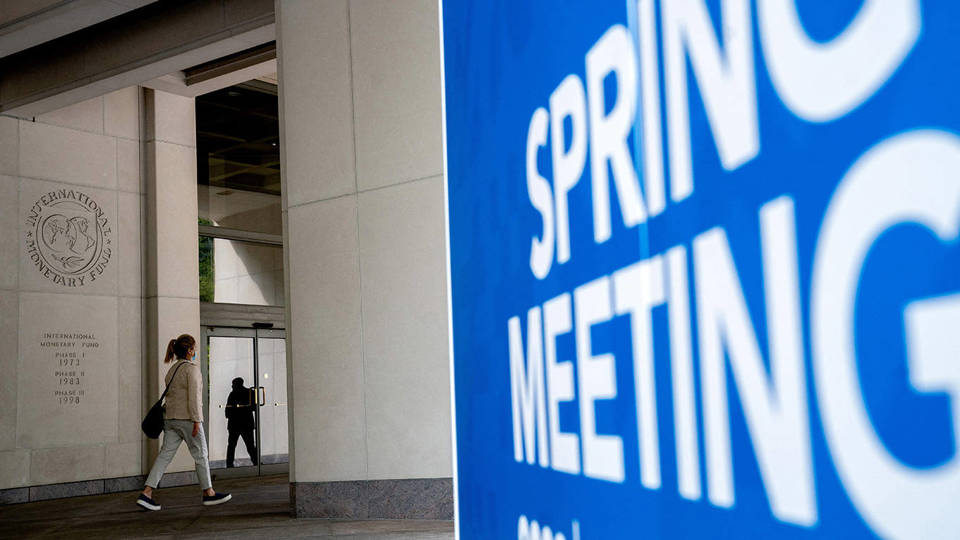
Kenya’s recent decision to forgo funding from the International Monetary Fund illustrates the asymmetry at the heart of the multilateral financial architecture. As policymakers gather for the Spring Meetings, they have an opportunity to address these structural imbalances, starting with an overhaul of the IMF’s quota system.
Listen to this commentary Please log in to listen to this commentary 0:00 / 0:00 Audio unavailable
These are not isolated failures. They are symptoms of a governance structure in which the most vulnerable lack a voice. Nowhere is this more evident than in the IMF’s quota system. Quotas determine how much a country can borrow, its of Special Drawing Rights (the IMF’s reserve asset), and, crucially, how much its vote counts. The 16th General Review of Quotas, completed in late 2023, pumped 50% more resources into the Fund but did not change any voting s. The 17th Review passed without conclusion. The work has been quietly pushed until 2028. This month’s Spring Meetings are the first major moment of accountability since those deadlines slipped.

Secure your copy of PS Quarterly: Winners & Losers – and $20
In the new issue of our magazine, leading thinkers examine how recent developments, from the AI revolution to intensifying geopolitical volatility, are reshuffling the economic and financial deck and generating new winners and losers across the global economy.
Subscribe to PS Premium now, with a $20 discount, to read the issue, featuring Claudia Goldin, Mark Blyth, Dambisa Moyo and others.
Subscribe Now
Failure to achieve meaningful realignment would be a choice, not an oversight. The current quota formula relies on variables—such as GDP measured at market exchange rates and trade openness—that are structurally biased toward advanced economies. But the deeper question is what can be repaid, and at what human cost, which is a principle that the people who carry sovereign debt understand in ways that distant creditors do not.
Small tweaks will be insufficient. A new formula is necessary. IMF member states should be bolder in demanding genuine structural change. Representation in multilateral governance must be anchored in people. The simplest version is the “one country, one vote” model that governs the UN General Assembly. Even better would be to weight votes by population, thereby aligning representation with the principle of universal adult suffrage that underpins legitimate governance.
The idea is not utopian. At a time when major powers apply martial rhetoric to trade, seize territories, and depose leaders, it has become clearer than ever that those countries with the requisite economic and military heft invoke the rules-based order selectively. Against this backdrop, the absurdity of a quota system that grants the wealthiest economies near-permanent control of an institution that professes to serve all its members is obvious.
This underscores the need for three reforms. The first is a new quota formula that provides greater voting power to emerging and developing economies. Second, affected populations must be able to shape the structure of IMF programs, not merely be consulted after the terms are set. Lastly, there must be a shift from compliance-based to legitimacy-based fiscal governance. When program conditions fail to account for a country’s constitutional framework and political context, the problem is design, not compliance. A country’s fiscal framework must be treated as an expression of the compact between a government and its citizens, not as a technocratic checklist.
Kenya’s decision to stand on its own feet is not a rejection of multilateralism. It shows what multilateralism should look : a system in which countries participate as sovereign partners, not dependents. Although it may seem a procedural exercise, the 17th General Review of Quotas is a test of whether the system can still reform itself. Failure to achieve lasting reform by the extended deadline of 2028 would tell the world everything it needs to know about whose interests the architecture will continue to serve.
Featured
-
The Iran War Could Trigger a Global Food Crisis
Mar 13, 2026 Bram Govaerts & Sharon Burke
-
Are We Facing an AI Nightmare?
Mar 10, 2026 Raghuram G. Rajan
-
Trump Is Showing China How to Seize Taiwan
Mar 11, 2026 Brahma Chellaney
-
Is the Stablecoin Economy Structurally Sound?
Mar 13, 2026 Neha Narula
-
The Gulf’s Tough Choices
https://prosyn.org/wSqSc21
It appears that you have not yet updated your first and last name. If you would to update your name, please do so here.
Please wait, fetching the form
Please wait, fetching the form
Please wait, fetching the form
Please wait, fetching the form
Please wait, fetching the form
Please wait, fetching the form
Please wait, fetching the form
Sumber Artikel:
Project-syndicate.org