

Given these estimates, it’s unly that such an expensive vehicle will generate the mass-market sales needed to meaningfully change Tesla’s sales trajectory. Indeed, many analysts expect no more than a few thousand Roadster units to be sold in 2027.
The last manually driven car developed by Tesla?
Musk raised this prospect when asked about the company’s car lineup on the earnings call in April. He noted that the vast majority of Tesla’s future production would be for the Cybercab. Moreover, Musk said Tesla’s future lineup is “going to be almost entirely autonomous. In fact, long-term, the only manually driven car will be the new Tesla Roadster.”
These comments imply, but don’t confirm, that there won’t be a new low-cost or family Tesla, at least not a manually driven one. All of which throws the emphasis on electric vehicle (EV) development onto the dedicated robotaxi EV, Cybercab.
However, the Cybercab (robotaxi) rollout depends on a variety of factors, including the development of the next version of full self-driving (FSD), v15, regulatory approvals, and modifications to Federal Motor Vehicle Safety Standards (FMVSS). All of this, plus a wide-scale Cybercab (robotaxi) rollout, will take time, not least as Musk doesn’t expect v15 to be validated and released before late 2026 or early 2027.
Expand

NASDAQ: TSLA
Tesla
Premium Feature
Moneyball Superscore
65/100
Today’s Change
(-0.57%) $-2.18
Current Price
$377.94
Key Data Points
Market Cap
$1.5TMarket cap calculated using publicly traded s outstanding only. Does not include unlisted, private, or dual-class non-traded s. Implied market cap may vary.
Day’s Range
$375.70 – $383.33
52wk Range
$297.38 – $498.83
Volume
25.9M
Avg Vol
39.2M
Gross Margin
18.85%
Why Optimus development is the real hardware story
While Cybercab (robotaxi) is obviously the most important near-term catalyst, many of the key factors in its development are, unfortunately, outside management’s control. These include how fast and comprehensively FMVSS are modified, state-by-state approvals, the result of National Highway Traffic Safety Administration (NHTSA) investigations, and legal and liability considerations.
So if the Roadster isn’t a game changer, and many of the key considerations around Cybercab aren’t in management’s hands, what should investors focus on in terms of management’s operations in 2026? The answer is Optimus.
Back on the earnings call in July, Musk said Tesla would “soon start production with Optimus.” He’s on record as saying that 80% of the company’s value would come from Optimus in the future. That’s an impressive claim given the expectations for Cybercab (robotaxi) to generate multibillions in recurring revenue over time as Tesla builds out its transportation-as-a-service (TaaS) business. While much of the attention, naturally, falls on Optimus’s future use in the home, the reality is its initial use is highly ly to be concentrated in industries that already extensively use robots and automation, such as logistics/warehousing and automotive manufacturing.
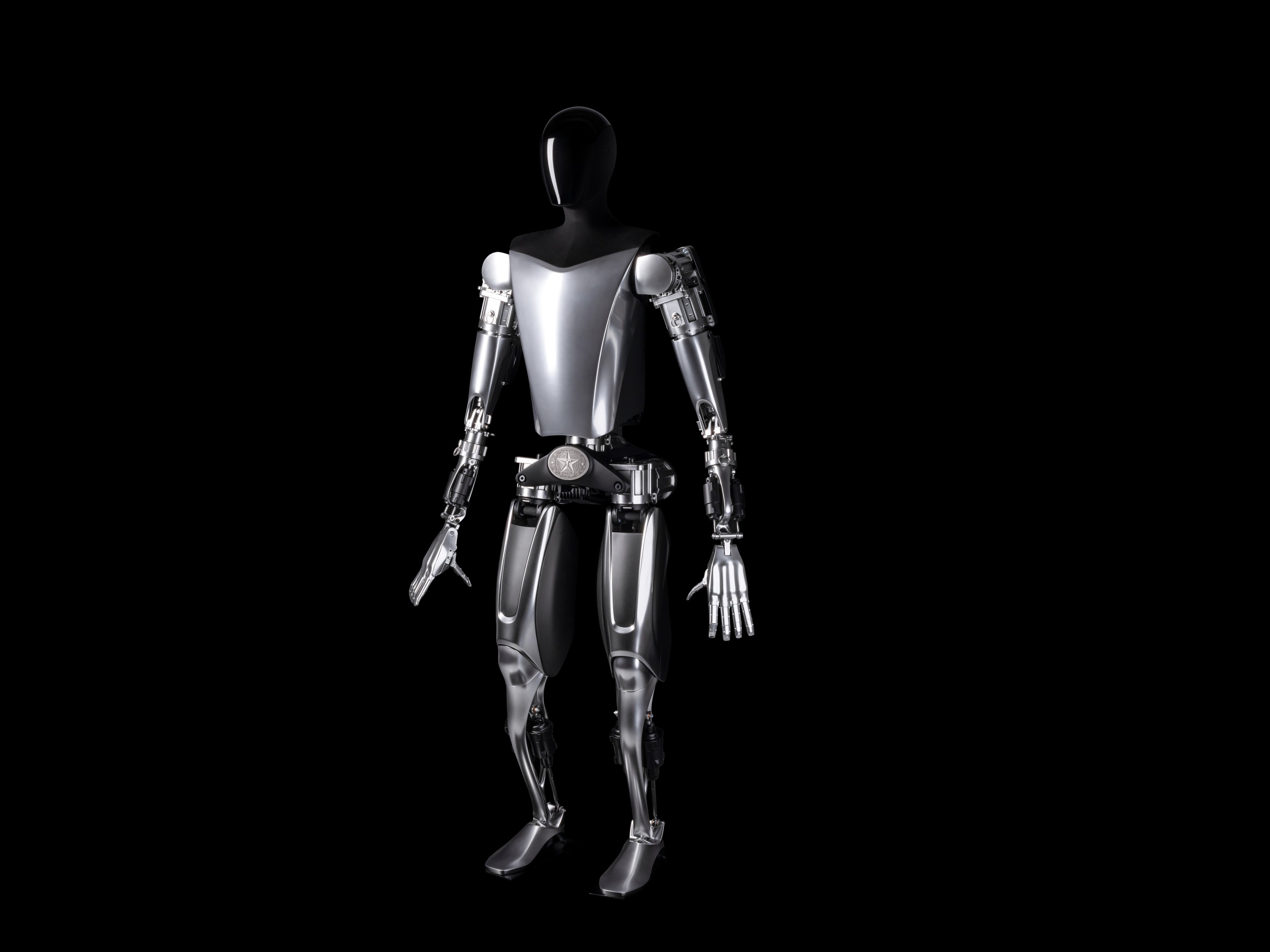
Image source: Tesla.
Optimus has a big future, but scaling its production won’t be easy, not least as Musk noted, “with Optimus, there is no supply chain. So we’ve had to build up a supply chain in its entirety or in-house production.” This is distinct from automotive manufacturing, where a manufacturer can approach myriad established suppliers to source components. Indeed, Musk described Optimus as “the hardest product to scale manufacturing that we’ve ever made at Tesla because everything on the robot is new.”
As such, Tesla needs to build out its supply chain and refine production to scale in the future.
Roadster is coming soon
The Roadster launch will showcase the best of Tesla’s technology and provide the company with a so-called “halo car” (a car designed to showcase an automaker’s highest level of engineering, performance, or design). However, as with most such cars, it’s not going to drive the company’s performance, and with Cybercab development ongoing (the hardware is already in use) and largely dependent on factors outside Tesla’s control, the real operational focus for investors in 2026 should be Optimus.
Read Next
•By Ryan Vanzo
Tesla’s Q3 Sales Report Comes Out Oct. 2. Here Are 2 Surprises It Might Reveal.
•By Daniel Miller
Tesla Makes Brilliant Supercharger Move but BYD Is Closer in the Mirror Than It Appears
•By Neil Patel
3 Things You Need to Know Before Buying Tesla
•By Adam Spatacco

Did Elon Musk Just Drop a Big Hint About a Possible SpaceX-Tesla Merger?
•By Lee Samaha
Tesla’s Free Cash Flow Went Negative. It Still Has a $43.5 Billion Cash Cushion.
About the Author

Lee Samaha is a contributing Stock Market Analyst at The Motley Fool covering industrials, electricals, energy, materials, transportation, and infrastructure stocks. Prior to The Motley Fool, Lee was a Civil Engineer and Investment Manager. He holds a Bachelor of Civil and Structural Engineering from Southampton University and a Certificate in Investment Management from Chartered Institute for Securities & Investment. Lee first cut his investing teeth on The Motley Fool bulletin boards (commonly referred to as the “Fool Boards,”) and he’s infinitely grateful to all of the investors he learned from in this powerful investing community.
Stocks Mentioned

Tesla
NASDAQ: TSLA
$377.94
(-0.57%)-$2.18

Motley Fool Stock Advisor’s Latest Pick
—% Avg Return
*Average returns of all recommendations since inception. Cost basis and return based on previous market day close.
Sumber Artikel:
Fool.com

