

Five steps, two done
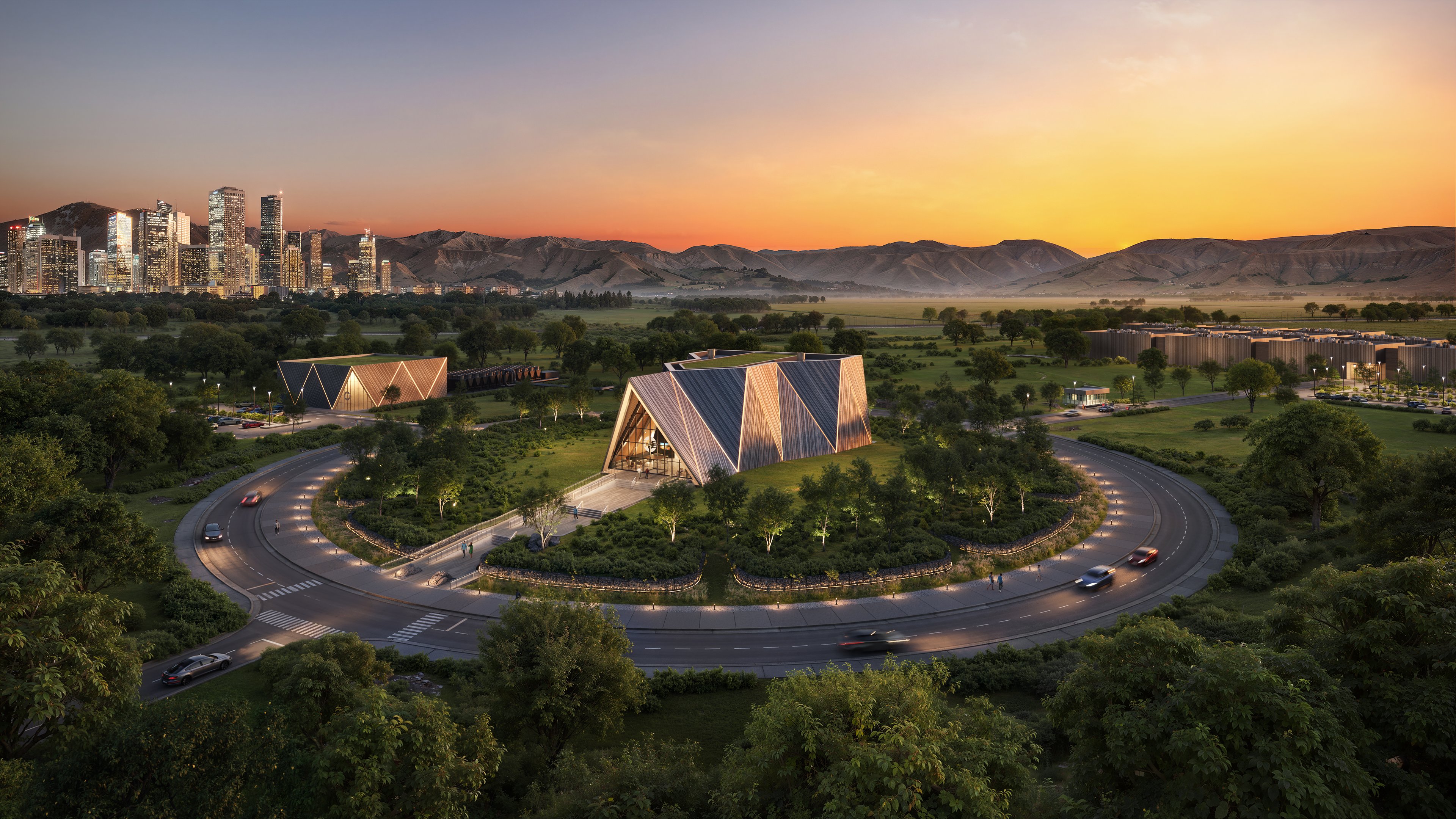
The timeline for Aurora-INL, the first powerhouse at Idaho National Laboratory, runs this. Construction began with a groundbreaking on Sept. 22, 2025. In July 2025, when Oklo named the project’s lead constructor, the company projected commercial operation in late 2027 or early 2028. By this month’s quarterly filing, the language had firmed into “an ambitious target of deploying our first powerhouse in 2028.” That adjective is management’s own, and the early edge of the old window is gone.
Initial authorization for this plant runs through the Department of Energy (DOE), not the Nuclear Regulatory Commission (NRC). That is a faster path, but it has defined gates. Oklo’s filing describes five steps in the DOE’s regulatory pathway for operating a nuclear facility, and two are done: the Nuclear Safety Design Agreement, approved early in 2026, and the Preliminary Documented Safety Analysis, approved June 11. Three remain.
Then comes fuel. The first core depends on a DOE award of five metric tons of high-assay low-enriched uranium (HALEU) recovered from decades-old government reactor fuel, which Oklo must fabricate into finished fuel at a new facility at the Idaho site.
Commercial HALEU from Centrus Energy, the supply meant to feed later powerhouses, isn’t expected to start delivery until 2029 under the companies’ letter of intent.
That 2029 supply feeds a planned Ohio campus where social media giantMeta Platforms has agreed to support up to 1.2 gigawatts of development, prepaying to help fund fuel.
The operators of artificial intelligence (AI) data centers are lining up power years in advance, in other words, and the demand side of Oklo’s model looks the readier half. The first plant, though, rides on a one-time government allocation.
Only after construction, the remaining approvals, fuel fabrication, fuel loading, and start-up testing does Oklo’s business model switch on. The company builds, owns, and operates its plants and sells the electricity. Revenue arrives when the power does. If start-up comes in 2028, so does the revenue, at the earliest.
Could it come earlier? Startup would have to beat the company’s own target by months, from a first-of-a-kind plant, on first-of-a-kind fuel, with three regulatory gates still open. Groves shows this team moves fast. It is also a low-power test reactor built on private land under the same DOE pilot program, a fraction of the 75-megawatt Aurora’s complexity. Encouraging, yes. A schedule for a commercial plant, no.
Isotopes come first
The prediction doesn’t mean Oklo stays revenue-free until 2028. On the company’s August earnings call, management said the first revenue out of its isotope business is more ly to come from the NRC-licensed Idaho Radiochemistry Laboratory than from Groves, in the first part of 2027. Groves, meanwhile, is expected to spend the next year or so working up to producing research-and-development quantities of isotopes.
So the sequence in Oklo’s own statements is services now, isotopes in 2027, and power after that. My prediction says the last item doesn’t jump the queue.
Expand

NYSE: OKLO
Oklo
Today’s Change
(1.03%) $0.43
Current Price
$42.09
Key Data Points
Market Cap
$7.8BMarket cap calculated using publicly traded s outstanding only. Does not include unlisted, private, or dual-class non-traded s. Implied market cap may vary.
Day’s Range
$41.39 – $43.68
52wk Range
$36.61 – $193.84
Volume
6.5M
Avg Vol
10.8M
Gross Margin
-2347.11%
Oklo can afford the wait, for what it’s worth. The company ended June holding about $3 billion in cash and marketable securities. Guidance for 2026 calls for $120 million to $150 million of operating cash use, plus $400 million to $500 million of capital spending on property and equipment. The money to reach 2028 is in hand.
Why 2028 holds
To be clear, a 2028 start would be an achievement, not a disappointment. If the company sells its first megawatt-hour that year, it will have gone from groundbreaking to commercial nuclear power in about three years, a pace the industry hasn’t managed in decades.
The prediction only says the schedule means what it says. A first-of-a-kind reactor, three regulatory steps from operation, doesn’t produce revenue a year ahead of its own ambitious target. Investors should expect 2026 and 2027 to be about milestones and isotope sales. The power revenue, if the target holds, comes in 2028.
Read Next
•By Frank Bass
3 Best Nuclear Energy ETFs for 2026 and How to Invest
•By John Bromels
Oklo Vs. X-Energy: Is the New Nuclear IPO the Better Buy?
•By Steven Porrello
What Is the Best Nuclear Reactor Stock You Should Put $1,000 Into in 2026?

•By Leo Sun
Oklo Built a Nuclear Reactor in 229 Days. Here’s Why the CEO Calls It a World Record.
•By Daniel Sparks
$10,000 in Oklo Stock at Its High Is Worth About $2,300 Today
•By Courtney Carlsen
Could $5,000 in This Nuclear Stock Turn Into a Life-Changing Sum?
About the Author

Daniel Sparks is a contributing Motley Fool stock market analyst covering technology, industrials, financials, and consumer goods. Daniel is the owner and chief investment officer of Sparks Capital Management. He holds a master’s degree in business administration from Colorado State University. The Globe and Mail profiled him and his investing philosophy in an article titled, “This stock picker is outperforming nearly everybody else. Here’s how he is doing it.”
Stocks Mentioned

Oklo
NYSE: OKLO
$42.09
(+1.03%)+$0.43

Motley Fool Stock Advisor’s Latest Pick
—% Avg Return
*Average returns of all recommendations since inception. Cost basis and return based on previous market day close.
Sumber Artikel:
Fool.com

