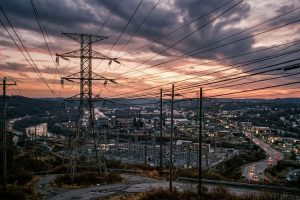

Pacific Gas and Electric Company (PG&E) responded to the City and County of San Francisco’s (CCSF) petition asking the California Public Utilities Commission (CPUC) to determine the value of PG&E’s electric distribution grid in San Francisco, concluding that the CPUC-required costs of a CCSF takeover would be $22.5 billion.
The utility argues that CCSF’s April 2026 filing estimated only the fair-market value of the grid’s assets, and says its own filing includes both the fair-market value of the grid’s assets and the costs CCSF would have to pay PG&E and its remaining customers as part of its proposed takeover. This includes the physical separation of the San Francisco grid from PG&E’s larger, integrated grid, and lost revenue for statewide energy programs that a CCSF utility would shift to customers outside of San Francisco
“A government takeover of our grid is not the right solution for our San Francisco customers,” said PG&E Corporation CEO Patti Poppe. “We have decades of specialized expertise operating San Francisco’s complex electric system. And now our filing shows that a takeover doesn’t make financial sense for customers.”
PG&E’s filing outlines a fair-market value of approximately $13.9 billion for its electric and real property assets in San Francisco, compared to the $3.4 billion that CCSF cited in April. However, PG&E’s valuation also includes $7.6 billion in damages for business severance and $1 billion in damages for physical separation.
PG&E argues that dividing its total burden of a takeover across the 420,000 electric accounts in San Francisco would equal about $53,000 per account. The utility notes that this is not a forecast of a specific customer bill or charge, but says a takeover would “burden San Franciscans with significant debt for decades to come.”
CCSF “significantly undervalues” PG&E’s assets, utility says
The CPUC already has ruled that CCSF will have to pay “the highest value” that a hypothetical buyer might pay for the assets, and PG&E argues that CCSF’s April offer for the company’s assets is well below fair-market value.
CCSF’s April filing suggested a total value of $3.4 billion for PG&E’s San Francisco grid. PG&E notes that CCSF’s filing assigned zero value on PG&E’s more than 2,000 real estate interests that include easements and licenses throughout the city. Additionally, PG&E argues that CCSF “dramatically undervalued” its underground distribution system in San Francisco, as the utility claims that CCSF failed to account for higher construction costs, the challenges associated with working around existing infrastructure, and “unique permitting and specialized installation practices” specific to San Francisco.
Severance damages fall into two categories: Costs to physically separate PG&E’s electric system within San Francisco from the company’s larger grid, and costs to ensure that a government takeover would not financially harm PG&E’s remaining customers.
CCSF’s takeover proposal includes taking PG&E’s Martin Substation in Daly City, plus transmission and distribution facilities, real estate, telecommunications assets and other infrastructure that supports service to customers outside San Francisco.
After physically severing assets, PG&E argues that any separation plan would have to physically restore service to PG&E’s remaining customers, including:
- Building a new PG&E substation, ly in San Mateo County, to replace the Martin Substation
- Building a new service center to maintain gas and electric operations for PG&E’s remaining Bay Area customers
- Reconfiguring or building power lines to restore service to PG&E customers outside of San Francisco, particularly in San Mateo County
On the legislative side
Last month, the San Francisco Board of Supervisors unanimously affirmed the final Environmental Impact Report for the City’s proposed acquisition of PG&E’s local electric grid, clearing a required step as San Francisco explores expanding public power.
Previously, the Planning Commission had unanimously certified the report in July after an environmental review and public process. Required under the California Environmental Quality Act, the report examines the environmental effects of acquiring PG&E’s assets and the work needed to separate the systems. The environmental review must be completed before the City can approve an acquisition.
“Today’s decision moves San Francisco forward as we explore expanding public power,” said SFPUC General Manager Dennis Herrera. “San Francisco has been a public power provider for more than a century, and we now provide more than 75% of the electricity used in the City through Hetch Hetchy Power and CleanPowerSF. What we don’t own is the local electric grid. Owning it would give us the ability to invest directly in San Francisco’s power infrastructure, with a focus on reliability and affordability for our customers.”
If policymakers decide to proceed with the purchase, the SFPUC would need to physically separate the portion of PG&E’s existing electric system that serves San Francisco. This work, generally along the San Francisco-San Mateo County border, would create two independent systems. The SFPUC would provide electricity service to customers in San Francisco, while PG&E would continue serving its customers outside the city.
Funding to acquire PG&E’s grid would not come from the City’s budget or taxes, SFPUC said. It would come from revenue bonds repaid over time through electric rates. In June 2018, San Francisco voters approved Proposition A with 77% of the vote. The measure amended the City Charter to authorize the SFPUC to issue revenue bonds to build or improve the City’s clean power facilities, with approval by two-thirds of the Board of Supervisors.
Sumber Artikel:
Renewableenergyworld.com