
Contributed by Frédéric Godemel | EVP Energy Management, Schneider Electric
Edited by Paul Gerke
What if we treated today’s energy market turmoil as an opportunity rather than a threat?
US energy markets have become increasingly unstable. Demand has now increased by 2.1% per year, on average. Factor in AI energy use, and rising demand now risks outpacing supply altogether. US electricity demand is anticipated to increase 39% by 2035, and peak demand will grow 25% by 2035 from 2026 levels.
Rising demand, mounting strain on existing energy systems, and the pressing need for grid modernization all point to one conclusion: we are entering an electricity supercycle, a prolonged period of unprecedented, surging demand for electrical power. As with any supercycle, there will be winners and losers. Higher prices, continued energy instability, and a rising cost of living are set to become lasting challenges that test the growth ambitions of both countries and companies.
Yet this sustained disruption could also provide the push needed to rebuild our energy systems faster, laying the groundwork for lasting stability. So how can the electricity supercycle become a catalyst for energy security? Countries and companies need to focus on three priorities.
Grid Modernization: The Biggest Bottleneck
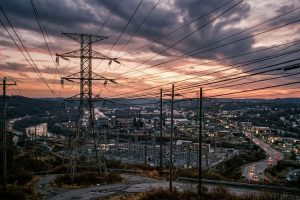
The electricity supercycle reveals a simple truth: the grid has become a major challenge for global energy security. Around the world, transmission and interconnection systems built for one-way, centralized distribution are struggling to keep pace with today’s rapid growth in renewables, electrification, and AI-driven demand.
While building a new wind or solar farm can take many years, an estimated 2,500 gigawatts (GW) of projects are currently queued worldwide. Between 1,200 and 1,600 GW of that could be unlocked through grid connection reform, the deployment of digital grid-enhancing technologies (GETs), and faster grid expansion.
Grid modernization efforts could be prioritized in the ing ways:
- AI-powered technologies, smart sensors, automation, and grid edge intelligence let operators manage energy congestion in real time, redirect power flows, and expand usable capacity without building new infrastructure. The Schneider Electric One Digital Grid Platform is one example of an AI-enabled platform that brings planning, operations, and asset management together without requiring a full overhaul of existing systems, using AI to cull runaway energy usage.
- The American Public Power Association found that the amount of new power generation and energy storage capacity seeking transmission interconnection declined by 10% between 2024 and 2025. As of 2025, 2,061 gigawatts of generation and storage capacity are actively pursuing grid interconnection. This is good news. Shifting from the traditional ‘first come, first served’ model to ‘first ready, first connected’, organizations truly prepared to pursue these new grid interconnections are clearing out ‘zombie projects’ holding up the queue, or speculative applications with no viable funding, and giving priority to projects ready to start supplying power to the grid. Over the longer term, maintaining a strong pipeline of new renewable projects prepared for interconnection will be essential to keep fueling economic growth as the world becomes increasingly electric.
- Targeted investment in assets that complement existing grid infrastructure can help meet growing energy demand more quickly. The IEA estimates that developing, permitting, and delivering new grid infrastructure typically takes between 5 and 15 years. By comparison, projects on both the electricity supply and demand sides can be completed much more quickly, with renewable energy developments such as solar PV and wind taking around 1–5 years, data centers 1–3 years, and EV charging infrastructure just 1–2 years.
With decisive grid modernization, the electricity supercycle can unlock stalled clean energy investment, support AI-driven growth, and secure more abundant, affordable power for decades to come.
Accelerating Investment in an Efficient Energy Supply
As demand outpaces supply, the countries and businesses that can move quickly to meet it will gain a real advantage.
Increasing domestic electricity generation and reducing reliance on volatile imports offer the greatest potential to permanently limit the impact of outside shocks. For most countries, that means adopting renewable energy sources and on-site energy generation compatible with fossil fuel energy sources. This progress is already underway. Renewables combined with nuclear are expected to supply 50% of the world’s electricity by 2030, up from around 42% today.
Transitioning to a clean energy economy in the United States would cost $320 billion a year from 2020 to 2050, but $366 billion a year in reduced fossil fuel costs alone, according to the World Resources Institute. This shift would help soften the blow of fluctuating energy costs on businesses and homeowners a. US wholesale electricity prices have risen around 40% since the beginning of 2025, driven partly by rising natural gas prices, and renewables combined with on-site energy generation can assist organizations, consumers, and businesses in adapting to the volatility of global commodity prices once built.
Countries such as Poland are investing heavily in renewables and, as a result, are already becoming more agile, more responsive, and better positioned for future economic growth. Poland added over 20 GW of solar capacity between 2020 and 2025, helping the nation grow closer to the European average for renewable generation. They are also working through their own energy curtailments to make room for renewables, supporting their current grid infrastructure. In March 2026, Poland passed initial measures to amend the Grid Act, which aims to unlock electricity grid connection capacity and filter out the country’s own “zombie projects.”
None of the benefits from new clean energy projects can be fully realized, however, without rapid upgrades to grid capacity and digital infrastructure.
Building a Flexible Energy System
Traditionally, energy shortfalls have been addressed by producing more energy and expanding grid capacity to meet peak demand. Simply pouring more energy into the system is not the most efficient way to solve the problem, though.
A more flexible energy system is the better answer.
Using energy more efficiently matters, but so does balancing the load across grid systems, shifting usage toward times of high renewable generation and easing demand during evening peaks. Battery energy storage systems (BESS) offer a key lever for reliable energy supply. Storing excess energy reduces curtailment and gives governments, companies, and homeowners greater control over their own energy use, particularly when paired with solar panels and microgrids.
Paired with AI and digitalization, battery storage lets operators and end users asmooth peaks and troughs in supply and demand while tackling price volatility, delivering smarter, more resilient energy distribution. This digital orchestration turns the grid into an omnidirectional distribution system, one where autonomous microgrids and grid-edge intelligence can balance supply and demand down to the millisecond.
The electricity supercycle, combined with greater energy flexibility, will become a catalyst for energy resilience and deliver a smarter energy future. By harnessing the energy technologies available today, we can unlock new efficiencies, deliver reliable energy, and build markets that are both resilient and competitive.
About the Author

Frédéric Godemel is executive vice president for energy management at Schneider Electric and a member of Schneider Electric’s Executive Committee, effective January 2025.
Prior to this role, Frédéric was the EVP for power systems and services, acting as a strong advocate for electrification and decarbonization, often representing Schneider Electric at high-profile speaking engagements.
He joined Schneider in 1990 and developed his international career around the power domain, spanning low and medium voltage, energy automation, infrastructure, and services. Over the years, he has held various global and operational leadership roles based in China, the UAE, and France.
Frédéric holds a degree in engineering from École Centrale de Nantes (France) and an MBA from ESSEC (France).
Sumber Artikel:
Renewableenergyworld.com