Close Banner
The Vitamin Deficiency That May Be Leaving Your Gut Wide Open To Infection

Author:
June 09, 2026
mindbodygreen editor

Image by Yazgi Bayram / iStock
June 09, 2026
Most people think of vitamin D as the bone health vitamin. Some know it plays a role in mood and immune function. But new research1 suggests it may also have something to do with how well your gut defends itself against infection.
The study found a strong link between low vitamin D levels and a higher lihood of testing positive for Helicobacter pylori (H. pylori), one of the world’s most common bacterial infections (that impacts the stomach lining). Here’s what you need to know.
About the study
For this study, researchers wanted to investigate whether vitamin D deficiency is linked to H. pylori infection and whether low vitamin D levels are associated with differences in lipid metabolism. H. pylori is a bacterial infection impacts about 40-50% (!!) of the global population2. You contract this bacteria from close personal contact or via contaminated food and water. Many people with H. pylori3 don’t know they have it, and it can even live in the stomach for years before it casues symptoms (burning in the upper abdomen, bloating, nausea, or regular burping.
So, the research team enrolled 502 adults and tested each person for both their vitamin D status and whether they were infected with H. pylori. They also collected information on lifestyle habits, demographics, and blood markers serum iron. To dig deeper, a smaller group of 50 participants underwent metabolomics testing (a type of analysis that maps the chemical processes happening in the body) to see whether vitamin D deficiency was associated with any shifts in how the body functions at a cellular level.
Vitamin D deficiency was far more common among those who tested positive
Vitamin D deficiency was far more common among participants who tested positive for H. pylori, and the association was statistically very strong. When researchers accounted for other factors, the pattern held:
- People with insufficient vitamin D had about 89% lower odds of testing positive for H. pylori. compared to those who were fully deficient
- People with sufficient vitamin D had roughly 98% lower odds of testing positive for H. pylori compared to the deficient group
- Being female was also associated with lower odds of infection
The researchers also noted that people who tested positive for H. pylori had lower average iron levels, consistent with earlier research. When researchers adjusted for other variables, however, iron status alone was not independently associated with infection risk, suggesting the vitamin D connection is not simply a reflection of iron deficiency.
What the metabolomics findings revealed
In the smaller sub-analysis of this study, vitamin D-deficient participants showed differences in several lipid-related pathways (aka differences in the way their bodies were processing certain types of fats).
vitamin D3 potency+
★ ★ ★ ★ ★
★ ★ ★ ★ ★
(208)
The most affected pathway involved sphingolipids, a type of fat found in cell membranes that plays a key role in how immune cells communicate and respond to threats. Two other pathways involved glycerophospholipids and ether lipids, both structural components of cell membranes involved in regulating inflammation.
What does this tell us? When vitamin D was low, the fat-based signaling systems that help immune cells do their job appeared to shift. Vitamin D status has also been shown to affect the body’s inflammatory response more broadly, which may help explain why deficiency seems to alter the immune environment in ways that could leave the gut more vulnerable.
One important caveat: the metabolomics analysis was not adjusted for H. pylori infection status, so the lipid pathway differences observed can’t be cleanly separated from the potential influence of infection itself. The study authors describe these findings as exploratory, and larger studies are needed before drawing firm conclusions.
Why vitamin D matters for gut immunity
Vitamin D plays an active role in both the innate and adaptive immune systems. Immune cells throughout the body have receptors for it, and it helps regulate the production of proteins that fight off pathogens and keep inflammation in check.
In the gut specifically, vitamin D helps maintain the integrity of the mucosal lining and supports the immune surveillance that keeps harmful bacteria from taking hold. Research suggests that vitamin D supports gut health by supporting both the microbial environment and the gut barrier. It has also been studied for its potential to reshape gut immune response in people with inflammatory bowel disease.
It’s also worth being clear about what this research does and doesn’t show. This was a cross-sectional study, meaning it captured a single snapshot in time. We can’t say whether low vitamin D causes H. pylori infection, whether the infection depletes vitamin D, or whether something else is driving both. Most importantly, vitamin D is not a treatment for H. pylori. Standard treatment involves antibiotics combined with acid-suppressing medication, and supplementation is not a substitute for that.
How to keep your vitamin D levels in a healthy range
If you’re not sure where your levels stand, a simple blood test measuring 25-hydroxyvitamin D (25(OH)D) is the most reliable way to find out. According to the Endocrine Society, levels below 20 ng/mL are considered deficient, 20–30 ng/mL insufficient, and 30 ng/mL or above sufficient (although many experts recommend levels around 50 mg/mL for optimal health).
There are a few key ways to support your vitamin D status.
- Sun exposure: Your skin produces vitamin D when exposed to UVB rays; even 10–30 minutes of midday sun a few times a week can make a meaningful difference, though this varies by skin tone, latitude, and season
- Food sources: Fatty fish (salmon, sardines, mackerel), egg yolks, and fortified foods dairy and plant-based milks all contribute, though food alone is rarely enough to correct a deficiency
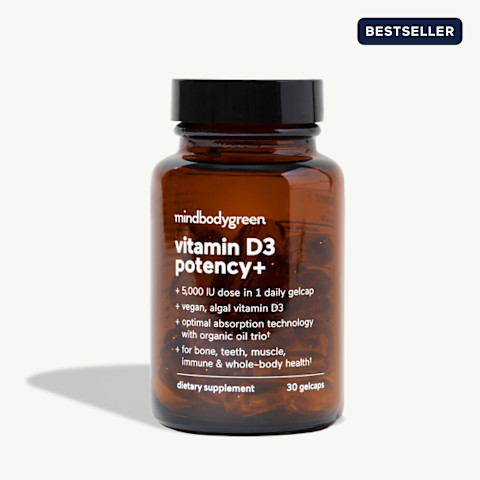
- Supplementation: This is the best and most effective way to raise (and maintain) optimal vitamin D levels. Vitamin D3 is the most bioavailable form; the right dose depends on your current levels and should be guided by a healthcare provider. These are the best (expert-approved) vitamin D supplements to choose from.
The takeaway
This study adds to a growing body of evidence that vitamin D’s role extends well beyond bones and mood, and that your gut’s immune defenses may be part of that picture. Whether the connection to H. pylori proves to be causal or not, keeping your vitamin D levels in a healthy range remains one of the more well-supported things you can do for your overall health. And getting your levels tested is a simple place to start.
vitamin D3 potency+
★ ★ ★ ★ ★
★ ★ ★ ★ ★
(208)
★ ★ ★ ★ ★
★ ★ ★ ★ ★
(208)
3 Sources
- https://www.frontiersin.org/journals/nutrition/articles/10.3389/fnut.2026.1812874/full
- https://pubmed.ncbi.nlm.nih.gov/38176660/
- https://www.ncbi.nlm.nih.gov/books/NBK534233/
Sumber Artikel:
Mindbodygreen.com