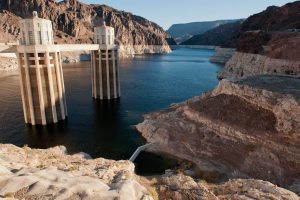

While the prospectors wielding the sharpest pickaxes on the frontier of artificial intelligence consider calling a team timeout to debate the existential threats posed by AI, its physical infrastructure is actively threatening local ecosystems in new and not-so-exciting ways.
Earlier this month, a “computer glitch” at an Equinix data center in New Jersey prompted 5,500 gallons of diesel to be dumped into a tributary of the Hackensack River. The fuel came from a storage tank that powers backup generators at the site, which has been active since 2001. The Department of Environmental Protection said no harm to wildlife has been reported, but local officials are skeptical the spill won’t have an environmental impact.
The incident, currently under investigation, was far from ideal, regardless of where you land on environmental policy. There’s never a good time to accidentally slosh a few thousand gallons of gas into a waterway. But considering how quickly climate concerns have taken a backseat to speed-to-power discussions in the United States, it probably wasn’t the worst time.
Last week, the U.S. Environmental Protection Agency (EPA) ed through on its promise to repeal rules limiting emissions from coal- and gas-fired power plants. Now null and void: critical portions of a 2024 regulation finalized under the Biden-era EPA requiring the longest-running existing coal-fired units and most heavily utilized new gas turbines to implement carbon capture and sequestration/storage (CCS) by various compliance dates in the 2030s. The EPA is further proposing to repeal all remaining greenhouse gas emissions standards for fossil-fired facilities under Section 111 of the Clean Air Act, claiming it has no authority to regulate power plant emissions based on their contribution to climate change.
Some are celebrating the rollbacks. More power plants will be allowed to stay open for longer without procuring expensive upgrades at a time when every electron is critical. The EPA estimates the final repeal will the industry up to $310 billion. However, an Associated Press examination found that maintaining the rules targeted by Trump’s EPA prevents an estimated 30,000 deaths per year and s $275 billion annually.
Clearly, our ambitions (making sand think for us while keeping the lights on) will come at a cost. Some lines on the ledger will be predictable. But are we willing to leave our card open when we’re still unsure of the total bill?
Hello and welcome to the Factor This Brief, a weekly collection of energy industry finance and development updates, delivered straight to your inbox on Monday mornings and hosted in a not-so-brief fashion here on Factor This, featuring the people, projects, and technology driving our electric future.
Thanks for checking it out. If you what you see here or want to recommend a story for next week, drop me a line. As always, here’s a jam for the journey- and here’s to hoping none of you had to face Josh Allen in fantasy football this past week.
Air Force Battery
Georgia Power is celebrating the commercial operation of the Robins Battery Facility, a 128-megawatt (MW) battery energy storage system (BESS) on Robins Air Force Base near Warner Robins, Georgia.
The facility can deliver stored energy generated by the nearby Robins Solar Facility for up to four hours, enhancing grid reliability and flexibility. Burns & McDonnell served as the engineering, procurement, and construction (EPC) contractor for the battery site and delivered the project on schedule.

“Seeing the Robins Battery Facility enter commercial operation is an important milestone for Georgia Power and for the future of energy in our state,” said Rick Anderson, senior vice president and senior production officer for Georgia Power. “By pairing battery storage with solar generation, we’re creating a more flexible and resilient grid that can respond to customer needs during periods of peak demand while supporting Georgia’s continued growth.”
The project is part of the utility’s broader strategy to add cost-effective energy resources through the Georgia Public Service Commission’s (PSC) Integrated Resource Plan (IRP) process. Robins is one of four battery energy storage projects approved in the 2023 IRP Update. Georgia Power has completed battery storage facilities in Cherokee and Lowndes counties totaling 579.5 MW and is nearing completion of a 57.5 MW facility in Floyd County.
The PSC has also approved nine additional BESS facilities across eight sites statewide, adding more than 3,000 MW of energy storage capacity. Sites were selected based on their ability to efficiently support grid operations, including proximity to existing infrastructure, substations , and company-owned properties. Planned facilities include locations at Plants Bowen, Hammond, McIntosh, Wansley and Yates, as well as stand-alone sites in Hall and McDuffie counties.
To help meet growing energy needs, Georgia Power has also received approval for two solar facilities paired with battery storage, providing a combined 350 MW of generating capacity. These projects are designed to maximize solar production while minimizing land impacts. The new solar-plus-storage facilities will be located in Laurens and Mitchell counties.
It’s a Grid in a Box
Distributed energy company Branch Energy has announced a $33 million Series B funding round led by Piva Capital and Clean Energy Ventures.
Branch’s “grid in a box,” called the Arc, is a proprietary, self-contained unit designed to store and deliver electricity. Roughly the size of a parking space, the system includes an industrial-grade battery, grid-connection equipment, cooling, autonomous controls, and software that lets Branch run it safely and securely from the cloud.
The company installs Arc on-site at commercial buildings (warehouses, hotels, factories, retail), delivered by flatbed trucks and set up in as little as two days. That’s a lot faster than typical power generation projects, Branch points out, which now take a median of more than five years from interconnection request to operations.


Courtesy: Branch Energy
“Hyperscalers need power, and they need it now,” said Alex Ince-Cushman, co-founder and CEO of Branch Energy. “We can do it on the timeline of a delivery, not a construction project. Our customers don’t lift a finger, don’t pay a dime, and get guaranteed savings.”
Branch’s model lets the building owner avoid upfront payment for the system, with Branch handling permitting, installation, insurance, and operations. Branch also becomes the host business’s retail electricity provider, locking in lower rates for future years by optimizing the battery’s charge and discharge cycle. The host provides a parking-space-sized plot of land and receives guaranteed savings on its energy bill, plus backup power during outages. Branch’s revenues come from the electricity market by dispatching the battery’s stored capacity to the grid or to contracted offtakers such as hyperscalers, and shifting energy from low-cost periods at night to high-cost periods during daily evening peaks.
The company is now expanding its services from Texas to Illinois, among other markets. PJM has recently opened a path for large energy users data centers to connect sooner when bringing their own capacity to the grid. PJM’s territory holds roughly 1.2 million commercial buildings and covers 20% of US national electricity demand, representing a significant market opportunity for Branch.
The Series B included participation from Active Impact Investments and Whitecap Venture Partners, and existing investors Prelude Ventures, Zero Infinity Partners, and Inovia Capital.
Marigold Ready to Bloom
Last week, the Salt River Project (SRP) Board of Directors approved the development of the Marigold Energy Center (MEC) in Stanfield, Arizona. The public utility says the project will help SRP meet growing energy demand across Maricopa and Pinal counties while maintaining affordability and reliability for customers and supporting its 2035 sustainability goals for carbon and water reduction.
MEC will include 600 MW of solar generation, 400 MW of 8-hour battery energy storage, and 675 MW of natural gas generation to provide flexible, dispatchable capacity that enhances grid reliability and enables the integration of additional renewables. MEC will also include a 230-kilovolt (kV)/500 kV substation and approximately four miles of new 230 kV transmission lines.
“The combination of resources at Marigold Energy Center represents a balanced system approach to providing affordable, reliable, and sustainable power to meet increasing customer demand during all hours of the day and night,” said Bobby Olsen, SRP associate general manager and chief power system executive. “Added investments in transmission infrastructure will further strengthen grid flexibility and help support continued growth across central Arizona.”

Electrical District No. 3 (ED3), a regional public power utility serving the communities of Maricopa, Stanfield and the surrounding area, is evaluating a potential partnership with SRP to procure a portion of the energy generated by MEC.
MEC will create between 300 and 400 jobs during peak construction and up to 45 full-time jobs once construction is completed. Construction on MEC is expected to begin in January 2027, and the project is scheduled to be online in 2032.
The development of MEC is part of SRP’s plan to more than double its power system capacity by 2035. SRP intends to accomplish that feat via an all-of-the-above approach, adding natural gas, renewable, and storage resources.
Cash for Community Solar
Distributed renewables platform 38 Degrees North (38DN) has closed on a $260 million financing facility with Apterra Infrastructure Capital, an affiliate of Apollo, to support the construction of approximately 85 MW of community solar projects across New York and Illinois.
Apterra served as Joint Lead Arranger, Administrative Agent, and Sole Bookrunner. Stifel and National Bank of Canada also served as Joint Lead Arrangers. BankUnited acted as Collateral Agent. Farmer Mac, Amalgamated Bank, and Siemens Financial Services participated as additional lenders in the facility, which was oversubscribed.
“New York and Illinois continue to be among the most active community solar programs in the country, with both states designed to bring new generation online while passing savings directly to subscribers. As project queues lengthen, developers with permitted, ready-to-build pipelines and the capital to finance them are best positioned to convert that backlog into operating assets,” said Ryan Bennett, Partner at 38DN.
Stoel Rives LLP represented 38DN. The lender group was represented by Norton Rose Fulbright. This transaction s the closing of 38DN’s HoldCo facility with EIG, announced in August 2026, leaving the company positioned to execute on its significant pipeline. 38DN has raised more than $1.7 billion in capital to date and continues to expand its portfolio of community solar and distributed generation projects across key markets.

Excelsior Sells Solar Sites
Independent clean energy investor Excelsior Energy Capital has completed the sale of two U.S. solar plants to subsidiaries of multinational power company Enel S.p.A. for approximately $760 million, its largest exit to date.
Together, the Faraday and Skyhawk projects have an installed capacity of 810 MW and an expected average output of 1.6 terawatt-hours per year. Faraday, a 525 MW plant located in Utah County, Utah, is one of the largest utility-scale solar investments in the country. The plant reached commercial operation in September 2025 and is backed by a 20-year power purchase agreement with PacifiCorp under Rocky Mountain Power’s Schedule 34 green energy tariff. Skyhawk, a 100 MW solar plant located in Obion County, Tennessee, has been in commercial operation since 2023. The plant is backed by a long-term power purchase agreement with the Tennessee Valley Authority.
The transaction s agreements signed by Excelsior and Enel in February 2026, which provide for the acquisition of a portfolio of wind and solar plants with a total installed capacity of over 1 GW, for an enterprise value referred to as 100% of the entire portfolio of approximately $1.3 billion.
“The sale of Faraday and Skyhawk marks an important milestone for Excelsior,” said Alex Ellis, co-founder and partner at Excelsior Energy Capital. “This transaction reflects our continued progress in realizing value and returning capital to our investors, and it underscores the strength of the contracted renewable infrastructure we build, with a focus on assets backed by strong counterparties and long-term power purchase agreements.”

Through this deal, Excelsior Renewable Energy Intermediate Fund I LP, the firm’s $504 million inaugural fund, which closed in 2020, is selling its full interest in both plants. Excelsior Renewable Energy Investment Fund II LP, a $1 billion fund that closed in April 2025 and co-invested in Faraday, is selling its full interest in that project.
The closing of the acquisition of the remaining 205 MW of wind capacity included in the above-mentioned agreements is expected by the fourth quarter of 2026, after which the Enel Group is expected to achieve in North America an installed capacity entirely from renewable sources of over 13 GW of wind, solar and storage facilities. Enel says the deal is expected to generate a positive effect of approximately $90 million per year on the Enel Group’s consolidated ordinary EBITDA.
Sumber Artikel:
Renewableenergyworld.com