Close Banner
This Common Summer Habit Is Accelerating Your Skin’s Aging

Author:
September 01, 2026
Assistant Health Editor
Assistant Health Editor
Ava Durgin is the former Assistant Health Editor at mindbodygreen. She holds a B.A. in Global Health and Psychology from Duke University.

Image by Kike Arnaiz / Stocksy
September 01, 2026
There are few things that feel quite as good as spending a summer afternoon in the sun. And even with everything we now know about UV exposure, wanting a little color hasn’t exactly gone away.
People are lying out by the pool, tracking the UV index to find the strongest sun, or skipping sunscreen for the first hour because they want to “get a base.” For a generation that has also become increasingly interested in longevity, skin care, and preventing premature aging, it’s an interesting contradiction.
While we tend to think about sun protection primarily through the lens of skin cancer, UV exposure is also one of the most well-established factors influencing how our skin ages.
And according to new research1, intentionally tanning outside is still surprisingly common, particularly among young women.
Nearly half of young women intentionally tan outdoors
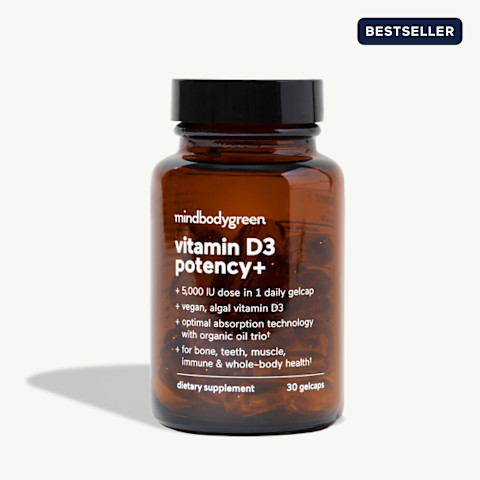
vitamin D3 potency+
★ ★ ★ ★ ★
★ ★ ★ ★ ★
(211)
The study, published in JAMA Dermatology, analyzed data from 31,615 adults who participated in the 2024 National Health Interview Survey, a nationally representative survey of U.S. adults.
Participants were asked how often they went outside specifically for the purpose of developing a tan, along with whether they’d experienced a sunburn in the previous year. Researchers also looked at factors including age, physical activity, alcohol use, sun sensitivity, and other demographic and lifestyle characteristics.
Overall, about 30% of U.S. adults reported intentionally tanning outdoors. But the rates were higher among women: 35.6% of women intentionally tanned, compared with 26.6% of men.
Age made an even bigger difference. Among women ages 18 to 29, that number jumped to 48.1%, meaning nearly one in two young women reported deliberately spending time in the sun to get tan.
And intentional tanners weren’t just getting more color. Nearly half, 49.9%, reported having a sunburn in the previous year, compared with 28.3% of people who didn’t intentionally tan.
A tan is also a sign of UV damage
We usually talk about these numbers because of skin cancer risk, and that’s an important part of the conversation. But there’s another reason to rethink intentional tanning if you’re interested in keeping your skin healthy as you age.
A tan is your skin’s response to UV exposure. When UV radiation reaches the skin, it damages cells, and the body responds by producing more melanin in an attempt to protect itself. So while we may associate a tan with looking “healthy,” biologically, it’s evidence that the skin has been exposed to something damaging.
Over time, repeated UV exposure contributes to photoaging, or premature skin aging caused by the sun. UV radiation can damage collagen and elastin, the proteins that give skin its structure, firmness, and elasticity. The cumulative effects can eventually show up as wrinkles, uneven pigmentation, rougher texture, and loss of firmness.
Chronic UV exposure can also contribute to oxidative stress, DNA damage, and the accumulation of senescent cells. Sometimes called “zombie cells,” these are damaged cells that stop dividing but don’t get cleared away as they normally would. Instead, they can release inflammatory signals that affect surrounding tissue and interfere with normal repair.
So if you’re spending a lot of money on retinoids, vitamin C, lasers, or other treatments to preserve your skin, regularly tanning without protection is working against many of those same goals.
RELATED READ: Research-Backed Treatments For Dark Spots, Crepey Skin & Sun Damage
Sun protection is one of the simplest skin-longevity habits
This doesn’t mean you need to avoid being outside. Spending time outdoors has plenty of benefits, and enjoying the beach, going for a walk, or eating lunch outside is very different from deliberately seeking UV exposure to change your skin color.
The more useful goal is reducing unnecessary exposure. Wearing a broad-spectrum SPF 30 or higher every day is a solid starting point, particularly on areas that get consistent sun your face, neck, chest, and hands. If you’re spending extended time outside, reapply sunscreen regularly and after swimming or sweating, seek shade when the sun is strongest, and add sunglasses, hats, and lightweight protective clothing when it makes sense.
And don’t rely on tanning to maintain your vitamin D levels. If you’re concerned about vitamin D, you can ask your doctor to check your levels and use food or supplementation when appropriate rather than intentionally exposing your skin to UV radiation.
RELATED READ: The 7 Best Vitamin D Supplements For Raising Stubbornly Low Levels
The takeaway
The takeaway here isn’t that spending time outside is bad for your skin. It’s that intentionally trying to tan is a very different thing from simply enjoying the outdoors.
If healthy aging is the goal, protecting your skin from unnecessary UV exposure is one of the simplest things you can do now that your future skin will benefit from. You can still have the beach days, outdoor dinners, and long summer walks. Just bring the SPF along with you.
vitamin D3 potency+
★ ★ ★ ★ ★
★ ★ ★ ★ ★
(211)
★ ★ ★ ★ ★
★ ★ ★ ★ ★
(211)
1 Source
Sumber Artikel:
Mindbodygreen.com