

The Southern Company is a predictable industry stalwart
There’s nothing especially special about The Southern Company. But that’s the point.
Investors afraid of a recession want to own well-established and well-proven defensive names. That’s what this utility outfit brings to the table. The $100 billion organization has been in business for well over a century now, and currently serves more than 9 million customers located all over the United States.
Its biggest single fuel source right now is natural gas, although, as it transitioned away from coal, it’s now investing in renewables as opportunities and funding allow. It’s not aggressively forcing this shift, however, and putting itself into a financial pinch as a result.
Expand

NYSE: SO
Southern Company
Today’s Change
(0.33%) $0.31
Current Price
$94.55
Key Data Points
Market Cap
$107B
Day’s Range
$93.77 – $94.80
52wk Range
$83.80 – $100.83
Volume
3.4M
Avg Vol
5.2M
Gross Margin
29.31%
Dividend Yield
3.15%
Perhaps more important to defensive-minded investors, Southern’s well-established presence in a business that few people can avoid using means it will continue to generate profitable revenue no matter what the foreseeable future holds.
And that’s what makes this ticker such a fantastic holding during tough times. It can afford not only to continue paying its cash dividends but also to raise them. The Southern Company has now increased its per-dividend for 25 consecutive years, in fact, through a handful of rough patches.
Newcomers will be plugging into a forward-looking yield of 3.2%.
Brookfield Renewable: Same idea, different package
Brookfield Renewable isn’t exactly a household name, mostly because it doesn’t directly serve customers under that banner. Rather, it is a developer and buyer of power-generating businesses.
Leaning on a combination of wind, solar, and a surprising amount of hydro power along with some exposure to the more esoteric elements of the renewable energy industry, this company’s 48 gigawatts’ worth of production capacity turned $6.4 billion in revenue into net income of $712 million last year, dramatically improving on the previous year’s numbers.
That’s not what makes Brookfield Renewable such a compelling investment prospect here, however. For that matter, neither is its flexible structure. (This company isn’t tethered to a particular geographical location, but rather, can and will invest in any appropriate opportunity no matter where it’s located.)
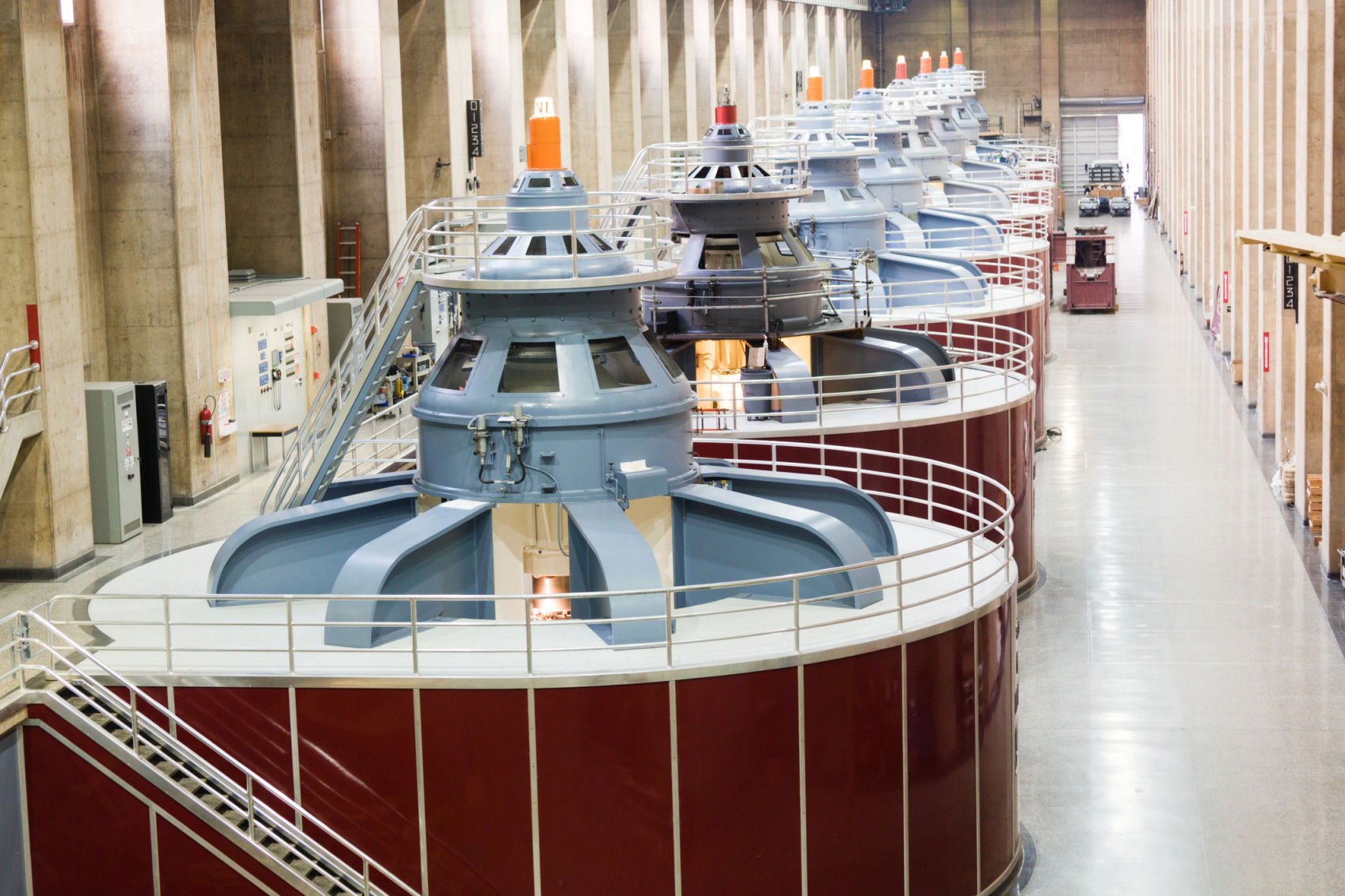
Image source: Getty Images.
What makes this name a must-have in good times and bad, rather, is that it’s being built from the ground up to pay and grow dividends. Not only is its forward-looking yield of 4.6% better than most stocks of its peers, but it’s targeting payout growth of between 5% and 9% per year, laying the groundwork for total annualized net returns of between 12% and 15%.
The thing is, it can arguably do it. Just make sure you step into the correct ticker if you’re interested. Its counterpart Brookfield Renewable Partners (BEP +0.48%) offers about the same performance. But it’s structured as a partnership, which comes with tricky tax rules that may not be worth the hassle for investors just looking to play a little defense.
Vistra is a defensive value name for growth investors
Finally, add Vistra to your list of top recession-proof utilities stocks to consider buying this month — although not necessarily for the reason you might think.
With nothing more than a quick look Vistra doesn’t look much different than any other outfit in the business. It provides power to a few million U.S. homes (mostly in the northeast) using a growing amount of natural gas and a decreasing amount of coal. It’s also easing its way into renewables, leading the way with nuclear.
Expand

NYSE: VST
Vistra
Today’s Change
(4.82%) $7.19
Current Price
$156.27
Key Data Points
Market Cap
$53B
Day’s Range
$150.75 – $157.57
52wk Range
$132.66 – $219.82
Volume
8.1M
Avg Vol
4.7M
Gross Margin
14.65%
Dividend Yield
0.58%
Vistra is different than most other utility names, though, in a couple of key ways.
First, while it serves 5 million retail customers, its focus is increasingly on power production it can route to different areas using the nation’s power-distribution grids. It’s also developing custom-built and conveniently located solutions that specifically serve the nation’s fast-growing AI data center industry. It’s already inked long-term power purchase agreements with Facebook parent Meta Platforms and cloud computing giant Amazon, although more are ly in the works.
And this may be the better opportunity to capitalize on right now. The International Energy Agency believes AI data centers’ global electricity demand is poised to more than double between 2024 and 2030, nd then grow another 27% between then and 2035.
The other oddity with Vistra is that, while it technically pays a dividend, that’s not its priority. Most of its profits are being poured back into the business’s own growth. And it’s working, even if much of the capital deployment being done right now won’t start generating a meaningful return until a few years from now.
The point is, this ticker is at least as much of a growth investment as it is a value or income investment. For growth investors that don’t want or need dividend income but still want to play a bit of defense at this time, VST is an ideal option, particularly while it’s down so much from last year’s peak when AI-mania was its most frenzied. There’s a reason the analyst community still thinks it’s worth $233 per — 73% above the stock’s present price — just as there’s a reason the vast majority of these analysts currently rate the stock a strong buy.
Read Next


•By Lyle Daly
The Largest Utilities Companies by Market Cap in May 2026

Southern (SO) Q1 2026 Earnings Call Transcript
•By James Halley
1 Company Set to Make a Fortune From the $1.7 Trillion Data Center Build-Out
•By Steven Porrello
Bloom Energy Stock Is Up Big in 2026. Is There Still Time to Get In?
•By Adam Spatacco
Can Micron Stock Keep Climbing? 2 Catalysts Wall Street Is Missing.
About the Author

James Brumley is a contributing Motley Fool stock market analyst covering consumer staples and consumer discretionary stocks. James is a former licensed stockbroker with Charles Schwab, and a registered investment adviser. He holds a bachelor’s degree in business management with a specialization in finance from Transylvania University.
Stocks Mentioned

Southern Company
NYSE: SO
$94.55
(+0.33%)+$0.31

Brookfield Renewable Partners
NYSE: BEP
$35.52
(+0.48%)+$0.17

Vistra
NYSE: VST
$156.46
(+4.95%)+$7.38

Brookfield Renewable
NYSE: BEPC
$37.52
(-0.27%)-$0.10
*Average returns of all recommendations since inception. Cost basis and return based on previous market day close.
Sumber Artikel:
Fool.com

