For most of human history, the idea that work should be “fun” would have seemed, at best, absurd and, at worst, offensive. Consider a Roman galley slave chained to an oar, or a medieval serf bound to land and lord, or a 19th-century textile mill worker inhaling lint in a windowless factory.
Even professions we now romanticize—such as blacksmiths, sailors, or early physicians—involved long hours, high risk, and minimal autonomy. Work was, in essence, a necessary burden: dangerous, monotonous, and rarely chosen. The notion that it should also be somewhat enjoyable would have seemed asking for dessert during a famine.
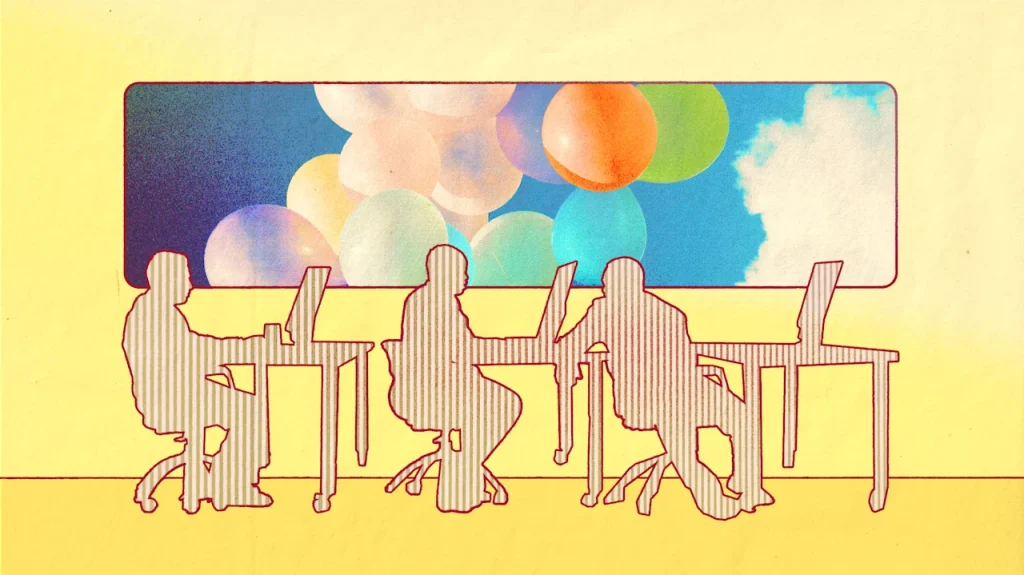
Against that backdrop, the past century, and especially the past two decades, represent a remarkable deviation. Work, at least for a segment of the global workforce, has been reimagined not merely as tolerable but as potentially fulfilling, even pleasurable. Offices began to resemble adult playgrounds. Silicon Valley firms led the charge, offering sushi chefs, kombucha on tap, nap pods, on-site gyms, and curated social events. The rise (and at times weaponization) of “culture” as a corporate asset reframed employment as an experience, not just a transaction. Parallel to this, the expansion of employee wellness programs, flexible schedules, and remote or hybrid work blurred the boundary between professional and personal life.
Work itself also underwent a subtle rebranding. Careers were no longer simply jobs; they became vehicles for identity, purpose, and self-expression. Employees were encouraged to “bring their whole selves to work” in order to seek meaning in what they did, and to expect that their employer would facilitate personal growth. Organizations, in turn, increasingly borrowed from the logic of consumer markets: Employees became internal customers and were offered access to coaching, leadership talks, curated learning journeys, and even quasi-membership communities.
{“blockType”:”mv-promo-block”,”data”:{“imageDesktopUrl”:”https://images.fastcompany.com/image/upload/f_webp,q_auto,c_fit/wp-cms-2/2025/10/tcp-photo-syndey-16X9.jpg”,”imageMobileUrl”:”https://images.fastcompany.com/image/upload/f_webp,q_auto,c_fit/wp-cms-2/2025/10/tcp-photo-syndey-1×1-2.jpg”,”eyebrow”:””,”headline”:”Get more insights from Tomas Chamorro-Premuzic”,”dek”:”Dr. Tomas Chamorro-Premuzic is the Chief Science Officer at Russell Reynolds, a professor of organizational psychology at UCL and Columbia University, and the co-founder of DeeperSignals. He has authored 15 books and over 250 scientific articles on the psychology of talent, leadership, AI, and entrepreneurship. “,”subhed”:””,”description”:””,”ctaText”:”Learn More”,”ctaUrl”:”https://drtomas.com/intro/”,”theme”:{“bg”:”#2b2d30″,”text”:”#ffffff”,”eyebrow”:”#9aa2aa”,”subhed”:”#ffffff”,”buttonBg”:”#3b3f46″,”buttonHoverBg”:”#3b3f46″,”buttonText”:”#ffffff”},”imageDesktopId”:91424798,”imageMobileId”:91424800,”able”:false,”slug”:””,”wpCssClasses”:””}}
There was also, for a time, a distinctly performative ethos: the rise of the “work hard, play hard” culture. Popularized in the late 20th century and institutionalized in consulting firms, investment banks, and later tech companies, it promised intensity offset by indulgence. Long hours would be compensated with team off-sites, lavish parties, and a sense of camaraderie forged under pressure. In theory, it was a bargain. In practice, it often became asymmetrical. The “play” proved episodic, the “work” permanent. As technology dissolved temporal boundaries, the bargain eroded further. Today, for many, the culture has quietly mutated into something less balanced: work hard, then remain on call.
This trajectory would have puzzled John Maynard Keynes, who famously predicted in his 1930 essay “Economic Possibilities for our Grandchildren” that technological progress would reduce the workweek to roughly 15 hours by the turn of the millennium. He was not entirely wrong about productivity gains. What he underestimated was our capacity to convert efficiency into higher expectations rather than greater leisure. Instead of working less, we have chosen—or been nudged—to work differently, and often more.
An unsentimental reality
Yet, as with most utopian projects, the fine print matters. Beneath the surface of kombucha taps and mindfulness sessions lies a less sentimental reality. Many of these initiatives were not purely altruistic but instrumental. Making work more enjoyable can also make workers more productive, more loyal and, crucially, more available. If your office has everything you need, why leave? If your job is your identity, why switch off? The risk is not merely longer hours but a deeper form of entanglement: the emergence of what one might call the spiritual workaholic, someone who does not feel coerced but nonetheless cannot disengage.
At the same time, the standardization of performance has intensified. Metrics, dashboards, and analytics increasingly govern how work is evaluated. Even ostensibly creative roles are decomposed into measurable outputs. Technology has amplified this trend. The smartphone (and for those of you old enough, remember the Blackberry?) ensured that work ed us home. Artificial intelligence now ensures that it s us into our thinking. Tasks that once required judgment are increasingly automated or augmented, often reducing the scope for discretion and experimentation.
The result is a paradox. Work has never looked more enjoyable on the surface, yet many report feeling less engaged, less creative, and more replaceable. Research on job polarization and automation suggests that as routine cognitive tasks are digitized, human labor becomes either highly specialized or increasingly commoditized. Generative AI accelerates this dynamic by making knowledge more accessible but also more interchangeable. When everyone can produce competent output, the marginal value of individual contribution declines.
Measurable benefits
In such an environment, “fun” risks becoming another managed variable, something to be optimized rather than experienced. Worse, it may be crowded out entirely. Efficiency, after all, is not particularly playful. The trade-off between efficiency and humanism becomes acute. As organizations pursue ever greater productivity, they may inadvertently strip work of the very qualities that made it engaging: autonomy, mastery, and social connection.
This matters because, contrary to the historical norm, fun at work is not merely a luxury. A substantial body of research suggests it has measurable benefits.
First, meta-analytic evidence shows that positive affect is associated with higher job performance, particularly in roles requiring creativity and problem-solving.
Second, studies on engagement consistently find that employees who experience enjoyment and interest in their work are more productive and less ly to leave.
Third, research on psychological safety, led by Harvard Business School professor Amy Edmondson, indicates that environments where people feel comfortable and relaxed foster learning and innovation.
Fourth, meta-analyses on intrinsic motivation, such as those by psychologists Edward Deci and Richard Ryan, show that enjoyment derived from the task itself predicts persistence and performance better than external rewards.
However, the desire for fun is not universal. Cultural norms shape how appropriate it is to display enjoyment at work. In some contexts, visible seriousness signals professionalism; in others, it signals rigidity. Individual differences matter as well. Personality traits such as extraversion and openness are associated with a greater desire for stimulation and novelty, whereas conscientious individuals may derive satisfaction from structure and achievement rather than amusement.
Self-assessment
A useful way to think about this is not whether work should be fun, but how much fun one needs from work. Consider a simple self-assessment:
1. Do you feel energized by social interaction and novelty, or drained by it?
2. Do you seek meaning primarily through your career, or outside it?
3. How important is it that your work reflects your identity?
4. Would you prefer a stable, predictable role that enables leisure elsewhere, or a dynamic, immersive role that blurs boundaries?
5. Do you equate enjoyment with immediate pleasure, or with long-term growth and mastery?
Those who score high on the need for alignment between personal identity and professional role are more ly to seek fun, or at least intrinsic satisfaction, in their work. Others may prefer to treat work instrumentally, as a means to fund a fulfilling life elsewhere. Neither approach is inherently superior, but confusion between them can be costly.
What to do
What, then, is to be done? Here, insights from author Dorie Clark’s work on long-term career strategy are instructive. One option is job crafting: deliberately reshaping aspects of your current role to increase autonomy, variety, and meaning. This might involve seeking projects that align with your interests, renegotiating responsibilities, or building relationships that make work more engaging. Research suggests that even small changes can significantly enhance satisfaction and performance.
Another option is strategic career design. Rather than chasing immediate enjoyment, Clark advocates for a longer-term perspective: investing in skills, relationships, and reputation that create future optionality. Ironically, this may involve periods of less enjoyable work in the short term, in service of greater autonomy later. The key is intentionality. Fun, in this view, is not something one stumbles upon, but something one engineers over time.
It is also worth noting that even in environments that are not obviously “fun,” people can often create pockets of enjoyment. Much of this comes down to colleagues. A strong team can transform even routine work into something tolerable, occasionally even enjoyable. d humor, mutual support, and informal camaraderie often matter more than formal culture initiatives. In that sense, fun at work is not always designed from the top down; it is frequently improvised from the bottom up.
For those considering a more radical shift, the question is not simply “What would be fun?” but “What kind of problems do I want to spend my time solving?” Sustainable enjoyment tends to arise not from perpetual entertainment, but from meaningful challenge. As decades of research on flow have shown, people are happiest when they are stretched but not overwhelmed, engaged but not bored.
The AI factor
Has artificial intelligence killed fun at work? Not quite. But it has changed the conditions under which fun can emerge. By automating routine tasks, it has the potential to free humans for more creative and social activities. Yet, if deployed primarily for efficiency, it may instead compress work into narrower, more standardized forms, leaving less room for play.
The future of fun at work, then, is unly to be determined by technology alone. It will depend on choices by organizations about how to design roles, and by individuals about how to engage with them. The historical arc suggests progress: from drudgery to dignity, from survival to, occasionally, satisfaction. Whether it extends to genuine enjoyment remains an open question.
Let us not forget that work may still always be, well, work, as in something we do to get paid, if we are lucky enough. Unrealistic expectations about how much fun one ought to have at work may be the worst enemy of all, and a reliable source of disappointment.
As The Shining reminds us, “All work and no play …” is not just a warning about monotony, but about imbalance.
So, perhaps the real problem is not that work isn’t fun enough, but that we have forgotten to seek, protect, and value the many other sources of fun that life so generously offers beyond it?
{“blockType”:”mv-promo-block”,”data”:{“imageDesktopUrl”:”https://images.fastcompany.com/image/upload/f_webp,q_auto,c_fit/wp-cms-2/2025/10/tcp-photo-syndey-16X9.jpg”,”imageMobileUrl”:”https://images.fastcompany.com/image/upload/f_webp,q_auto,c_fit/wp-cms-2/2025/10/tcp-photo-syndey-1×1-2.jpg”,”eyebrow”:””,”headline”:”Get more insights from Tomas Chamorro-Premuzic”,”dek”:”Dr. Tomas Chamorro-Premuzic is the Chief Science Officer at Russell Reynolds, a professor of organizational psychology at UCL and Columbia University, and the co-founder of DeeperSignals. He has authored 15 books and over 250 scientific articles on the psychology of talent, leadership, AI, and entrepreneurship. “,”subhed”:””,”description”:””,”ctaText”:”Learn More”,”ctaUrl”:”https://drtomas.com/intro/”,”theme”:{“bg”:”#2b2d30″,”text”:”#ffffff”,”eyebrow”:”#9aa2aa”,”subhed”:”#ffffff”,”buttonBg”:”#3b3f46″,”buttonHoverBg”:”#3b3f46″,”buttonText”:”#ffffff”},”imageDesktopId”:91424798,”imageMobileId”:91424800,”able”:false,”slug”:””,”wpCssClasses”:””}}
Sumber Artikel:
Fastcompany.com