Text settings
Story text
SmallStandardLargeStandardWideStandardOrange
* Subscribers only
Learn more
I don’t The Witcher 3: Wild Hunt. I’m sorry to disappoint you. I know it’s confusing, and I hope you will still respect me.
I had to say that a lot back in 2015. When the game first came out, the community of critics and enthusiasts I was a part of went bananas for it, much in the same way the current crop of journalists and influencers rallied around Clair Obscur: Expedition 33 in 2025—another game that didn’t really work for me, if I’m being honest.
The Witcher 3 was showered in accolades and awards, and it seemed every Twitter conversation was about it. There were memes all over Reddit about how no other game could live up to it, plus lengthy essays from games journalists about just why it was so incredible. “Game of the Year” awards rained from the proverbial sky.
Meanwhile, I tried it and found it a slog. It took me years to finish it, because I kept losing interest, but I felt I had to force myself to keep going in order not to be out of the loop.
Those who knew me found this baffling. “You love RPGs this,” they’d say. “Two of your favorite recent games are Skyrim and Mass Effect. This is the best of both of those. What’s the problem?” (I’m paraphrasing, but I got several versions of basically this.)
The thing is, games are so diverse in focus these days that “I love open world RPGs” can mean a lot of different things.
Creating a character vs. playing a character
Every RPG I have ever truly loved was a game in which I made my own character.
Filling out that blank character sheet with a vision for the identity I wanted to inhabit was by far my favorite step when I played D&D, GURPs, Traveller, Shadowrun, and other tabletop RPGs when I was younger.
To me, the overriding point of a role-playing game is defining your role and inhabiting it. It’s creating my own alter ego to meet a certain fantasy, and seeing where inhabiting it takes me.
The Witcher 3 puts you in the shoes of Geralt of Rivia, a man with decades of history, the subject of multiple games, books, and a TV show. Geralt is as well-defined as they come, and while you get to make some choices for him, they still reflect the core of who that man is.
It’s genuinely impressive that The Witcher 3‘s writers managed to give the player meaningful choices within this framework. Each branching dialogue choice taps into different aspects of and conflicts within Geralt’s personality and values—the writing in The Witcher 3 is far above par, I’ll give it that. But ultimately, it’s just Geralt through different lenses, not an identity formed by the player.
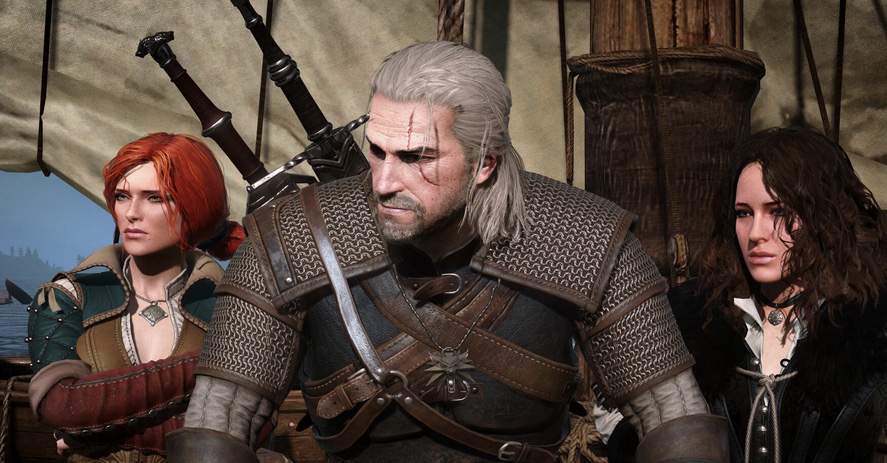
Geralt is indisputably a rad dude. He’s just not my rad dude.
Credit: CD Projekt Red
Geralt is indisputably a rad dude. He’s just not my rad dude. Credit: CD Projekt Red
Even Cyberpunk 2077, a game made by The Witcher 3 developer CD Projekt Red that I do love, offers a sort of middle path between these approaches. Yes, there is a named protagonist, and yes, they have some hints of a predetermined personality in much of their dialogue. But the player can customize how they look and define their background, and that background gives the player very different dialogue options. The major choices in the game reflect fundamentally different values, not just conflicts within one person with an otherwise consistent worldview.
The same is true for Mass Effect 3‘s protagonist, Commander Shepard. You decide what they look , you pick their background, and you get to make a very meaningful impact on who they are through your dialogue choices, play style, and more.
Some open-world RPGs take one path here, and some take the other. It’s OK to only one of them, regardless of what others may value.
Power fantasy vs. earned competence
Geralt is, frankly put, a total badass. The man has been training for his entire life to face off against the most terrifying monsters around, and his mutations put him in a different class from most people.
Part of the appeal of The Witcher 3 is in being that badass. I understand that appeal very well. But you know where this is going: it’s not what I’m looking for from my RPGs.
I enjoy the transition from nobody to somebody, from novice to master.
The Witcher 3 gives you ways to specialize Geralt, strengthening powers and abilities he already has, but he is most definitely not starting from zero. It’s not just because The Witcher 3 is a sequel, either. The game’s designers are intentional about making sure you feel the power fantasy in full force from the very beginning.
So again, we have an example of a variation within a genre. To outsiders, Elden Ring (another favorite game of mine) and The Witcher 3 might look similar—grimdark open-world roleplaying games with melee combat, right? But one has you going from zero to hero, and the other has you going from hero to even more heroic hero.
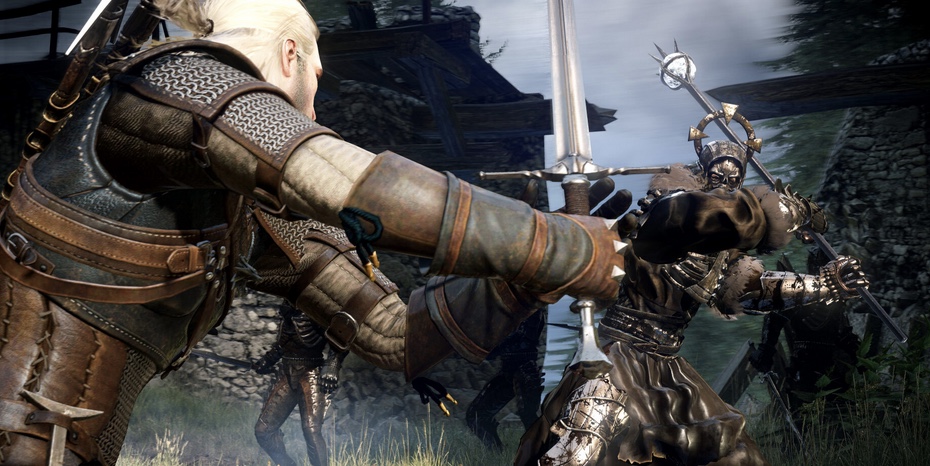
Geralt is powerful, so the power fantasy is strong.
Credit: CD Projekt Red
Geralt is powerful, so the power fantasy is strong. Credit: CD Projekt Red
You may feel differently, but it’s the journey, not its destination, that matters to me.
All this is to say it’s OK to one flavor of something, and not the other. You can orange, but not lemon, or vice versa—you don’t have to categorically say “I citrus,” and no one should expect liking one to mean you the others. (Not that any well-adjusted person would, but hey, gamers are gamers.)
The value of knowing what you
On gaming subreddits, you’ll often see folks lamenting the state of things in the Twitch/YouTube/TikTok/Instagram side of the community. There’s a strong sentiment that people who play games no longer form their own opinions, as they’re just parroting what influencers think.
I think there’s some truth to this, though it’s more complicated than just, “influencer says this, so I believe it too.” There are deeper social dynamics around community belonging and algorithms at play. But the point I want to make here is that this phenomenon is not entirely new. As long as there has been gaming media, there have been anointed games that everyone who’s part of the club is expected to .
The Witcher 3 was one of those games. But if you take one thing away from what I’m writing here, I want it to be this: genre itself, those media and social dynamics flatten taste into something much simpler than it really is, and it’s important to think about what you and why, not focus on what you think you should .
I know I’m preaching to the choir when it comes to the Ars audience, but I, at least, need a reminder sometimes. I mean, I almost fell for it again; I spent $70 on this year’s hyped open-world RPG Crimson Desert because of all the buzz, and bounced off it immediately for many of the same reasons I didn’t The Witcher 3—all of which I knew about before I clicked the “buy” button. At least this time I didn’t play the game for 100 hours because I felt I should it when I really didn’t.
Playing The Witcher 3 today
Are you someone who s The Witcher 3? Good for you! I’m glad. And if you haven’t played it but you read this and said to yourself, “Actually, I prefer the power fantasy and the authored character,” that clearly bodes well for your potential enjoyment of the game.
You can nab it on GOG and other storefronts. In fact, it’s 80 percent off on GOG right now (so it’s $7.99). That’s a good deal for 100-plus hours of entertainment.
Unsome older games we discuss in this series, there’s no need to install a bunch of community patches to get it running on this system. Plus, it’s been well-maintained by its developers; it got a major free update with new features ray-tracing just a couple years ago.
Give it a shot, and if you it more than I did, I’ll be glad to hear it—just don’t tell me it’s baffling that I’m not into it!
Some quick C:ArsGames housekeeping
First, a quick apology: It’s been almost two months since the last entry in this ostensibly monthly series. For those who’ve been ing the series closely, the Ars staff is sorry for the long gap! This series is dessert for us, not the main course; we love doing it, and we get to it when we can, but when things in the wider tech world get busy, it can sometimes end up on the back burner. We’re still committed to keeping it going, though—hopefully at a more consistent pace.
That brings me to a question, though. Generally, these posts have centered on PC-focused games from the 90s, but we’ve had a couple of examples of somewhat more recent games—The Witcher 3 and Dishonored both came out in the past 15 years.
For those ing along at home: are you interested in slightly newer games that, or would you prefer the series mostly stick to that bygone golden age of ware floppies, Voodoo cards, and big boxes at Software Etc? If you have an opinion, let us know!
Samuel Axon Senior Editor
Samuel Axon is the editorial lead for tech and gaming coverage at Ars Technica. He covers AI, software development, gaming, entertainment, and mixed reality. He has been writing about gaming and technology for nearly two decades at Engadget, PC World, Mashable, Vice, Polygon, Wired, and others. He previously ran a marketing and PR agency in the gaming industry, led editorial for the TV network CBS, and worked on social media marketing strategy for Samsung Mobile at the creative agency SPCSHP. He also is an independent software and game developer for iOS, Windows, and other platforms, and he is a graduate of DePaul University, where he studied interactive media and software development.
Sumber Artikel:
Arstechnica.com