

 Ulet Ifansasti/Getty Images
Listen to this commentary Please log in to listen to this commentary 0:00 / 0:00 Audio unavailable
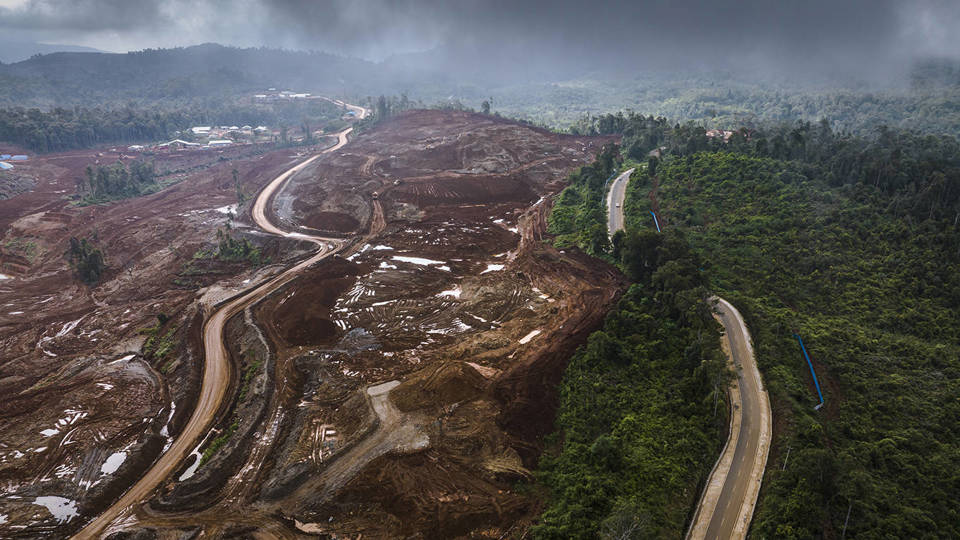
These agreements are sidelined, however, when countries pursue bilateral agreements that prioritize market access over all else. Consider the uneven treatment of nickel and palm oil in the EU–Indonesia Comprehensive Economic Partnership Agreement. The European Union has strict sustainability standards for palm oil, but not for nickel, even though both sectors can cause significant social and environmental degradation.
The best way to put principles into practice is to consolidate Global South policy and advocacy networks. This would enable policymakers, civil society, and local communities to their experience with mineral extraction and processing and their proposals for making the sector more equitable and environmentally responsible.

Secure your copy of PS Quarterly: Slopocalypse Now
AI-generated content already accounts for half the articles published online, and not even digital forensics experts can tell what’s real anymore. Can those still offering a humanistic vision of online life make themselves heard over the din?
SUBSCRIBE & $50
There is a genuine desire among policymakers in the Global South to the lessons learned from their successes and failures. The Natural Resource Governance Institute’s South–South Transition Minerals Learning Platform has facilitated the dissemination of policy insights among government officials from Indonesia, Chile, Zambia, the Democratic Republic of the Congo, and other countries. While they the same goal—to build more inclusive, resilient, and prosperous societies using mineral wealth—the platform enables a deeper understanding of how variations in commodities, domestic political economies, and value-chain positions require different strategies, rather than a one-size-fits-all approach.
Equally important are transnational or transcalar advocacy networks that connect civil-society groups across the Global South. They, too, can provide a platform for sharing experience and knowledge, while also strengthening collective action and extending accountability beyond national borders. By producing wide-ranging evidence of social and environmental abuses linked to mineral extraction, smelting, and processing, domestic advocacy actors can bypass governments and companies that do not adequately support local communities and directly seek out international allies to apply outside pressure.
Here, again, Indonesia provides a useful example. The prominent Indonesian NGO WALHI, together with Friends of the Earth Japan, mobilized more than one hundred organizations to urge Vale Indonesia’s holders to act on alleged human-rights abuses at the Sorowako nickel project. Some holders, including Vale, Sumitomo Metal Mining, and Mitsui & Co., responded by exerting pressure on the company when the government failed to do so effectively.
Similarly, campaigners from Mighty Earth, Climate Rights International, and Global Witness attracted investors’ attention by alleging widespread abuses in Indonesia’s nickel extraction and processing industry. They urged electric-vehicle battery and car producers to comply with social and environmental standards and due-diligence obligations. Weda Bay Nickel has since expressed interest in complying with Initiative for Responsible Mining Assurance standards, and some automakers have imposed stricter requirements on nickel suppliers.
This global pressure—which includes Publish What You Pay Indonesia raising concerns about the country’s nickel governance at the 2025 OECD Forum on Responsible Mineral Supply Chains—has forced the Indonesian government’s hand. After assessing the gap between its regulatory framework and three global standards, the government is preparing ESG (environmental, social, and governance) guidelines to help firms identify which Indonesian regulations meet the requirements of global standards in the nickel supply chain.
Advancing inclusion in transition-mineral supply chains—the goal of the IGF meeting—requires strategies for translating lofty declarations into concrete action. This can be achieved by bringing together and strengthening Global South policy and advocacy networks. Existing South–South cooperation mechanisms can expand their reach to facilitate policy learning on critical minerals, while domestic civil-society groups can deepen their global connections to put a spotlight on mining-related environmental destruction and human-rights abuses. Many pieces of the puzzle are already in place; now it is time to put them together.
Help us strengthen our reporting on global health and development by taking a short survey.
Take Survey
Featured
-
Distorted Intelligence at the AI Frontier
Sep 28, 2026 Daron Acemoglu
-
Is Another Eurozone Debt Crisis Looming?
Sep 30, 2026 Desmond Lachman
-
What Killed Liberalism?
Sep 25, 2026 Gene Frieda
-
An EU–Canada Partnership Against Coercion
Sep 28, 2026 Alberto Alemanno
-
The Great AI Gamble
Sep 25, 2026 Harold James
https://prosyn.org/ypwSiEA
It appears that you have not yet updated your first and last name. If you would to update your name, please do so here.
Please wait, fetching the form
Please wait, fetching the form
Please wait, fetching the form
Please wait, fetching the form
Please wait, fetching the form
Please wait, fetching the form
Please wait, fetching the form
Sumber Artikel:
Project-syndicate.org


