
Extreme weather, aging infrastructure, and unprecedented electricity demand being driven by data centers have forced many utilities to explore options that can effectively balance long-term reliability with immediate affordability. Products the ones that G&W Electric showcased at DTECH 2026 are designed to do just that for utilities of all types and sizes, but exactly what that looks in terms of utilizing a specific piece of technology or system depends on the situation, need and ultimate value proposition.
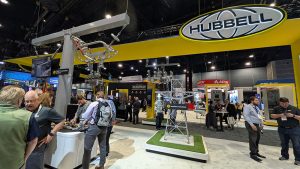
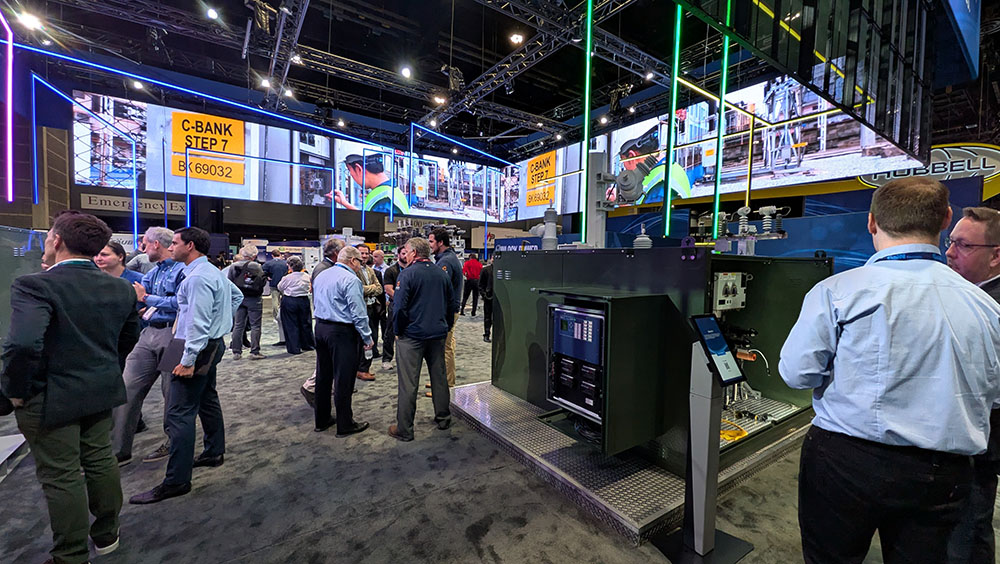
Attendees at the 2026 IEEE PES T&D Conference & Exposition were able to explore those specifics at the G&W booth, where they showcased many of those same products. While the Viper recloser once again drew major interest, conference program discussions that were centered on reliability and affordability gave the G&W team a chance to detail how their suite of products has been specifically engineered to resolve these issues.
Focusing on Longevity with Customized Solutions
Kyle Stromberg, Global Product Line Manager at G&W Electric, mentioned that to effectively address challenges with reliability and affordability, utility teams need to explore them as part of a bigger shift that’s tied to longevity. In a sector facing a significant labor shortage, the most affordable equipment is often the gear that requires the least amount of human intervention over its lifespan.
“Conversations we have with our utility and C&I partners always seem to come back to an element of ‘we don’t have enough people,’” Stromberg said. “If infrastructure can reliably last with little or no maintenance, that’s a massive advantage.”
While high-performance equipment can carry a higher upfront cost, Stromberg argues that the real-world performance during harsh weather events and extreme temperature swings will prove the value proposition. By investing in resilience early, utilities can avoid the catastrophic costs of grid instability, which have caused incalculable damage.
However, G&W recognizes that not every utility has the sort of budget to make what can be a significant investment in these kinds of systems and solutions. When questions about budget begin to dominate the conversation, answers can be related to adjustments that G&W can make with the capabilities of a given system or tool.
“Not every recloser is designed with the same feature set,” Stromberg told Factor This. “Some are designed intentionally with a price point that’s maybe a little bit more affordable, but lower on some of the automation bells and whistles. We have customers that want every high-accuracy sensor and predictive grid technology we have available, but we can also put together options that don’t have all of those capabilities built in.”
When tools are customizable, they integrate into a utility’s existing workflow rather than disrupting it. This approach to technology doesn’t just improve adoption, but can also strengthen grid reliability in a way that is quantifiable.

Grid hardening at an exponential rate
With nearly 90% of energy infrastructure approaching or exceeding its life expectancy in the next decade, the focus is shifting toward grid hardening that will require hardware updates and tools that can better support what it means to serve larger loads. However, this massive overhaul is also one that’s set to be achieved through a distinct digitalization process.
Stromberg envisions a future where traditional switching and protection assets will evolve and be more sensor-driven. By adding relatively inexpensive sensors and instrument transformers, a standard switch can become something much more powerful.
“Think about those senses and transformers as intelligence nodes that can look out and provide diagnostic information around what’s happening with that equipment or in the environment,” Stromberg said. “Once all this data comes together and it is used effectively, we’re going to see the grid harden at an exponential rate.”
That improved awareness is connected to one of the most significant developments in the sector, which is the full shift from reactive to predictive maintenance. It’s a shift that G&W’s recent acquisition of Safegrid further highlights, as it will add more grid monitoring capabilities to G&W’s portfolio. The acquisition comes at a time of accelerating demand for grid intelligence that can identify minor issues before they become costly problems, which could change the paradigm around system-level challenges.
“Safegrid is a really cool hardware and software solution stack that allows for the identification and location of faults with high accuracy,” Stromberg mentioned. “Predictive fault technologies mean that a dollar’s worth of preventative maintenance can avoid what could otherwise be a hundred-dollar problem, and you quickly see how something that scales up and out to further enhance reliability.”
Pilot Programs Define the Path Forward
The surge in data center construction, driven by the energy demand connected to AI, has introduced a very different load structure to the grid. It’s just one of the many types of unique challenges that utilities of all types are facing. For Stromberg, the best way to sort out answers for all of these challenges is through pilot programs that can be defined by a variety of G&W products, but the effort is as much about process as it is technology.
The industry’s willingness to test alpha and beta technologies has shortened development cycles significantly, moving away from the years-long waiting periods of the past. As efforts to digitalize processes and harden infrastructure become standards for today rather than potential future projects, utility teams need to forge partnerships with organizations that can support these types of pilot programs in both the short and long term.
“We want to be known as an organization that has resilient equipment that can be foundational to pilot programs,” Stromberg said. “These programs can define larger efforts to harden the grid, but can also include the sensors and help identify the insights needed to be more proactive. Regardless of the need or approach, we have the solutions that are required to keep the electricity flowing.”
Sumber Artikel:
Renewableenergyworld.com