Text settings
Story text
SmallStandardLargeStandardWideStandardOrange
* Subscribers only
Learn more
It’s easy to criticize US automakers and their tepid approach to electric vehicles under the current administration and the expiration of the EV tax credit. It’s also easy to look at the rest of the world’s embrace of EVs and wonder if the US is entering a “Malaise 2.0” era. Which is why GM wants the world to know that it is still focused on its end goals of electrification, autonomy, and improving vehicle quality while reducing development time.
At this year’s GM Forward event, company executives announced that its hands-off, eyes-off Super Cruise technology will expand across the lineup and be available on nearly every vehicle. This will include the pickup trucks and the crossovers, and not just the Escalade IQ that it was announced for last year.
Sterling Anderson, GM’s head of product, said the company is testing this technology to the tune of 1 million miles (1.6 million km) a month in both the virtual and real world. The goal is that not only would the vehicle be able to take you places, but it could go and do things for you.
That sounds rather dystopian. But Anderson told Ars in an interview that once you realize what your vehicle is capable of doing (beyond the paradigm of being a car to go places), it opens up a world of convenience that might be hard to envision right now. He’s not talking about an Optimus-style robot that’ll do your laundry, but a tool that you use every day that expands to do more things.
OnStar is your new PA
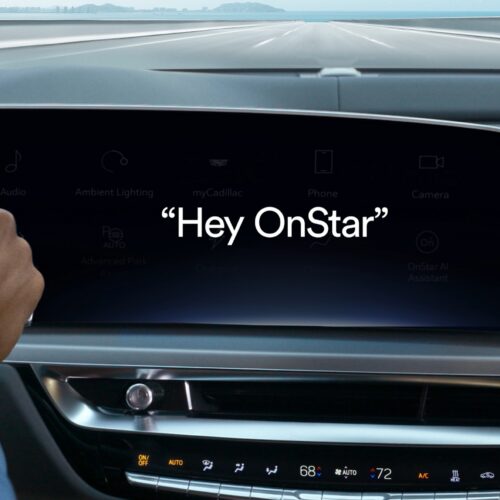
GM’s newly announced OnStar AI will play a role. “Imagine you worked late, and you get in your car to go home,” he told us. “Your car might remember that you ordered takeout from a restaurant recently that you frequent and . The car could prompt you and place a pick-up order for you, which will be ready when you arrive to pick it up.”
Trust is the key here, and Anderson reiterated that several times, suggesting that a car might be a more trusted piece of technology than a mobile phone. “People have a relationship with their cars that they don’t have with other things,” he said. “If your phone randomly suggested your favorite restaurant, it might give you pause, but if your car did so within the appropriate context you might be more willing to accept that.”
OnStar AI will do more than just learn your habits; it will be able to help you better understand and better use your vehicle, we’re told. For example: a driver hears the car beep but doesn’t know what the alert was for. In this case, they could ask OnStar and it would be able to tell them—for example, a speed limit warning. Being a specialized AI trained specifically on the details of the car, it can be integrated in a way that other models, Google’s Gemini, cannot.
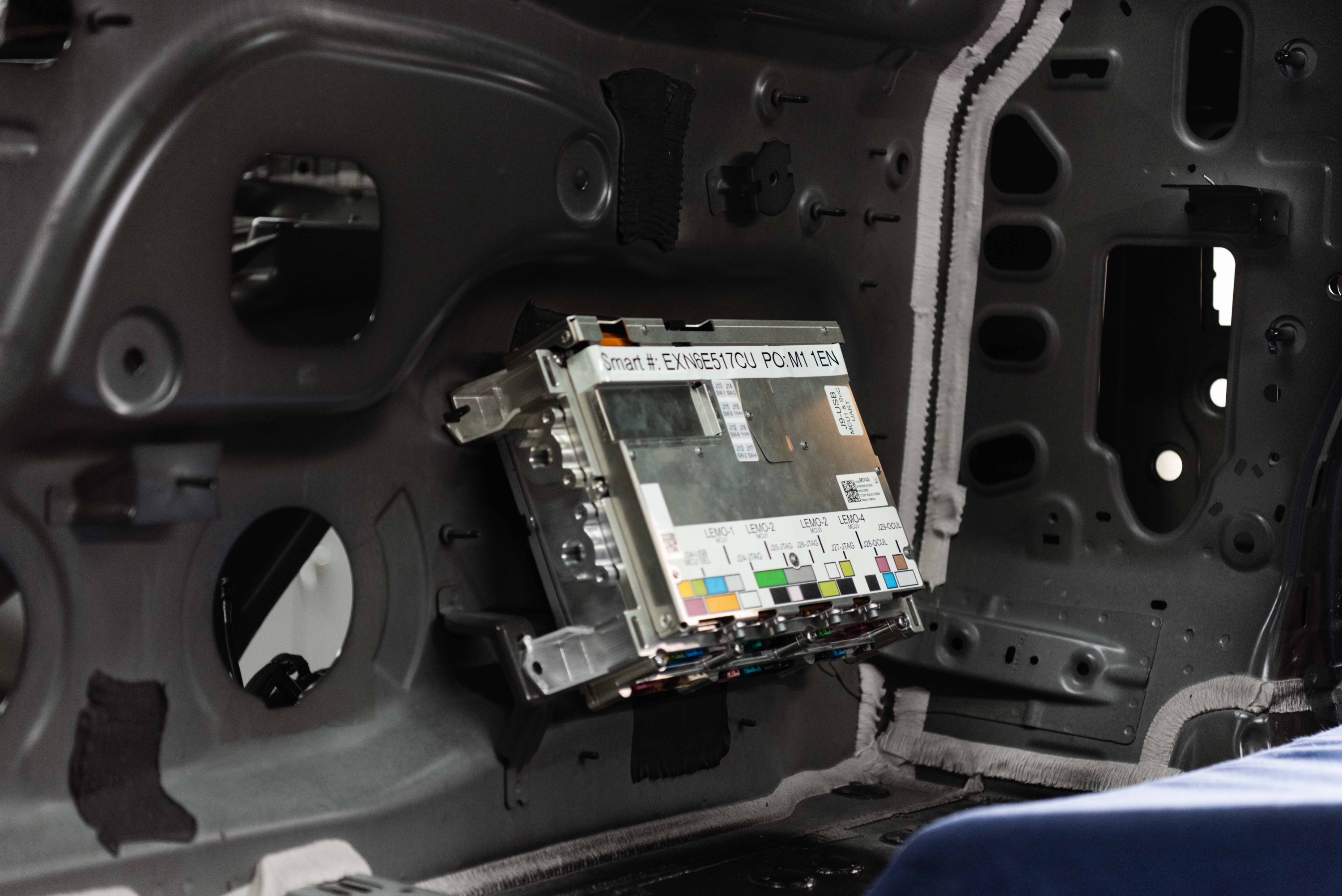
GM’s new central compute module installed in a car.
Credit: GM
GM’s new central compute module installed in a car. Credit: GM
Thanks to new compute on board, announced at last year’s Forward, the car will be able to handle much of that processing locally without requiring a connection to the cloud at all. But a cloud connection could improve the drive or make it safer. For some time now, automakers and suppliers have promised systems that crowdsource data to infer and predict road conditions—if you’re driving through a snowy area, and the cars in front of you have had traction control events, you could receive a warning to be extra careful as you approach.
GM also wants to keep customers within its own ecosystem. Imagine a two-car, two-GM OnStar AI household, and you’re late picking up your child from practice. Here, OnStar AI could look and see your spouse is actually closer, swap roles, and re-direct you to the takeout place to pick up dinner. OK, it’s a very specific use case.
Can you trust it?
Trust continues to be the key. Anderson knows that must be earned, and trust is difficult to get back if it’s broken.
His approach is to put that customer trust first in what he does. For example, GM’s new infotainment system will have the ability to record from the cameras as a dash cam and store that video. And it can upload that video to GM’s cloud to access anywhere. But it is end-to-end encrypted, meaning that when it hits GM’s servers it’s in a format that GM can’t read. If law enforcement wanted to view the video, GM wouldn’t be able to help because it could not decrypt the video.
That is the type of trust that is absolutely needed when dealing with this type of personal data, because there is a convenience to a lot of this. But the opportunity for that data to be misused is also there—it wasn’t too long ago that GM was found to be selling customers’ data, often without their knowledge, to insurance companies.
We’ll want to experience GM’s new attitude in practice, of course, but hearing an automotive executive directly address that concern head-on was refreshing.
Car, take the wheel
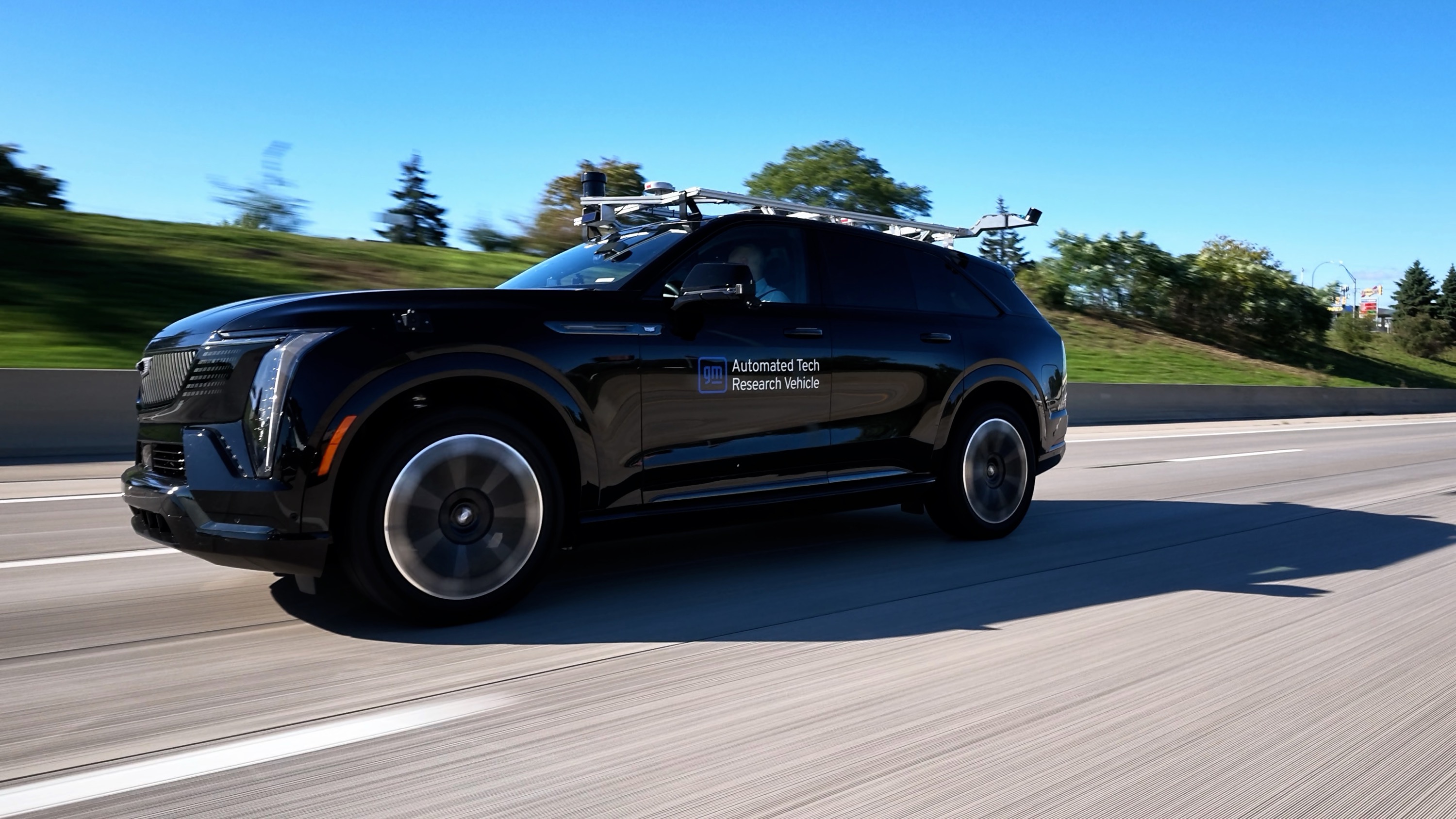
GM might have shuttered Cruise and mothballed the robotaxis, but it’s still working on autonomous vehicles.
Credit: GM
GM might have shuttered Cruise and mothballed the robotaxis, but it’s still working on autonomous vehicles. Credit: GM
This all leads into the fully autonomous functionality that GM is working on. Ars also spoke with Rashed Haq, VP of Autonomous Vehicles at GM, about the current state of the level 4 technology, and more importantly, when it’ll be safe enough for customers to use.
“We look at two key factors, safety and roadcraft,” Haq told me.
Safety obviously includes the vehicle’s occupants, but also the general public. And that requires millions of miles of testing in the real world but also digitally. Automakers GM will never be able to prepare for every scenario, but it will combine training data with an open vocabulary to assess what information is there and make a driving decision based on that. Haq also reiterated the company’s expectation that when the car is driven by the computer, the responsibility falls on GM and the computer if something goes wrong due to a malfunction.
The second key here is roadcraft. That means making sure that the vehicle isn’t creating a hazard or problem for other vehicles on the road. You’ve ly seen videos where Waymo vehicles are all crowded on a street blocking traffic: That’s not something GM wants its cars to do.
Eventually, all of this leads back to the idea of a car working for you for tasks that aren’t just driving places. Your car could go pick up your dry cleaning, or at least drive there and wait while someone comes out and deposits the clothes inside it. You could ride to school with a child, both sitting in the back seat, reclaiming some time together because the car is doing the mundane task of driving.
It’s an interesting idea and will only happen if consumers trust GM and their vehicle enough to do that, something we won’t know until closer to that technology maturing.
LMR batteries
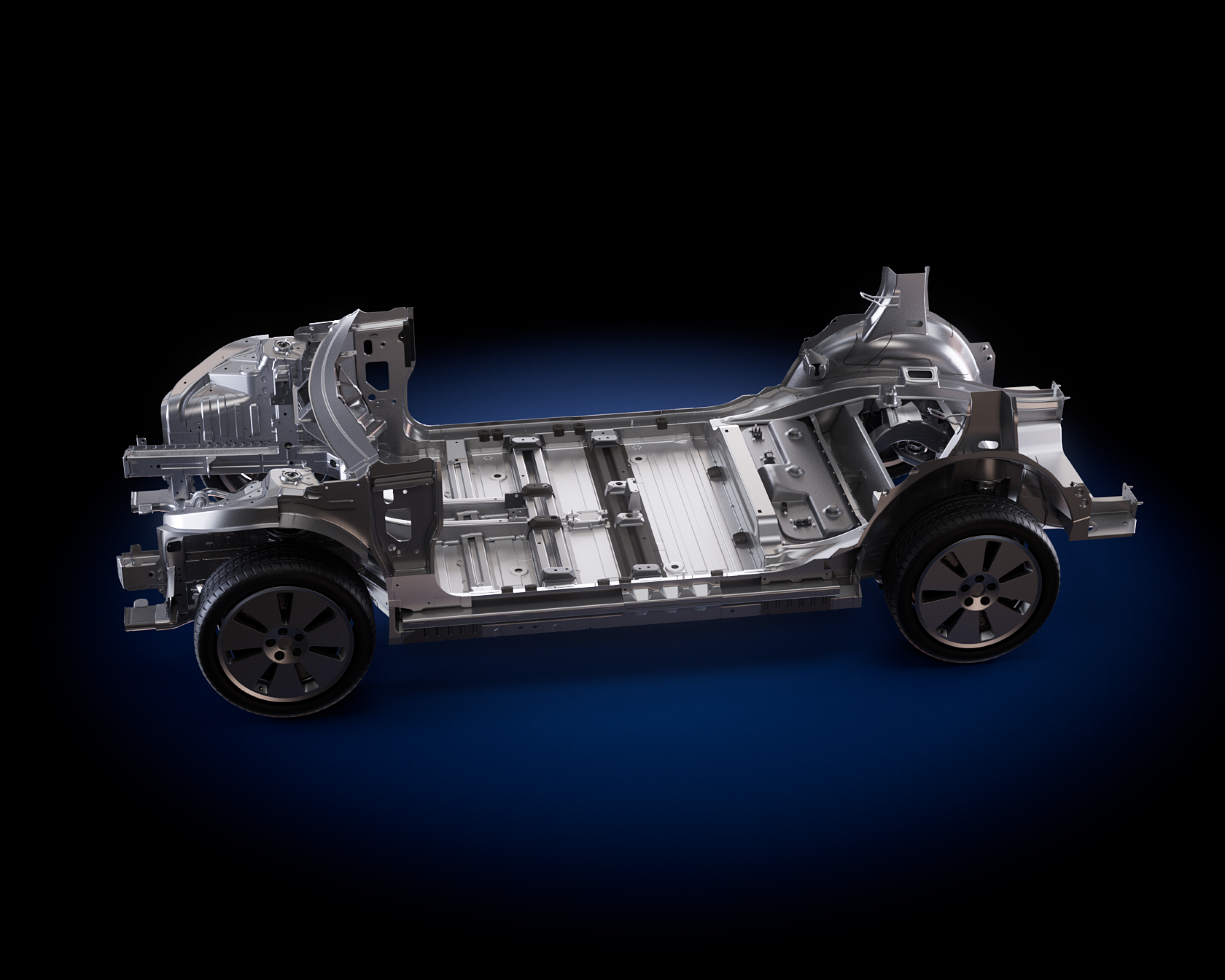
A render of GM’s Gen-4 EV skateboard.
Credit: GM
A render of GM’s Gen-4 EV skateboard. Credit: GM
GM also announced its Gen-4 EV architecture based on LMR battery technology. As we learned last year, the new lithium manganese-rich battery chemistry promises energy densities close to nickel-manganese-cobalt but without that expensive cobalt, making their cost closer to that of lithium iron phosphate (LFP) chemistry cells.
A 30 percent cheaper battery should help GM offer a wide variety of EVs, hopefully including some affordable models, the now-limited-run Bolt.
If GM can also deliver affordable autonomy, built on a foundation of trust and safety, it’ll be a unique offering from a US automaker and will put the company in a better position to take on the challenges from global competition.
Sumber Artikel:
Arstechnica.com