

Ford Motor is electric
A little over three years ago, Ford secured a license from China’s Contemporary Amperex Technology Co., or CATL, which permits Ford to manufacture batteries using CATL technology. The original plan, of course, was to make these batteries for Ford electric vehicles (EVs). But now that EV demand in the U.S. has collapsed, and demand for electrical power to run artificial intelligence (AI) data centers has exploded, Ford has struck upon a new idea for how to use its technology license:
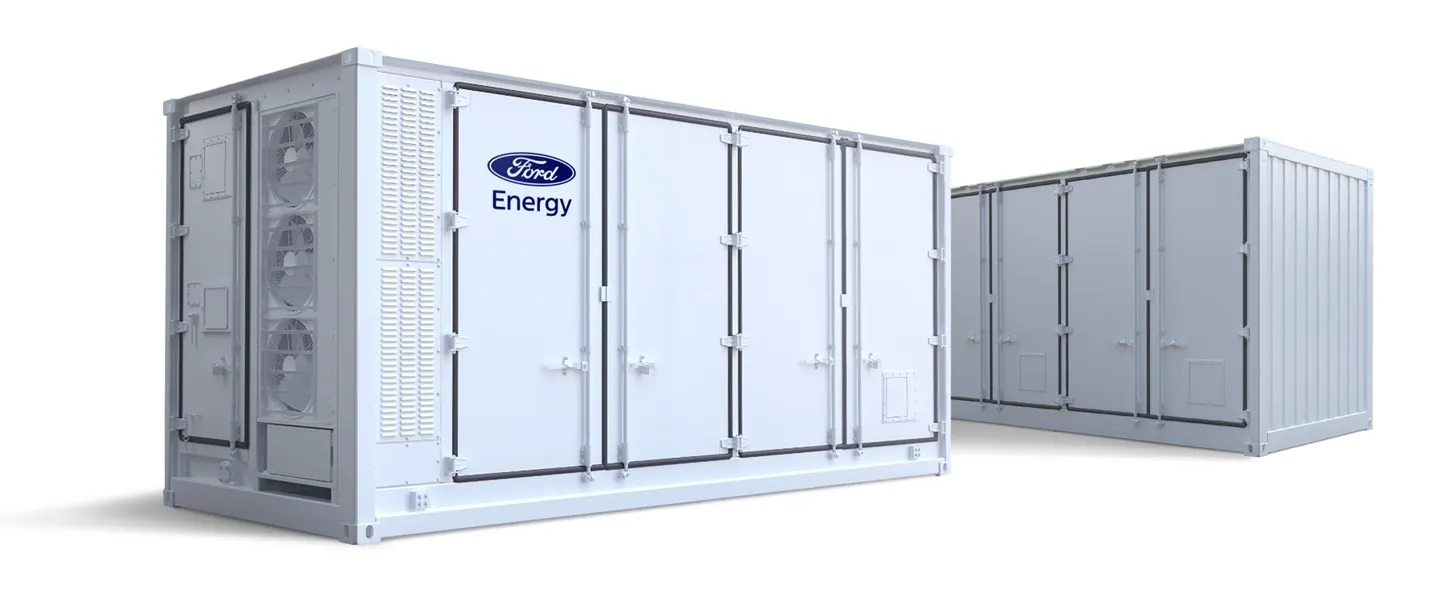
Ford will manufacture batteries to store electricity for use by data centers and AI semiconductor factories.
Ford announced the plan in January 2026, promising to build batteries at factories in Kentucky and Michigan, and use them to create a “battery energy storage business.” Production would begin in mid-2027, rapidly ramping to produce 20 gigawatt-hours of batteries annually and generating as much as $5 billion in new energy storage revenue by 2030.
Wall Street already loves the idea. In mid-May, Morgan Stanley predicted energy could generate between $500 million and $600 million in annual operating profit for Ford.
Expand

NYSE: F
Ford Motor Company
Today’s Change
(0.65%) $0.09
Current Price
$14.05
Key Data Points
Market Cap
$56B
Day’s Range
$13.73 – $14.13
52wk Range
$10.42 – $17.78
Volume
1.6M
Avg Vol
57.9M
Gross Margin
7.81%
Dividend Yield
4.27%
General Motors charges in
It was this prediction, by the way, that sparked Ford stock’s amazing run last month — and it seems the lesson wasn’t lost on Ford archrival General Motors (GM 0.36%). Last week, GM announced it has a few energy ideas of its own.
GM’s first idea isn’t exactly original: “vehicle-to-grid” electricity in which owners of GM EVs can plug them into the grid to support the grid during peak demand — essentially a system of distributed energy storage. GM said last week it is seeking to partner with utility companies on such a project and is already in talks with utility companies in California and Michigan.
Separately, GM is partnering with privately held Redwood Materials to reuse or recycle old EV batteries for utility-scale energy storage.
Finally, GM said it’s working on a new battery chemistry that centers on more common (and cheaper) sodium rather than lithium. The new sodium-ion technology has other advantages over lithium-ion batteries — not requiring cooling to operate at full efficiency, for example — and may also be simpler and more reliable. GM says it’s partnering with Denver-based energy storage start-up Peak Energy to produce sodium-ion batteries beginning sometime after 2028.
This all sounds a bit more scattershot than Ford’s simple approach: Build a factory to manufacture batteries, then assemble those batteries into energy storage systems. Then again, the more bets GM makes, the more chances that one of them may strike it rich!
Expand

NYSE: GM
General Motors
Today’s Change
(-0.36%) $-0.29
Current Price
$79.29
Key Data Points
Market Cap
$71B
Day’s Range
$78.94 – $80.95
52wk Range
$47.63 – $87.62
Volume
18.9M
Avg Vol
7.6M
Gross Margin
6.10%
Dividend Yield
0.83%
How rich, exactly?
Wall Street’s optimism aside, though, how does the math on all this work?
Let’s take Ford’s estimated “$5 billion” in 2030 battery energy storage revenue, for example. According to data from S&P Global Market Intelligence, Ford currently earns about a 0.8% operating profit margin on its revenues, implying $5 billion in extra revenue might earn Ford an extra $40 million.
That’s hardly a large payoff for a new business that will take five years to build!
GM’s 6.6% operating profit margin, in contrast, seems to offer more potential for profit should any of the company’s several energy bets pay off. Still, there’s the question of whether GM is better advised to keep earning 6.6% margins by selling trucks or try to earn even more by selling energy storage? How good a bet is that?
For context, consider the bet Tesla (TSLA +1.18%) made back when it began its own “energy generation and storage” business by buying SolarCity back in 2016. Over the past decade, this business has grown from $1.1 billion in annual revenue to $12.8 billion while also generating very respectable profit margins. In 2017, Tesla EGS earned a 21.7% gross profit margin that has since grown to nearly 30% in 2025.
Long story short, Tesla’s energy business today generates nearly twice the gross margin of its EV business. If Ford and GM can accomplish anything similar, it should be well worth the effort.
Read Next
•By Daniel Miller
Why GM’s Newest Strategy Could Top Rival Ford

•By Jeremy Bowman
Best Quantum Glass Battery Stocks to Buy in 2026

•By Matt DiLallo
How to Buy Tesla Stock (TSLA) in 2026

What Companies Does SoftBank Own?

About the Author

Rich Smith is a contributing Motley Fool defense and stock market analyst covering publicly traded and emerging companies in defense, space, aerospace, and other sectors. Prior to The Motley Fool, Rich practiced international corporate law for Clifford Chance in Russia, and for the Russian-Ukrainian Legal Group in Moscow, Kyiv, and Washington, D.C. He holds a bachelor’s degree in international relations from the College of William & Mary, a law degree from the University of Baltimore, and a language certification from the International Institute of Russian Language & Culture in Tver, Russian Federation. The Globe and Mail once featured him as “one of the best stock pickers since 2009.”
Stocks Mentioned

General Motors
NYSE: GM
$79.29
(-0.36%)-$0.29

Motley Fool Stock Advisor’s Latest Pick
—% Avg Return

Ford Motor Company
NYSE: F
$14.05
(+0.65%)+$0.09

Tesla
NASDAQ: TSLA
$401.06
(+1.18%)+$4.68
*Average returns of all recommendations since inception. Cost basis and return based on previous market day close.
Sumber Artikel:
Fool.com

