

 Rober Solsona/Europa Press via Getty Images
Listen to this commentary Please log in to listen to this commentary 0:00 / 0:00 Audio unavailable
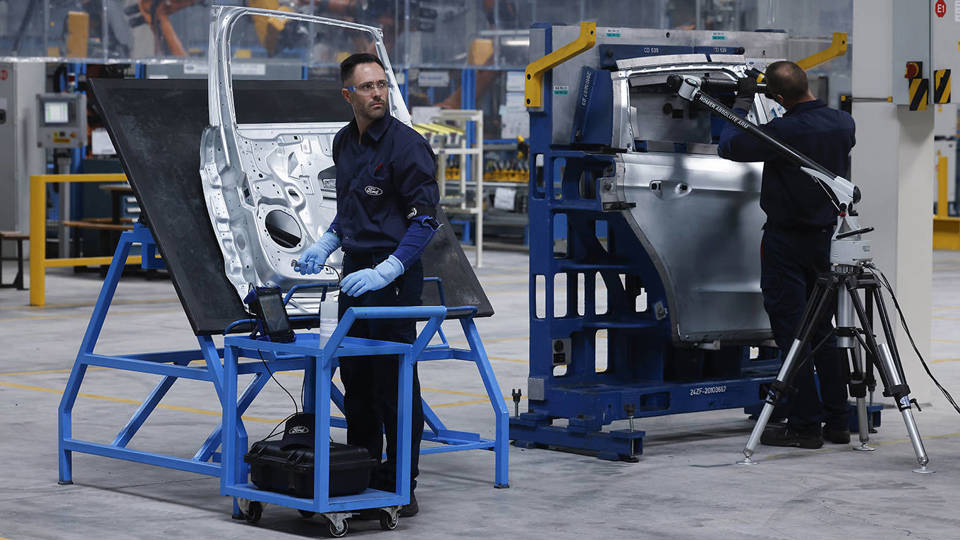
For European firms, electrification is synonymous with modernization and productivity, giving them an edge in a highly competitive global economy. While fossil-fuel volatility raises operating costs and can even force temporary production pauses, electrification offers more stability and affordability. True, it requires upfront investment in new processes and infrastructure, such as industrial heat pumps and electric furnaces. But the returns are worth it. Heat pumps, for example, are 3–4 times more efficient than their fossil-fuel counterparts.
The same logic applies to citizens. Purchasing an EV or a heat pump might be expensive, especially amid a cost-of-living crisis, but the benefits are almost immediate. Notably, the average driver can almost €900 in fuel costs per year by switching to an EV. Equipping low- and middle-income households with clean-energy technologies can insulate them from the current price hike and future shocks.

Sharpen your perspective
A PS Digital subscription brings you cutting-edge analysis of the forces shaping markets, politics, and power. This back-to-school season, give one to a student in your life, or claim one for yourself, for only $50 for your first year.
Subscribe for $50
The EU has all it needs to accelerate electrification. Europe’s clean-tech sector is scaling up to the point that it can meet the bloc’s needs. More than two-thirds of the bloc’s electricity is decarbonized, and about 85 gigawatts of solar and wind capacity were added last year. Embracing electrification has the added benefit of enhancing the EU’s industrial base, from France’s battery valley and industrial heat-pump makers in Italy and the Czech Republic, to Poland’s burgeoning solar-manufacturing industry and offshore wind champions in Denmark and Spain.
All that is missing is the political commitment to shift spending away from imported fossil fuels toward cleantech. The Commission’s Action Plan confirms a shift in the EU’s energy paradigm away from the diversification of gas and oil supplies and toward electrification. But a plan, however comprehensive, can only succeed if ed by concrete legislative action. Markets respond to clarity, especially in capital-intensive sectors such as grids and electrotechnology manufacturing. And that is precisely why the next step can be to turn this political promise into a binding EU-wide target of at least 50% by 2040. It would provide credible direction for investment, infrastructure planning, and industrial strategy.
Here, the EU’s Energy Security Framework offers a natural vehicle to give the target legal force, resolutely placing electrification as a central pillar of the future European energy security architecture. In doing so, it can allow the EU to adopt a long-term outlook, rather than focusing on short-term crisis management.
But a standalone binding target is not enough. The EU must pair it with enabling policies that can accelerate deployment across the economy and ensure that electricity is abundant and cheap for households and industries. The Electrification Action Plan offers a strong foundation for that. It addresses several barriers, including grid access, storage, industrial investment, the upfront costs faced by households, and the price gap between electricity and gas.
The Action Plan’s accompanying proposal for rebalancing the tax differential between electricity and gas can make the former more abundant and affordable for households and industry. At a time when electricity is taxed more than fossil fuels, it can incentivize the rebalancing of national tax systems. Denmark has already adopted such reforms, lowering inflation and energy costs for consumers.
Equally important is the ability to mobilize public funds to help low- and middle-income households and small and medium-size businesses invest in electrification. Revenue from the EU’s Emissions Trading System could be put toward equipping Europeans with cleantech or decarbonizing the bloc’s industrial base. The EU can build on this foundation by applying an “electrification-first” principle systematically across its funding instruments and emissions-trading revenues. Such policies would translate the Action Plan’s ambition into investment decisions and quick economic gains.
The politics around electrification are beginning to shift in the EU as more people recognize its importance for competitiveness, industrial resilience, and economic security. European policymakers must seize this momentum to embed a target of at least 50% electrification by 2040 in the EU’s energy security framework. This is technically feasible. But more significantly, in a period defined by geopolitical uncertainty and economic fragmentation, such a target is strategically necessary to provide the continent with the stability it desperately needs.
Featured
-
Three Ways AI Will Change the Course of Humanity
Aug 19, 2026 Dambisa Moyo
-
Is the Trump Treasury Panicking?
Aug 25, 2026 Kenneth Rogoff
-
In the AI Gold Rush, the Cloud Wins
Aug 26, 2026 Cecilia Rikap
-
Why the World Still Needs Wall Street
Aug 21, 2026 Jorge Arbache
-
What the World’s Oldest Bank Reveals About EU Financial Integration
Aug 25, 2026 Lucrezia Reichlin
https://prosyn.org/LiSiAph
It appears that you have not yet updated your first and last name. If you would to update your name, please do so here.
Please wait, fetching the form
Please wait, fetching the form
Please wait, fetching the form
Please wait, fetching the form
Please wait, fetching the form
Please wait, fetching the form
Please wait, fetching the form
Sumber Artikel:
Project-syndicate.org

