As ever-increasing energy demand and extreme weather test the grid never before, resiliency has taken on a whole new meaning for utilities. Distribution systems need to do more than just deliver power, which is why the decisions utilities make today are about much more than keeping the lights on. The tools utility teams use and the systems they build need to grow. They need to adapt. They need to evolve.
This process is a reality that Joe Matamoros navigates every day. As Chief Product Development Officer at S&C Electric Company, Matamoros works directly with utilities to build a grid capable of handling tomorrow’s challenges. It’s a task that goes far beyond basic storm prep or single-technology fixes, and he’ll be fully detailing it as part of the keynote opening at DTECH Reliability & Resiliency, taking place August 25-27 in Chicago, Illinois. He’ll be outlining what it means to maximize today’s existing grid assets while building a reliable, future-proof foundation for every community.
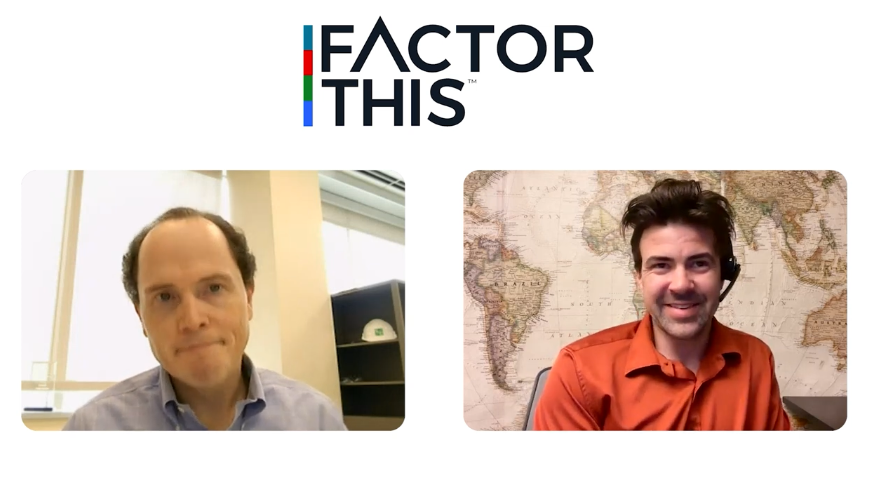
So, what does it actually take to design systems that evolve alongside changing demands and recover faster when outages hit? What does it mean to approach these challenges in a practical way that isn’t unnecessarily complex? And how will these priorities shape the programming at DTECH Reliability & Resiliency? In this exclusive video interview, Matamoros answers these questions while also exploring:
- Grid automation at the edge
- Layered automation and system resiliency
- AI as a utility planning tool
- DER integration maturity
- Managing grid complexity with simple solutions
In This Video
Edge automation and layered grid resiliency
Historically, utility automation focused on generation and high-voltage transmission networks, where a failure at one point threatens the entire system. Today, though, changes to the grid are taking place at the edge and have shifted down to distribution laterals. Because failures on individual laterals don’t typically cause regional blackouts, they don’t require the same centralized, heavy-bandwidth communications used in transmission. Instead, adopting the type of end-to-end, layered approach that we’ve previously explored allows utilities to install autonomous controls that can resolve local line faults without risking higher-level system stability or overburdening field crews during severe weather events.
“The layered approach is a helpful thought process because when we’re looking back to this concept of resiliency, if the transmission system has a problem, that’s going to have a huge impact on thousands of customers,” Matamoros said. “A distribution substation might have hundreds to thousands of customers, so when we think about the ways to make the grid more resilient, the priority needs to be on those parts of the grid that are going to have the biggest impact if they were to not operate.”
This shift fundamentally redefines what grid resilience looks in operational practice. By isolating issues locally through autonomous devices, utilities can shorten restoration times for small pockets of customers without waiting for line crews to physically clear every minor circuit fault. Over time, building this resilience layer by layer protects the broader grid infrastructure, ensuring that a localized outage during an extreme weather event will not trigger cascading failures across the wider distribution system.
The importance of utility simplicity
The electrical grid is widely considered to be the most complex machine ever built, but as it turns out, managing it doesn’t require an equally complex setup. And in fact, it shouldn’t.
Attempting to deploy highly centralized control systems at every level of the distribution network introduces massive communications overhead, elevated cybersecurity risks, and maintenance costs that can quickly go beyond the benefits of automation. They’re the sorts of challenges that elicit a very simple question on every side of a project or process.
“The closer to the edge you get, the simpler it needs to be,” Matamoros told Factor This. “Distribution systems need to be very simple to implement and very simple to maintain. Otherwise, the cost of all that maintenance will exceed the benefit that we get from the automation. So how can we make it simple?”
True resilience relies on simplicity. By focusing on simple, autonomous, and modular solutions at the local circuit level, utilities can achieve immediate reliability gains without waiting for top-down, multi-year system overhauls. Embracing simplicity isn’t about ignoring grid complexity, but is instead about choosing straightforward engineering that delivers immediate progress today while safeguarding the system for the future.
Practical AI applications and the human-in-the-loop
While it’s tough to talk about what’s now and what’s next for the sector without mentioning AI, it’s all about the specific ways it can create value in the short term that enable long-term opportunities. AI can automate tedious tasks data cleansing, asset categorizing, and simulating circuit performance under varying weather or load conditions, which is a metaphor that Matamoros called out in a helpful way.
“You can think of AI as a really great spell checker for distribution planning circuits,” Matamoros said. “It’s really exciting to think about and use as a planning tool that could allow you to run your system differently depending on the weather conditions or loading conditions.”
This pragmatic view helps bridge the gap between technological possibility and the traditionally risk-averse nature of utility operations. By focusing initial AI deployments on low-risk, high-value tasks distribution planning and data organization, grid operators can build trust in these tools without compromising system safety. As utilities become more comfortable with data-driven insights, AI will serve as a vital tool that augments systems and processes, rather than something that replaces anything or anyone.
Learn more about DTECH Reliability & Resiliency and register for the event.
Sumber Artikel:
Renewableenergyworld.com