

Training vs. inference
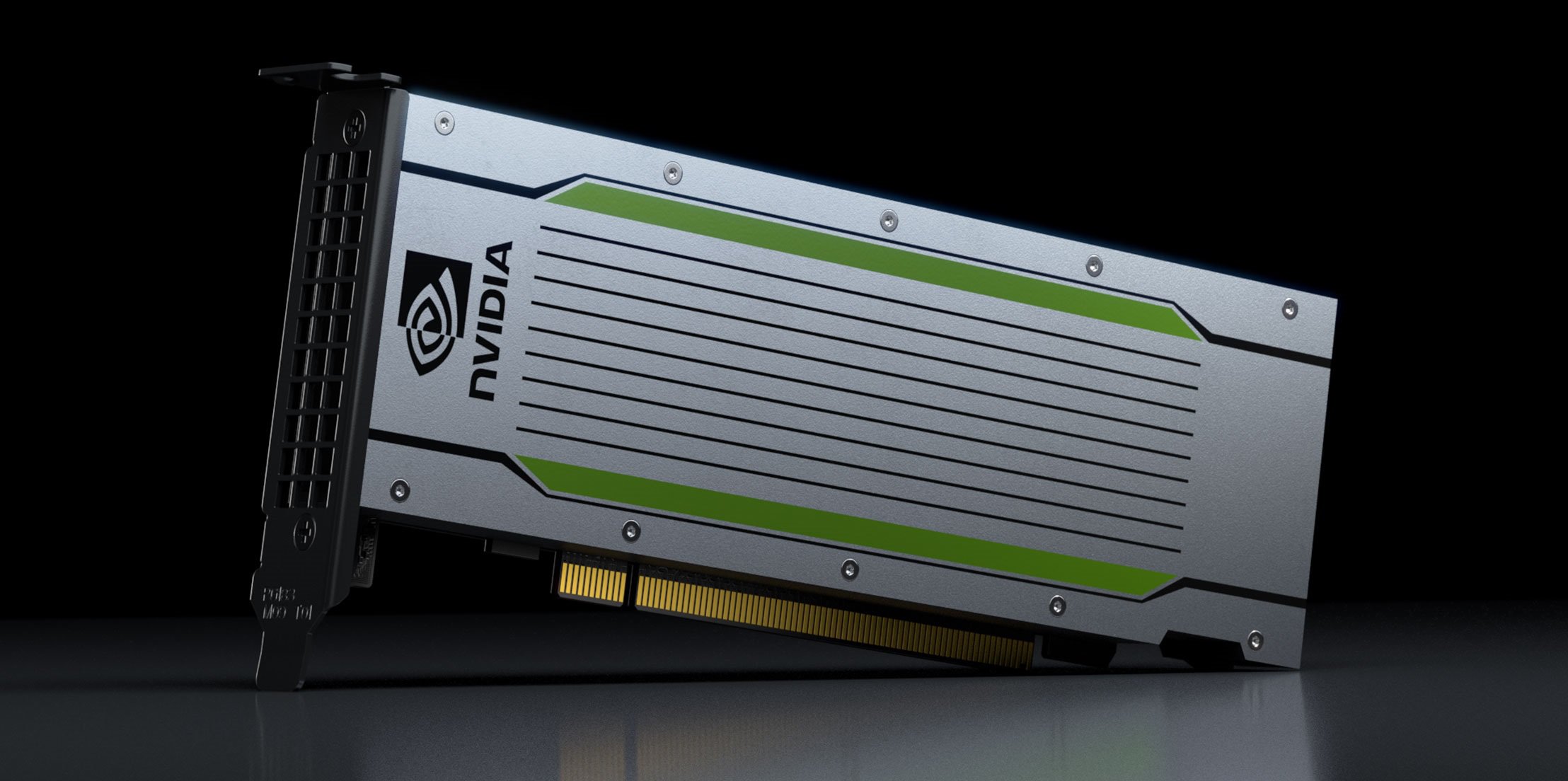
Nvidia made its mark in AI model training, and there is little doubt it will remain the leader in this space. When the company developed its CUDA software platform to program its GPUs, it smartly gave the software away for free and seeded it in places doing early work on AI.
The result was a generation of developers trained on its software, with most foundational AI code written using its software and optimized for its chips. This moat in training still holds strong today.
Expand

NASDAQ: NVDA
Nvidia
Premium Feature
Moneyball Superscore
94/100
Today’s Change
(0.66%) $1.49
Current Price
$228.87
Key Data Points
Market Cap
$5.5TMarket cap calculated using publicly traded s outstanding only. Does not include unlisted, private, or dual-class non-traded s. Implied market cap may vary.
Day’s Range
$226.50 – $229.98
52wk Range
$164.27 – $236.54
Volume
95.7M
Avg Vol
128.6M
Gross Margin
74.67%
Dividend Yield
0.23%
While the AI training segment remains strong, inference is growing faster and is projected to become a much larger market in the coming years. According to Bloomberg Intelligence, the inference market is projected to grow at a 32% compound annual growth rate until 2032, reaching $1.3 trillion, which would be about double the $658 billion it expects the AI training segment to reach over the same time period.
This is important because inference is less technically demanding than training, and Nvidia’s CUDA moat is not nearly as wide. Inference is also less about raw compute power and more about quick access to memory; since inference is an ongoing cost, cost-per-inference becomes a very important factor.
AMD and Broadcom: Big inference opportunities ahead
This opens the door for both AMD and Broadcom to become major players in the inference market. AMD’s GPUs are much cheaper than Nvidia’s, and it has nicely improved its ROCm software platform over the past few years. Meanwhile, its chiplet design can be packaged with more high bandwidth memory (HBM), making its GPUs well-suited for inference.
Expand

NASDAQ: AMD
Advanced Micro Devices
Premium Feature
Moneyball Superscore
94/100
Today’s Change
(1.34%) $8.25
Current Price
$623.77
Key Data Points
Market Cap
$1.0TMarket cap calculated using publicly traded s outstanding only. Does not include unlisted, private, or dual-class non-traded s. Implied market cap may vary.
Day’s Range
$606.31 – $624.52
52wk Range
$154.78 – $624.52
Volume
28.3M
Avg Vol
25.3M
Gross Margin
50.37%
It’s also made a lot of moves in memory, including its acquisitions of the memory optimization company MEXT and the inference chip designer Taalas. In addition, its new Veral chips for edge computing incorporate on-chip SRAM (static random-access memory) to reduce reliance on off-chip memory during inference. Finally, it has also partnered with Cerebras for a high-end inference offering, where Cerebras’ ultra-fast but expensive chips handle the decode phase of inference while its GPUs handle the pre-fill phase, helping it compete directly against Nvidia ing its deal with Groq.
AMD already has two $100 billion multiyear deals in place with OpenAI and Meta Platforms, and it recently announced that Anthropic and Microsoft are also GPU customers. On top of that, it is a leader in server central processing units (CPUs), a market it sees growing to $220 billion in the coming years due to the rise of agentic AI.
Broadcom is also set to become a big player in the inference market. The company is a leader in ASICs (application-specific integrated circuits), which are custom chips hardwired to perform certain tasks. While they are less flexible than GPUs, they are high-performance and use less power than general-purpose GPUs, making them particularly attractive for reducing inference costs.
Expand

NASDAQ: AVGO
Broadcom
Premium Feature
Moneyball Superscore
91/100
Today’s Change
(0.52%) $1.88
Current Price
$364.54
Key Data Points
Market Cap
$1.7TMarket cap calculated using publicly traded s outstanding only. Does not include unlisted, private, or dual-class non-traded s. Implied market cap may vary.
Day’s Range
$359.29 – $366.55
52wk Range
$289.96 – $495.00
Volume
20.6M
Avg Vol
23.4M
Gross Margin
66.54%
Dividend Yield
0.88%
Instead of making its own AI chips, Broadcom helps customers turn their designs into physical AI chips that can be manufactured at scale. It helped Alphabet co-design its highly regarded Tensor Processing Units (TPUs), which are set to be its biggest growth driver, both internally and by selling these chips to Anthropic. Broadcom has also helped OpenAI and Meta Platforms design their own custom chips.
As these programs ramp up, it sees its AI revenue doubling next fiscal year to $115 billion, then doubling again to $230 billion in fiscal 2028.
Nvidia, AMD, and Broadcom all have strong growth ahead from the AI infrastructure build-out, but AMD and Broadcom could be set to outperform their larger rival given their positions in the inference market and growth off of a smaller base. That makes them the better AI stocks to buy, despite Musk’s endorsement.
Read Next

•By Jeremy Bowman

AMD Stock Has Blown Past Nvidia This Year. Is It Still the Better Buy?
•By Keith Noonan
5 Best GPU Stocks for 2026 and How to Invest
•By Keithen Drury

•By Daniel Sparks

•By Daniel Sparks
$500 a Month in Nvidia Stock Since ChatGPT Launched Is Now Worth About $79,000
About the Author

Geoffrey Seiler is a contributing Motley Fool stock market analyst covering technology, consumer goods, healthcare, energy, and materials stocks. Prior to The Motley Fool, Geoffrey was a senior equity analyst at Raging Capital Management, a $600 million long-short hedge fund. He holds a bachelor’s degree in history from Haverford College.
Stocks Mentioned

Nvidia
NASDAQ: NVDA
$228.87
(+0.66%)+$1.49

Motley Fool Stock Advisor’s Latest Pick
—% Avg Return

Broadcom
NASDAQ: AVGO
$364.54
(+0.52%)+$1.88

Advanced Micro Devices
NASDAQ: AMD
$623.77
(+1.34%)+$8.25
*Average returns of all recommendations since inception. Cost basis and return based on previous market day close.
Sumber Artikel:
Fool.com

