Featured in this article

Best All-Round
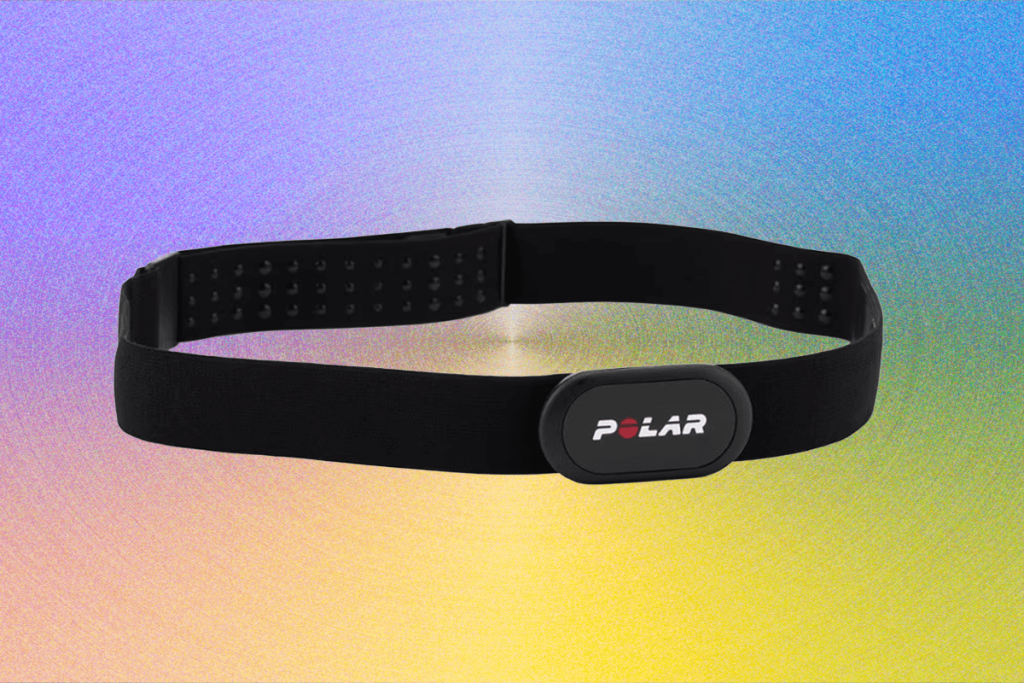
Polar H10
Amazon

Best for Running
Garmin Forerunner 970
Amazon

Best for Swimming
Form Smart Swim 2 Pro
Backcountry

Best for Garmin Users
Garmin HRM 600
REI
Getting your pulse taken only once a year at the doctor’s office is a thing of the past. Nowadays, the best heart rate monitors are cheap, comfortable, and ubiquitous. You don’t have to spend a lot of money, or even leave your home, to check your heart rate during exercise or at rest. Even the cheapest fitness tracker boasts a heart rate monitor these days, and sensors are popping up all over the place, with smartwatches, chest straps, arm straps, and even headphones squeezing one in. Not all are built equally. Some are more comfortable to wear, they vary in the metrics they offer, and some are more accurate than others.
Whether you’ve been prompted to keep closer tabs on your ticker due to health concerns or you need a better sense of how hard you’re really pedaling in your Peloton-powered pain cave, these are the heart rate monitors that deliver where it matters. Right now, the best heart rate monitor is the Polar H10 ($85), but the best armband is the Coros heart rate monitor ($79). Be sure to check out the rest of our health and fitness guides, the Best Walking Pads, Best Gravel Running Shoes, and the Best Smart Rings.
Jump To
Updated March 2026: We added the Garmin Forerunner 970, the Apple Watch Series 11, and the Form Smart Swim 2 Pro smart goggles. We also updated links and prices.
-
Best All-Round
Courtesy of Polar Electro
to wishlist Polar
H10
Amazon
Polar
A chest strap remains the most accurate way to track your heart rate for exercise, putting an EKG sensor closest to your heart. The Polar H10 is the standout here. That’s because Polar has replaced the typical loop-and-hook connector found on most monitors with a buckle-style connector to reduce irritation. The company also uses small silicone dots to make sure the strap stays put during high-intensity activities so the HR data is still good.
Comfort aside, it’s the most accurate of the monitors I’ve tested for exercise. There were no glaring drop-outs or underreporting or overreporting during my test runs, indoor cycles, strength training, or interval sessions. Having some built-in memory to store data for a session is useful, and the ANT+ connectivity means you can effortlessly link equipment turbo trainers or swap out the HR stats on your watch for more accurate ones. You can take it for a swim too, and you won’t have to replace the battery for a year, even if you’re wearing it on a regular basis. If you’d to a few bucks, the previous Polar H9 ($70) offers many of the same features for about $30 less.
Specs Battery life Up to 400 hours Built-in memory Yes Water resistance Splash-resistant Bluetooth and ANT+ connectivity Yes WIRED/TIRED
LargeChevron WIRED
- Buckle-style connector is less irritating
- Most accurate monitor
TIRED
- The Polar H9 is almost the same, and cheaper
-
Best for Running
-
Photograph: Brent Rose
-

Photograph: Brent Rose
-

Photograph: Brent Rose
-

Photograph: Brent Rose
Chevron Chevron to wishlist Garmin
Forerunner 970
Amazon
REI
Best Buy
The Forerunner 970 is Garmin’s most capable runner’s first smartwatch. It takes features from Garmin’s pricier Fenix 8 series and puts them into a more manageable design, while also offering the best heart rate tracking performance. The Forerunner 970 has the latest version of the in-house built Elevate optical sensor, which is the same sensor in the Fenix 8. That setup fuels a rich set of heart rate tracking features, including extremely reliable 24-hour monitoring, powering insightful metrics Training Readiness, or sending out alerts when heart rate is abnormally high or low.
The sensor performance during exercise is where the Forerunner 970 really shines. It more than holds its own against a gold standard chest strap monitor across a range of activities, That includes runs, high intensity indoor bike rides, more explosive home workouts, and also when you’re going all out on race day. Garmin also makes room for an ECG sensor to offer extra health insights on top of the training-focused ones. It’s the optical setup that stands out and helps to justify paying the pretty sizable price to strap it to your wrist.
Specs Battery life Up to two weeks Built-in memory Yes Water resistance 5 ATM Bluetooth and ANT+ connectivity Yes WIRED/TIRED
LargeChevron WIRED
- Garmin’s brightest screen
- In-house optical heart rate sensor
- Incredible accuracy
- Rich software training features
TIRED
- Not as versatile as the Fenix 8
-
-
Best for Swimming
-
Photograph: Michael Sawh
-

Photograph: Michael Sawh
-

Photograph: Michael Sawh
Chevron Chevron to wishlist Form
Smart Swim 2 Pro
Backcountry
Best Buy
Tracking heart rate and being in water are two things that typically don’t mix. After planting a great augmented reality display into a pair of swimming goggles, the next challenge for Form was to find a way to measure effort. Enter the Form Smart Swim 2 Pro. After leaning on Polar’s small Verity heart rate sensor, the Smart Swim 2 ($199) and Swim 2 Pro now feature their own optical sensors that sits on one side of the goggles. Positioning that sensor against the temple while making sure hair doesn’t get in the way lets you capture and view real-time heart rate data on the built-in screen, adding to the already solid swim tracking support.
Placement is key, and the goggles will notify you onscreen if they’re not in the optimal spot to generate good quality HR data. Form issued a white paper promising a 97 percent accuracy rate when compared to a heart rate monitor chest strap. It certainly lives up to that promise, from steady-paced swims to more interval-style sessions when I tested them against a chest strap and some of the best-performing smartwatches for tracking heart rate. Upgrading to the Pro version gets you a tougher display, all with the same tracking, training, and coaching features that makes Form’s smart goggles a fine pool and open-water companion.
Specs Battery life Up to 14 hours Built-in memory Yes Water resistance Fully waterproof Bluetooth and ANT+ connectivity Yes WIRED/TIRED
LargeChevron WIRED
- Works in the pool
- Built-in interior screen
- Accurate when compared to chest strap
TIRED
- Subscription required for premium features
-
-
Best for Garmin Users
Photograph: Michael Sawh
to wishlist Garmin
HRM 600
REI
Backcountry
The Garmin HRM 600 represents the best that Garmin has to offer in heart rate monitoring. If you’re fully locked into the Garmin ecosystem and also happen to have a sports watch the Forerunner 970, then the 600 will feel more worthy of its premium price tag. It comes in two strap sizes, and both are safe to throw into your washing machine. That’s after you’ve removed the sensor module, which usefully includes a pairing and battery indicator light. It carries an 5 ATM waterproof rating so you can slip it underneath a wetsuit while offering strong protection against sweat and rain for those land-based athletes. There’s no battery to remove and replace, as this chargeable monitor can go for months, even with regular training, and uses the same charging cable as most Garmin watches.
It uses an EKG sensor that when put to the test for indoor and outdoor running at a mixture of paces, indoor interval cycling sessions and circuit training and the HRM-600 has been fully up to the task. There’s both Bluetooth and ANT+ connectivity, so you can hook it up to multiple devices at the same time, and it worked perfectly fine paired to non-Garmin devices the Apple Watch. The extra features will appeal most to runners looking to delve deeper into running form, and it can be worn all day if you want it to double up as a fitness tracker. It’s expensive but delivers where it matters and is one of the most feature-packed monitors to strap on.
Specs Battery life Up to 60 days Built-in memory Yes Water resistance 5 ATM Bluetooth and ANT+ connectivity Yes WIRED/TIRED
LargeChevron WIRED
- Two strap sizes
- You can use it under a wetsuit
- Fully integrated into Garmin ecosystem
TIRED
- Expensive
-
Best Armband

Photograph: Coros
to wishlist Coros
Heart Rate Monitor
REI
Coros
Heart rate monitoring armbands are the new kid in town here, and while the Coros Heart Rate isn’t the most feature-packed option, it has the most likable design in terms of everyday comfort. You’re also much less ly to misplace the Coros compared to other armband monitors.
Coros pairs up a not-too-dainty, five-LED light-packing sensor with a Velcro strap that has a welcome stretch to it due to a mix of polyester, nylon, and Spandex. It’s just Bluetooth connectivity here, so no love for ANT+ fans, but this monitor can connect to sports watches, connected gym equipment, and indoor trainers, so don’t sweat it. We’ve found that on runs, indoor rides, and high-intensity workouts, this monitor was typically 1-3 BPM out from a heart rate monitor chest strap—so it’s up to you whether that’s a trade-off between practicality and accuracy that makes sense. It lacks the storage capacity you get with rival HR armbands the Polar Verity Sense ($105), though it does have a useful notification light to let you know when you’ve maxed out on the 38 hours of battery it can muster up on a single charge.
Specs Battery life Up to 80 days Built-in memory No Water resistance 3 ATM Bluetooth and ANT+ connectivity Bluetooth WIRED/TIRED
LargeChevron WIRED
- Nice, stretchy strap
- Can connect to sports watches and gym equipment
- Battery indicator light
TIRED
- No storage
- No ANT+
-
Best-Looking Heart Rate Monitor
-

Photograph: Adrienne So
-

Photograph: Adrienne So
-

Photograph: Adrienne So
Chevron Chevron to wishlist Whoop
MG Fitness Band
Whoop (Peak)
Whoop (One)
Whoop (Life)
The Whoop MG joined the Whoop 5.0 as a more health-focused alternative to the screen-less band worn by some of the finest athletes on the planet. One of the biggest gains with going for the MG lies with heart rate tracking and access to ECG-style monitoring. That heart health feature comes at an additional cost and does mean opting for the most expensive subscription plan in Whoop’s controversial new tiered service. Only then will you be able to place your thumb and fingers on the electrodes built into the Whoop’s clasp to let the FDA-cleared feature check for signs of atrial fibrillation (AFib) or abnormally high or low heart rate rates.
You still also have photoplethysmography (PPG) sensors to measure heart rate and heart rate variability during the day and night and when exercising. Positioning is key when you want the best data from your workouts. Wearing it on the wrist can cut into an indoor rowing session, but you’ll want to move the sensor into Whoop’s optional bicep strap to make the HR sensor a better fit for high intensity workouts interval running or HIIT. You will need to buy extra accessories to move the MG’s sensors all around the body. There’s few that can match the combination of looks, performance, and software that can help you make better decisions about when to take rest days, have an early night, and now seek out a medical professional.
Specs Battery life Up to 14 days Built-in memory Yes Water resistance IP68 Bluetooth and ANT+ connectivity Bluetooth WIRED/TIRED
LargeChevron WIRED
- A plethora of cardiac features, including Afib
- The only wearable that tracks blood pressure
- Attractive
TIRED
- Best features paywalled behind highest subscription tier
-
-
Best Heart Rate Monitoring Headphones
-Reviewer-Photo-SOURCE-Ryan-Waniata.jpg)
Photograph: Ryan Waniata
to wishlist Beats
Powerbeats Pro 2
Amazon
Walmart
Apple
Despite rumors that Apple would add heart rate tracking to the AirPods, it was the Beats Powerbeats Pro 2 that enjoyed a biometric boost. They’re by no means perfect, but they do perform miles better than any previous heart-rate-tracking earbuds, and could hopefully be a sign of what’s to come for Apple’s white buds.
Apple and Beats do things differently by adding optical PPG sensors in both earbuds that are 1/16th the size of the ones included inside of an Apple Watch. They work with both Android and iOS devices, though it’s surprisingly a more restricted experience with the latter, as they only work with a few select apps. But they offer better heart rate tracking than any other headphones I’ve tested, although they aren’t infallible when you up the intensity of your workout. Add in new active noise cancellation tech, improved overall sound quality, and a slimmer, more refined ear hook design, and these are excellent workout buds that come with the added bonus of solid heart rate monitoring skills.
Specs Battery life Up to 45 hours Built-in memory No Water resistance IPX4 Bluetooth and ANT+ connectivity Bluetooth WIRED/TIRED
LargeChevron WIRED
- Incredible fit
- Clear, dynamic sound
- New heart rate monitoring feature
TIRED
- No multipoint pairing
- Water resistance is not the best
-
Best Smart Ring
-

Photograph: Simon Hill
-

Photograph: Simon Hill
-

Photograph: Simon Hill
-

Photograph: Simon Hill
Chevron Chevron to wishlist Oura
Ring 4
Oura
Amazon
Best Buy
Oura (Ceramic)
The Oura Ring 4 remains the smart ring to beat for a host of reasons. It looks great, the companion app is more polished than those of its rivals, and now it’s better equipped to track your heart and make its insights all that more insightful.
Oura has upgraded its optical sensor platform by opening up signal pathways to boost overall tracking accuracy. It’s now also better at monitoring data on different finger shapes and skin tones, and, crucially, when your ring moves around during the day and night. It leads to noticeably more reliable daily and sleep heart rate data. This powers its key Readiness metric, which tells you whether you’re in good shape to take on a stressful day or you should maybe have a chilled one. It also means new features Oura’s Symptom Radar can actually understand when you’re not feeling great.
Recording heart rate during exercise is better too, though it still doesn’t match what you get from the gold standard in monitoring. The improvements are enough, though, to make Oura’s latest ring the best pick if you prefer to wear a heart rate monitor on your finger.
Specs Battery life Up to 8 days Built-in memory No Water resistance 10 ATM Bluetooth and ANT+ connectivity Bluetooth WIRED/TIRED
LargeChevron WIRED
- Accurate tracking.
- Long battery life.
- Looks and feels great.
- Slick app offers interesting features.
TIRED
- Requires a subscription for some features.
-
-
Best Smartwatch
-

Photograph: Michael Sawh
-

Photograph: Adrienne So
-

Photograph: Adrienne So
Chevron Chevron to wishlist Apple
Watch Series 11
Amazon
Apple
Best Buy
Walmart
While Apple’s flagship smartwatch may lack the brighter display, bigger battery and extra physical button you get on the Watch Ultra, there’s a strong argument to say that when it comes to tracking your heart, the Series 11 will be a better fit for more people. The Series 11 uses the same third-generation optical features on the Ultra, albeit in a form factor that does sit smaller on the wrist. The more snug fit, combined with Apple’s latest sensor, is capable of doing a pretty impeccable job capturing heart rate in real-time during a spin class as it is keeping tabs on it during the day and night.
You don’t need to be a gym junkie to reap the benefits of that onboard heart rate monitor, either. It can also be used to notify you of potential hypertension. Add in the ECG sensor that can detect atrial fibrillation and make sharing that data to medical professionals a breeze, and you have a smartwatch with serious health tracking prowess. Delve into Apple’s App Store and you’ll find a wealth of apps that want to also put the impressive heart rate sensor to greater use. That’s all nestled inside of a smartwatch that looks great and remains the top pick for iPhone owners.
Specs Battery life 24 hours Built-in memory Yes Water resistance 5 ATM Bluetooth and ANT+ connectivity Bluetooth -
-
An Affordable Fitbit

Courtesy of Fitbit
to wishlist Fitbit
Charge 6
Amazon
Walmart
Google Store
While it’s tough to know where the future lies for Fitbit’s smartwatches, the Charge 6, its flagship fitness tracker, strengthens its monitoring powers, notably in the heart rate tracking department.
It relies on a similar optical sensor setup to the Charge 5, reliably delivering metrics resting heart rate. It also dips into heart rate variability to estimate when you’re feeling stressed. In the exercise-tracking realm, that sensor performed better for workouts, with Fitbit delivering on that promised 60 percent improved accuracy compared to the Charge 5. That’s across stationary sessions indoor rows and HIIT sessions, and when putting the not-so-fantastic built-in GPS to outdoor use. However, it does still occasionally have its moments throwing up wildly high average and maximum readings. Now you can make the most of that (mostly) reliable tracking and transmit it to connected gym equipment rowers and treadmills. An EKG sensor gives the Charge 6 the power to assess your heart rate rhythm for atrial fibrillation, bringing in a health feature typically reserved for more expensive smartwatches.
Specs Battery life Up to 7 days Built-in memory Yes Water resistance 5 ATM Bluetooth and ANT+ connectivity Bluetooth WIRED/TIRED
LargeChevron WIRED
- Affordable.
- Wide array of health metrics.
TIRED
- Connectivity is sometimes an issue.
- Requires a subscription.
Compare Top Heart Rate Monitors
| Model | Battery Life | Built-in Memory | Water Resistance | Bluetooth and ANT+ Connectivity |
|---|---|---|---|---|
| Polar H10 | Up to 400 hours | Yes | Splash-resistant | Yes |
| Garmin Forerunner 970 | Up to two weeks | Yes | 5 ATM | Yes |
| Form Smart Swim 2 Pro | Up to 14 hours | Yes | Fully waterproof | Yes |
| Garmin HRM 600 | Up to 60 days | Yes | 5 ATM | Yes |
| Coros Heart Rate Monitor | Up to 80 days | No | 3 ATM | Bluetooth |
| Whoop MG | Up to 14 days | Yes | IP68 | Bluetooth |
| Beats Powerbeats Pro 2 | Up to 45 hours | No | IPX4 | Bluetooth |
| Oura Ring 4 | Up to 8 days | No | 10 ATM | Bluetooth |
| Fitbit Charge 6 | Up to 7 days | Yes | 5 ATM | Bluetooth |
FAQS
We tested and recommend all of the heart rate monitors below, which do a pretty impeccable job. But what do all these terms mean?
Heart rate zones: If someone tells you they’ve been doing 80/20 training, they’ve been doing heart rate zone-based workouts. Heart rate zones are an easy way to break down your range of effort during exercise. Zones go from 1 to 5, with 5 indicating working at 90 to 100 percent of your maximum heart rate. Zone 2 represents training at 60 to 70 percent of maximum heart rate and represents light training. 80/20 training is intended to build endurance and means that 80 percent of your runs should be in Zone 2. If your heart rate monitor doesn’t tell you your zone, you can calculate it using Polar’s simple tool.
Maximum heart rate: Some monitors can inform you of your maximum heart rate, which is the number of beats your heart can reach during exercise. This is useful for knowing when you’re training at peak intensity and can be used to create heart rate zones. Factors your age and fitness level can influence what that maximum heart rate will be. You can generate an estimate of your maximum heart rate by simply subtracting your age from 220 and use that at a starting point.
VO2 max: The term VO2 max stands for maximum rate of oxygen your body can consume during exercise; the higher the better. It provides a useful indicator of your ability to sustain intense effort for long periods. Calculating this accurately is done in lab conditions, so heart rate monitors and watches often use their own algorithms to approximate that lab testing.
Heart rate variability: Heart rate variability measures the intervals between heart beats and is measured in milliseconds. High HRV readings are considered better than lower ones, because it means that the body is responding in a resilient way to stress. However, your HRV readings can differ widely from one person to another because they can be influenced by age, fitness level, or even when the measurement was taken.
Resting heart rate: This is the number of times your heart beats in one minute when at rest, which is a simple indicator of your current level of cardiovascular fitness and general well-being. Typically, your heart rate is supposed to sit anywhere from 60 to 100 bpm at rest. A low resting heart rate is associated with athletes, because the heart has been trained to be more efficient. But an uncharacteristically low or high RHR could mean that something is not quite right.
Calories burned: A heart rate monitor looks at your effort based on your heart rate and uses the company’s own algorithms to offer an indicator of how many calories you’ve burned during a workout. Heart rate is one of the strongest, if not the strongest indicators of effort, which means a heart rate monitor is one of the most accurate ways to get this information.
How to Wear a Heart Rate Monitor
Based on those factors above, what kind of information do you need to see? Figuring this out will help you get a heart rate monitor that not only delivers wearability, accuracy, and value, but ensures that you strap it to the ideal part of your body.
Wearing one on the wrist, as part of a smartwatch, may be the most convenient way to track heart rate, though a strap—typically on the chest or, more recently, the upper arm or bicep—can generate more accurate data for activities exercise.
If you want to track heart rate during sleep, make sure you opt for a form factor that isn’t going to feel bulky or become a nuisance for your sleeping companion. If you’re hoping to use it with other fitness equipment or a watch, look for the type of Bluetooth and ANT+ connectivity support to do that with single or multiple devices.
How We Tested
These heart rate monitors are predominantly designed to track your heart during exercise, so that’s how I focused our testing. I used them for a range of indoor and outdoor workouts, including runs, indoor bike rides, rowing, and HIIT-style sessions to see how the monitors fare when it has to track sudden spikes and drops in heart rate.
I also mixed up the duration of those workouts, going from 20 to 30 minute sessions to one hour or longer, to see how the battery performed, particularly for those with rechargeable battery setups. For those that offer a mix of exercise-based and continuous monitoring, I’ve used those monitors alongside other strong-performing HR trackers, to check the accuracy and compare medical-grade heart rate sensors to blood pressure monitors and pulse oximeters that also promise accurate on-the-spot readings.
Power up with unlimited access to WIRED.Get best-in-class reporting and exclusive subscriber content that’s too important to ignore. Subscribe Today.
Topicsbuying guidesShoppingSportsworkoutExercisefitnessWearableshealth

The Best Theraguns and Therabody Devices for Rest and Relaxation
From massage guns to compression boots and LED face masks, these are the top performers in Therabody’s wellness lineup.
Boutayna Chokrane

Breathe Easy—We Found the Best Air Purifiers
Protect your home against dust, pets, allergies, and more with air purifiers tested firsthand by WIRED.
Lisa Wood Shapiro

The Best Headphones for Working Out, Traveling, and Putzing Around
Rock your inner jock with a pair of sturdy, sweatproof, and tangle-proof headphones. Here are our favorites.
Adrienne So

The Best Gravel Running Shoes for Travel, Hiking, and More
The best new shoes in this hybrid, niche footwear style can take you from your front door, down the asphalt, and into the trees.
Kieran Alger

The Best Pillows for Every Style of Sleeper
We’ve spent over a year testing the best pillows to support your noggin, whether you snooze on your side, on your back, or in a tangle of blankets.
Nena Farrell

The Best Base Layers for Every Adventure
Whether you’re layering up for winter cold or looking for an ultralight summer system, I’ve tested and found the best base layers for all your outdoor adventures.
Scott Gilbertson

The Right Mattress Can Erase Your Back Pain
If you’re struggling with chronic back or shoulder pain, these mattresses could change your life
Nena Farrell

The Best Wireless Chargers to Refuel Your Phone (or Watch)
Stop fumbling for cables in the dark. These WIRED-tested stands and pads will take the hassle out of refueling your phone, wireless earbuds, and watch.
Julian Chokkattu

We Tried a Dozen of the Most Popular Indoor Gardening Systems
Grow a backyard’s worth of greens and vegetables in your house with a vertical hydroponic garden. Here are a few that might be worth the investment.
Kat Merck

The 12 Best Coffee Subscriptions of 2026 to Keep You Wired
These services deliver freshly roasted, delicious coffee picks right to your door—each with its own twist.
Matthew Korfhage

The 4 Best Smart Beds You Can Buy Right Now
These tech-packed beds can adjust firmness, track your sleep, and regulate temperature automatically. Based on my testing, here’s what’s worth the investment.
Julia Forbes

The Best Barefoot Shoes for Walking or Running
Our favorite zero-drop, minimalist footwear will let you feel the ground beneath your feet.
Scott Gilbertson
Wired Coupons

T-Mobile Promo Code
Samsung GS25+ Free With T-Mobile for Business SuperMobile

Squarespace Promo Code
Squarespace Promo Code: 20% Off Annual Acuity Subscriptions

LG Promo Code
LG Discount Code: 10% Off Any Purchase

Dell Coupon Code
10% Off Dell Coupon Code for New Customers
.png)
Samsung Promo Code
30% Samsung Coupon – Offer Program 2026

Canon Promo Code
10% Off Canon Promo Code + Up to 30% Off
Sumber Artikel:
Wired.com