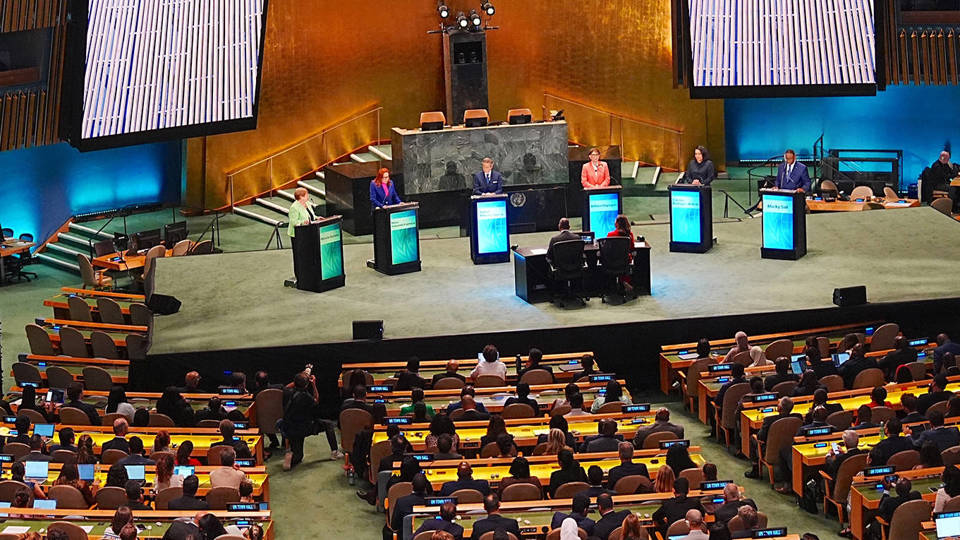
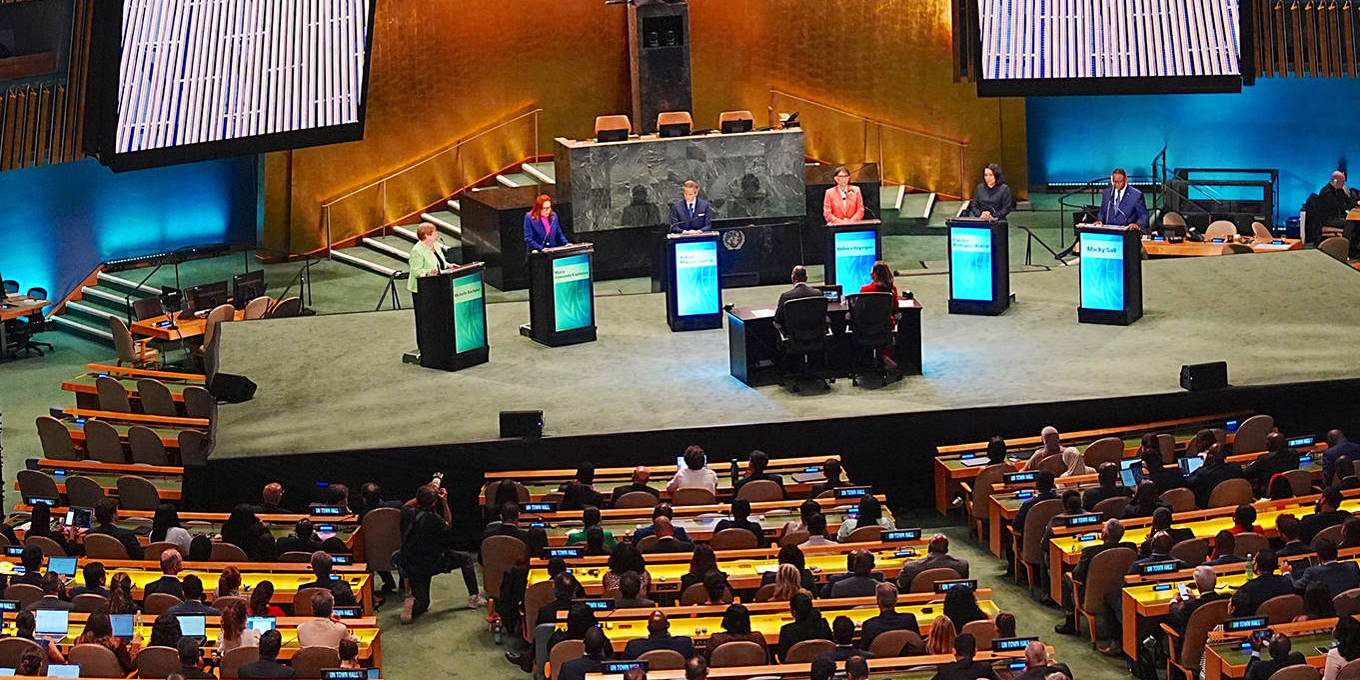
 Selcuk Acar/Anadolu via Getty Images
Listen to this commentary Please log in to listen to this commentary 0:00 / 0:00 Audio unavailable
For starters, the next secretary-general should focus on delivering consistent messaging and on using the largely predictable UN calendar to achieve some early wins. They should begin with political clarity, not thematic expansion; complete existing agendas, such as the Sustainable Development Goals and climate agreements; and shift the focus from proliferation to execution. More fundamentally, the new head must also commit to making power more transparent; embed inclusion across the UN system; strengthen coordination with member states; and ensure that financing is aligned with governance.
That means rebuilding trust from within. When appointing the senior leadership team, the next secretary-general should select people who demonstrate political courage, independent judgment, discipline in setting priorities, a willingness to take risks and withstand criticism, and a renewed commitment to mediation. Such leaders will be well-positioned in the long term to incentivize coordination, build coalitions that outlive their tenure, and pursue meaningful structural and organizational change backed by concrete accountability mechanisms.
Secure your copy of PS Quarterly: Slopocalypse Now
AI-generated content already accounts for half the articles published online, and not even digital forensics experts can tell what’s real anymore. Can those still offering a humanistic vision of online life make themselves heard over the din?
SUBSCRIBE & $50
Instilling a renewed sense of purpose in a workforce of around 120,000 people struggling with low morale and impossibly tight budgets will require a compelling diagnosis of the UN’s challenges, a vision for its future, and priorities for action. The diagnosis should focus on political factors first and foremost, as many of its problems can be traced to choices made by member states, weakening consensus, and shifting power relations. To be sure, this limits what institutional reform—or the secretary-general alone—can realistically achieve. But, more importantly, it suggests that the selection and transition agenda should address not only the expectations for the next secretary-general, but also what member states are prepared to provide in return.
The secretary-general will inherit the unfinished UN80 Initiative, which aims to improve efficiency, review implementation of the body’s mandates, and examine possible structural changes and program realignments. In the first 100 days, important decisions must be made about which parts of the reform agenda to continue, which to adjust, and which to abandon, while keeping in mind the need to avoid reform fatigue and ensure that the next phase is shaped and owned by member states.
At the country level, the secretary-general must also make difficult choices about activities the UN should no longer pursue, while improving delivery, localization, and coordination. This requires greater clarity about where the UN adds value, focusing on its universal legitimacy, convening and norm-setting power, and, perhaps most importantly, mediation and “good offices.” The guiding principle should be differentiation, not withdrawal: continuing direct delivery where necessary while relying more deliberately on regional and national actors when they are better placed to act.
Lastly, to reduce the UN’s dependence on voluntary contributions and earmarked resources, often from a small number of major donors, the next secretary-general should begin engaging with member states to develop a more sustainable funding model. This means preparing to make strategic use of the organization’s existing levers of authority to align financing with governance, which would strengthen the system’s effectiveness and accountability. This could be accomplished by maximizing unearmarked voluntary funding and creating project-specific funding windows (where transaction costs do not distort governance), while also providing contributors with appropriate political recognition and greater transparency.
The new UN head’s broader agenda—restore peace, protect the most vulnerable, and convince the world to act on climate change and regulate AI—represents a formidable challenge, especially as geopolitical upheaval impedes efforts to forge consensus or deliver long-term solutions. The UN has not adapted quickly enough to today’s multipolar reality in which influence is dispersed across many sites. Tokenistic engagement and negative narratives reinforce a sense of exclusion, deepening the legitimacy crisis.
But the next secretary-general can change that trajectory. Although rebuilding legitimacy will not be easy or immediate, a leader who demonstrates strong management skills and a commitment to reform in the first 100 days will provide an important foundation on which to build a reinvigorated UN.
Help us strengthen our reporting on global health and development by taking a short survey.
Take Survey
Featured
-
After the AI Bubble Bursts
Sep 10, 2026 Barry Eichengreen
-
Why India Wants Peace in Ukraine—and China Doesn’t
Sep 15, 2026 Nina L. Khrushcheva
-
Will Europe Be as Unprepared as Ukraine Was?
Sep 7, 2026 Tatyana Deryugina, et al.
-
Are China’s Rare Earths Really a Potent Weapon?
Sep 8, 2026 Daniel Gros
-
AI Firms’ Self-Serving Warnings
Sep 15, 2026 Brian Judge
https://prosyn.org/evxkOzb
It appears that you have not yet updated your first and last name. If you would to update your name, please do so here.
Please wait, fetching the form
Please wait, fetching the form
Please wait, fetching the form
Please wait, fetching the form
Please wait, fetching the form
Please wait, fetching the form
Please wait, fetching the form
Sumber Artikel:
Project-syndicate.org