

 Temiloluwa Johnson/Getty Images
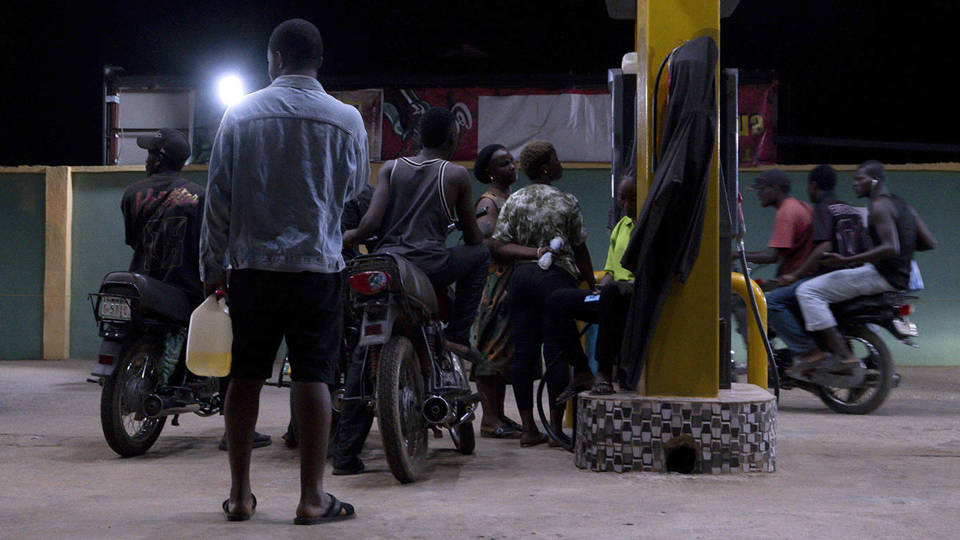
The fallout from the latest war in the Middle East has made visible a problem that many preferred to ignore: the international financial architecture is not fit for a world of cascading shocks, tightening fiscal constraints, and rising human need. Nowhere is this more obvious than in Africa.
Listen to this commentary Please log in to listen to this commentary 0:00 / 0:00 Audio unavailable
With debt-servicing costs already high, this dynamic is becoming one of the cruelest features of the war’s global fallout. Hopes for lower interest rates have evaporated as inflationary pressures have persisted. Yet African economies cannot rely on concessional lending at scale. They must borrow at market rates, which are now climbing. Research shows that 12 developing countries—including Kenya, Ghana, Côte d’Ivoire, and Egypt—are simultaneously facing rising borrowing costs and above-median debt payments due this year: a double bind that leaves no room for error. Private capital is retreating just when investment in sustainable agriculture, energy, and industry is most urgently needed.
Making matters worse, Gulf capital—which had recently become a meaningful source of financing for African development—will now dry up as Gulf Cooperation Council governments redirect resources toward reconstruction and military expenditure. That means Africa loses twice: once from the shock, and again from the withdrawal of the financing that might have cushioned it.

Secure your copy of PS Quarterly: Winners & Losers – and $20
In the new issue of our magazine, leading thinkers examine how recent developments, from the AI revolution to intensifying geopolitical volatility, are reshuffling the economic and financial deck and generating new winners and losers across the global economy.
Subscribe to PS Premium now, with a $20 discount, to read the issue, featuring Claudia Goldin, Mark Blyth, Dambisa Moyo and others.
Subscribe Now
There is a bitter irony here. Many have pointed out that Africa contributed very little to climate change, but is expected to shoulder a disproportionate of the costs. Now we are absorbing the costs of yet another global problem we did not cause, and the escape route—ending fossil-fuel dependencies through an accelerated transition to renewable energy—is being closed off.
Although solar and wind farms have become cheap when calculated over their lifetime, the upfront financing required to build them at scale remains out of reach for countries already struggling to service existing debt. The current financial system’s unforgiving math means that the countries most exposed to fossil-fuel shocks are the least able to invest in the alternatives.
We have been here before. The COVID-19 pandemic exposed the same structural vulnerabilities. But many assumed that such crises were exceptional and manageable. We should have drawn a different lesson: the system itself is broken, and every new shock simply compounds the damage caused by the last one. Kicking the can down the road had consequences that we are dealing with today.
What can be done? At the African Leaders Debt Relief Initiative, we have long argued for a two-track approach. For the most heavily indebted countries, nothing short of comprehensive debt restructuring will suffice. These governments need a predictable, fair, and inclusive process to bring all creditors—bilateral, multilateral, and private—to the table. The G20 Common Framework was a start, but it has proven too slow. Countries cannot wait years for relief.
The second track applies to all developing countries, whose cost of capital must come down. Multilateral institutions can help with credit enhancements, guarantees, and debt suspension mechanisms. But while these tools would give governments enough headroom to invest, rather than merely to survive, they have not been deployed at scale.
That needs to change, and a portion of the freed-up fiscal space must be directed toward the energy transition. Renewable infrastructure is not a luxury. It is a strategic hedge against exactly the kind of shock Africa is absorbing today. Countries that generate their own energy from sun and wind cannot be held hostage by distant conflicts or volatile commodity markets.
The current moment, for all its horror, offers an opening. It has made visible a problem that many preferred to ignore: the international financial architecture is not fit for a world of cascading shocks, tightening fiscal constraints, and rising human need. When this basic truth becomes undeniable, reform becomes possible. The continent cannot keep absorbing the costs of a system it had no hand in designing, nor should it be denied the financing it needs to build its way out of vulnerability.
Featured
-
The Real Question About the AI Future
Apr 8, 2026 Ricardo Hausmann & Andrés Velasco
-
When Fools Go to War
Apr 3, 2026 Federico Fubini
-
Remaking Europe’s Energy System for the Age of AI
Mar 30, 2026 Lucrezia Reichlin
-
Why Iran Is Beating America
Apr 3, 2026 Brahma Chellaney
-
Is Economic Forecasting Still Possible?
Apr 6, 2026 Morten Nyboe Tabor
https://prosyn.org/BPa4byC
It appears that you have not yet updated your first and last name. If you would to update your name, please do so here.
Please wait, fetching the form
Please wait, fetching the form
Please wait, fetching the form
Please wait, fetching the form
Please wait, fetching the form
Please wait, fetching the form
Please wait, fetching the form
Sumber Artikel:
Project-syndicate.org

