
By Lea Maurer | S&C Electric Company
Sponsored content.
At the 2026 IEEE PES trade show in Chicago, one word popped up again and again, during numerous conversations and several panel sessions: resilience.
One utility leader narrowed the focus even further: “We have to think in layers,” he said. “Resiliency in multiple layers is the only way it works at scale.”
We wholeheartedly agree with this sentiment: To achieve the kind of grid-wide resilience that empowers electrical distribution systems to meet today’s challenges and prepare for tomorrow’s complexities, utilities can embrace scalable, layered grid upgrades.
Solutions to achieve this layered, interoperable distribution grid upgrade already exist and have been proven to help utilities maximize grid resilience in a scalable, simple, and meaningful way.
Defining ‘Layers of Resilience’
Utilities can improve their metrics today by identifying problem areas in their grids and installing resilience-boosting products at those sites to mitigate or remedy issues.
But this kind of one-off, seek-and-address approach to hardening and modernization has its limits.
To achieve true resilience, it’s necessary to take a holistic approach, treating the entire distribution grid as a unified system, from the substation to the grid edge. Operating from this perspective, utilities can devise comprehensive resilience schemes comprising layers of area-specific solutions that work together to achieve grid-wide goals.
On the product level, resilience starts with automation technology. Solutions that can rapidly isolate faults and quickly restore power to surrounding areas will immediately transform aging distribution infrastructure into modern, agile distribution systems.
Then, add layer upon layer of this modernizing technology, in the form of devices such as reclosers, sensors, sectionalizers, and automated switches at points spanning the entire area of the grid. This helps approach the level of resilience most utilities want to deliver for their customers.

Zooming in on Each Layer of Resilience
Of course, different portions of the grid require different, specialized grid solutions.
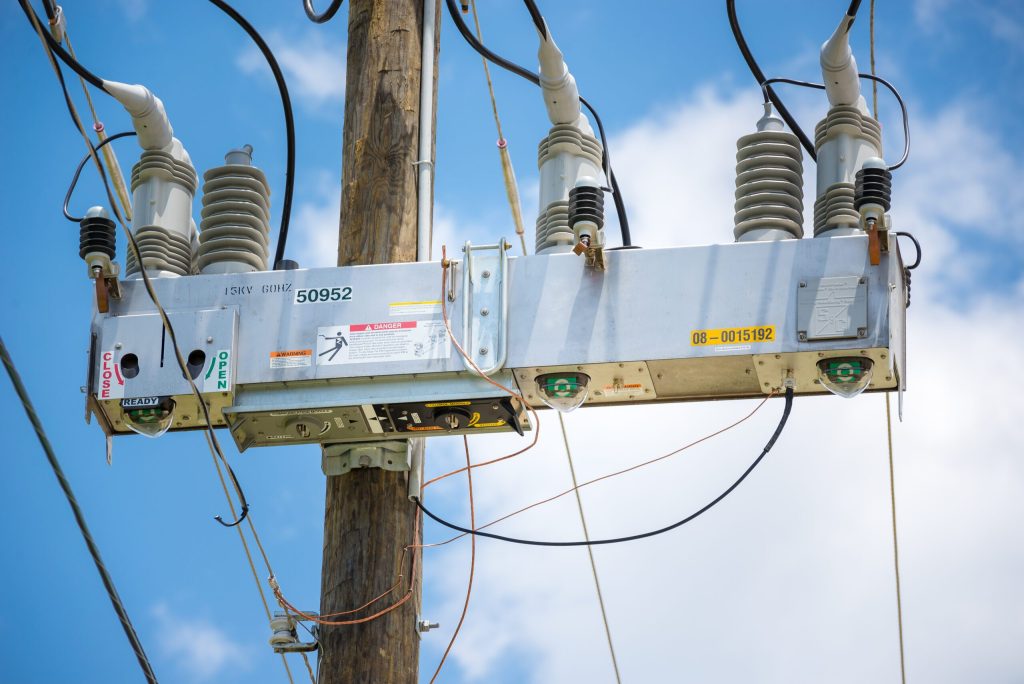
Starting upstream at the head of the system, utilities can retrofit substations and feeders with intelligent reclosers, switches, or fault interrupters that respond automatically to changing conditions. Whether feeder lines are overhead, underground, or a hybridization of both, they need protection and segmentation to deliver the resilience and reliability utilities seek for this vital portion of the grid. Feeder automation devices S&C’s IntelliRupter® PulseCloser® Fault Interrupter provide both protection and unlimited segmentation to optimize feeders, with one Midwest utility recently achieving a 32% System Average Interruption Duration Index (SAIDI) improvement using the device.
Moving downstream, utilities can use automated devices to boost the resilience of the single-phase lateral lines extending into neighborhoods and rural areas. Take, for example, S&C’s Tripr® Single-Phase Recloser product line. This device is essentially an electronic self-resetting fuse that utilities install on overhead lateral lines in place of conventional fuses. Tripr reclosers automatically clear temporary faults and restore power in seconds, turning what used to be an hour-long outage from a blown fuse into a momentary blink. The latest release is the Tripr FXR Recloser, a device that extends these reclosers’ benefits by offering higher ratings and modular add-ons, enabling utilities to cover more scenarios with simple, reliable automation.
For utilities that have adopted the growing trend of installing underground distribution lines, it can be difficult to find faults and restore service. By installing automated, self-healing solutions for underground lines, though, these utilities can achieve the resilient, reliable service their customers expect—even during storms.

Deploying Each Layer of Resilience
This end-to-end grid modernization can comprise hundreds or even thousands of new devices. Fortunately, utilities can incrementally upgrade their existing grids, taking a step-by-step approach toward a more capable system, and making strategic, targeted upgrades at a steady pace. This strategy protects the massive investments utilities have already made and delivers improvements with speed and at a fraction of the cost of a full rip-and-replace approach.
When devising and deploying this layered system of resilience, utilities can take advantage of today’s field-proven automation solutions. Many available devices offer easy installations, plug-and-play setups, and largely autonomous operations, delivering significant resilience upgrades without making life harder for field crews. Utilities can also prioritize devices that use familiar interfaces so crew members can interact with new, automated equipment in much the same way they interacted with the old gear.

Courtesy: S&C Electric Company
Achieving Resilience at Scale
By taking this layered, incremental, grid-wide approach to boosting resilience, utilities can position themselves for success as challenges, both foreseen and not yet evident, arise.
In fact, many forward-looking utilities are already using proven solutions to create an end-to-end system of automated intelligence, leading to reduced outages, improved resilience, and, yes, tradeshow hot topics.
Learn more about layered resilience solutions from S&C Electric Companyhere.
About the Author

Lea Maurer is Business Development Director at S&C Electric Company. In the roles of Field Engineer through Senior Manager of Market Intelligence, she has more than 20 years of experience helping utilities improve reliability through distribution feeder automation, smart device deployment, system protection, SCADA, and communications. Lea earned her bachelor’s degree in engineering from Northwestern University.
Sumber Artikel:
Renewableenergyworld.com