
Contributed by Alon Mashkovich, CEO of enSights
For years, solar innovation and growth were easy to measure: higher module efficiency, better tracking, improved inverters, and other hardware advancements.
In today’s market, margins are thinner, capital is tighter, and portfolios are larger and more complex. Success no longer depends just on the hardware you install, but on consistent financial performance. Project performance is now the defining business metric.
But you can’t fix what you can’t see, and unfortunately, many operators lack full visibility into how their assets are truly performing. Clean data and clear accountability are two essential strategies to pinpoint root causes of failure and take decisive action when systems fall short.
In 2025, enSights analyzed operational data from more than 17,000 anonymous solar systems. One of the biggest variables that stood out: the performance ratio (PR) readings from raw portfolio data (OEM portals/SCADA/monitoring systems) varied between 40% (severe underperformance) to over 120%, which is physically impossible, indicating the underlying data or assumptions are fundamentally broken. This represents a variance of up to 4x within the same fleet, which means operators have been making decisions based on wildly flawed data.

In 2026, independent power producers (IPPs), solar asset managers and O&M divisions will measure success by making sure their existing assets perform in financial terms. In practice, that means fixing the data gaps, aligning roles between developers, owners and operators, and treating cybersecurity as seriously as uptime.
Performance has become a financial discipline
As solar becomes a leading source of new electric power generation worldwide, expectations for performance are rising. Investors expect predictable returns, lenders expect confidence in reporting, and owners expect operators to manage their solar assets as disciplined, profit-generating businesses.
The evolution has spurred new challenges. Today’s portfolios are rarely uniform. A single fleet may include:
- A logger from 2014
- Inverters and monitoring systems from different vendors and generations of technology
- A storage system from 2024
- Additional hardware and software platforms that were never designed to communicate with one another
The challenge for operators is integration. How do you bring these “orphaned” assets into a single communications system?
Orphaned assets operate in silos without the ability to reliably communicate with the rest of the system. The data fragmentation makes performance optimization near impossible, increases operational risk and reduces confidence in portfolio-level financial reporting.
Software determines outcomes, not hardware
Software is now shaping the next generation of solar and storage energy, with unified data platforms, operational analytics and AI.
However, AI is only as good as the data beneath it. Advanced analytics cannot compensate for incomplete, inconsistent, or unvalidated data. For AI to deliver real operational and financial value, asset owners must first ensure their data is accurate, trusted, and truly AI-ready.
With real-time data and AI, asset owners can turn tough conditions into predictable returns. When data integrity is addressed first with a clean, unified data platform, and portfolios that have seen average performance improvements of around 7.5%. Companies can detect performance issues in real time and prioritize the most financially damaging. Accountability improves, resolution cycles can shrink by half and margins stabilize.
On easy sites, companies could tolerate poor O&M and bad data. But easy sites are no longer the norm. Today’s portfolios face severe weather, sand, snow, rooftop complexity, weak grids, curtailment, and tariffs. Under these conditions, bad data can kill an operator’s internal rate of return.
Cybersecurity is now a core operating requirement to keep data safe
As portfolios shift to a software-first approach, cybersecurity becomes an operational and financial imperative. Asset owners must control their data. Without secure, trusted data flows, performance guarantees lose meaning and the entire asset management plan is at risk. Cybersecurity must be built into software from the beginning.
Software partners must also provide solutions flexible enough to grow with companies as they scale. A portfolio’s asset management plan becomes more complicated with storage, and cybersecurity becomes even more important as software grows more complex.
Data-driven performance will determine a portfolio’s success
The solar industry has seen recent bankruptcies and restructurings. Scale alone does not guarantee a portfolio’s durability. Many portfolios have failed because performance risk was hidden for too long.
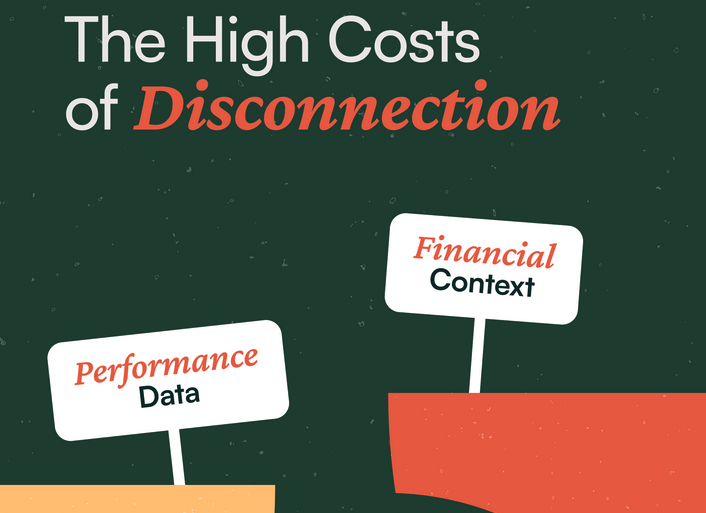
In many cases, assets were generating power, but the data used to operate and report their performance was fragmented and disconnected leading to significant financial losses.
In a tighter, more competitive market, data-driven performance will be the difference between portfolios that endure and those that fall behind. Solar asset managers must treat performance as a financial obligation, starting with data integrity and building in cybersecurity from the beginning.
Hardware built the solar industry. Now, asset performance, clean data, accountable operations and software designed for financial outcomes will determine who succeeds.

Alon Mashkovich, CEO & Co-founder of enSights, is an entrepreneur with more than 20 years of experience in strategic business development, operations management, energy efficiency, and renewable energy. Previously, as a business and energy efficiency consultant, Alon saw the challenges that his clients faced with energy management and optimization, which led him to create enSights with his co-founders. Alon is passionate about helping enterprises in their digital and clean energy transformation.
Sumber Artikel:
Renewableenergyworld.com