Retro Rewind Re-creates The Glorious Drudgery Of Working …
Text settings
Story text
SmallStandardLargeStandardWideStandardOrange
* Subscribers only
Learn more
If you were working a retail job at a movie rental store in the early ’90s, there’s a decent chance you couldn’t wait to clock out for the day and escape from the daily grind with a mindless video game. Here in the 2020s, on the other hand, at least one mindless video game is striving to re-create the daily grind of working at a video rental store.
Retro Rewind: Video Store Simulator is the latest in a burgeoning field of “work simulators” that has found indie success on Steam. And while the depth of the game’s overall retail simulation is pretty shallow, there is a sort of soothing, zen comfort to be found in the repetitive nostalgia of that menial workaday world of the past.
Working 9 to 5
Unsimulations that rely heavily on menus or spreadsheets, Retro Rewind puts you in the first-person perspective of the manager of a small local VHS rental joint circa 1990. That means you have to run around doing everything from buying the tapes to laying out the furniture and decorations in the store. And while you can technically display those tapes out on any shelf you want, grouping them together by genre makes for both a better customer experience and helps to quiet those anal-retentive organizational voices in your head.
Once the store is set up, the mind-numbing repetitiveness of the daily routine quickly sets in. Each in-game day is primarily filled by switching between two main tasks: manning the cash register (i.e., scanning items, taking customer cash, and making change from the register) or reshelving returns (picking up videos from the return bin, scanning them in, and running them back to the shelves in groups of 10 at a time).
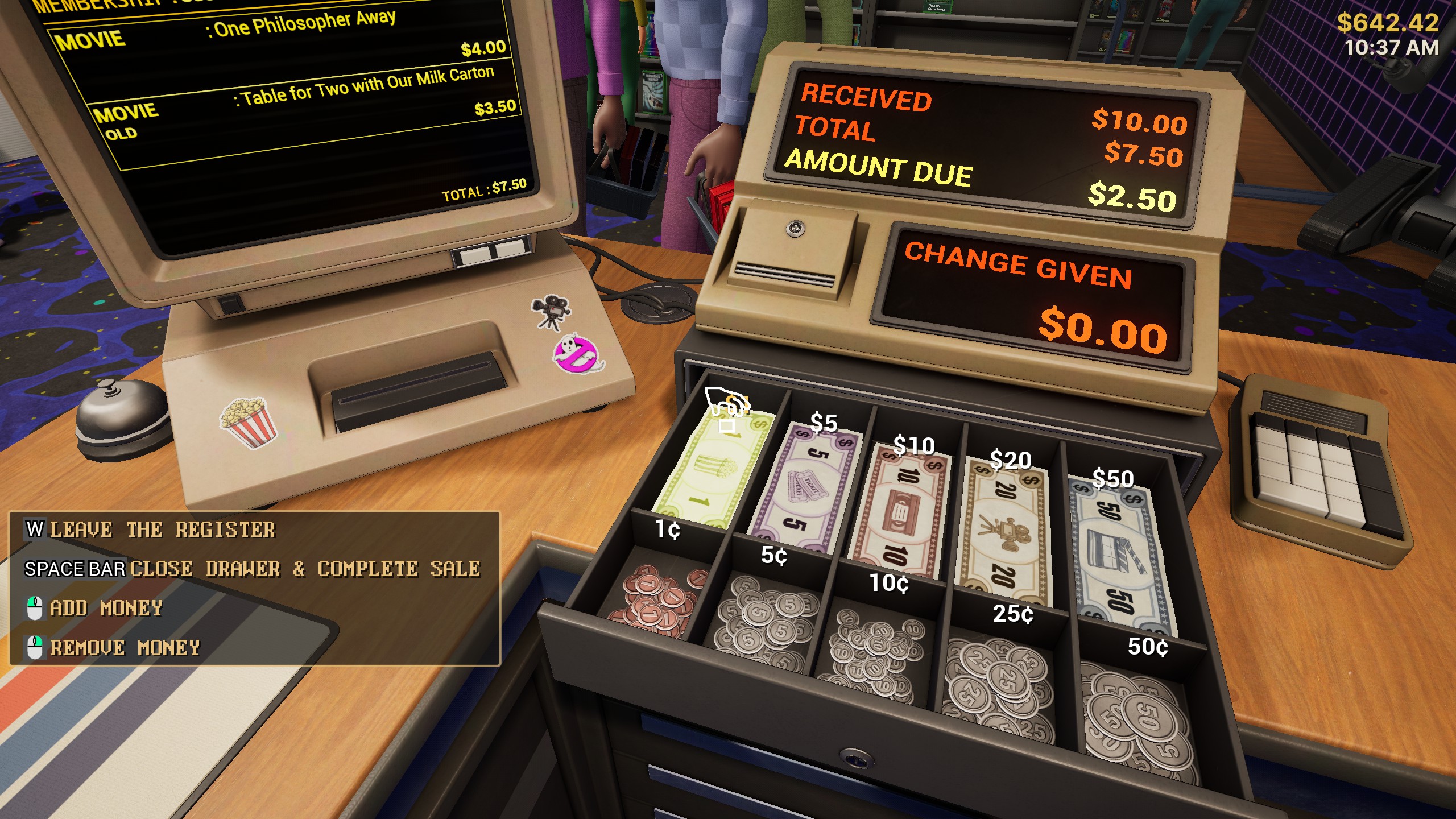
Get ready to make a LOT of change.
Credit: Blood Pact Studios
Get ready to make a LOT of change. Credit: Blood Pact Studios
Each individual action described above requires just enough specific mouse movement and clicking that you can’t quite commit it to muscle memory—there’s no holding down a single button to automate any processes here. And each job has just enough mental requirements and randomized interruptions to prevent you from going into full “brain off” autopilot. You never know when you’re going to have to stick a returned tape in the (all too slow) rewinding machine, for instance, or go grab a specific tape reservation for a customer, or run to the back to field a phone call.
As the days go on, you’ll slowly unlock minor variations in this seemingly inexorable cycle. A new video release day, for instance, might mean moving the old copies of “Forward to the Past” to the bargain bin in order to make room on the shelves for new copies of “Die Trying” (the parody film titles are hit-or-miss, but can have their own nostalgic appeal). And fixing the slushy machine behind the counter means getting occasional breaks from making change for to spend a small 15-second mini-game making a snack for a customer.
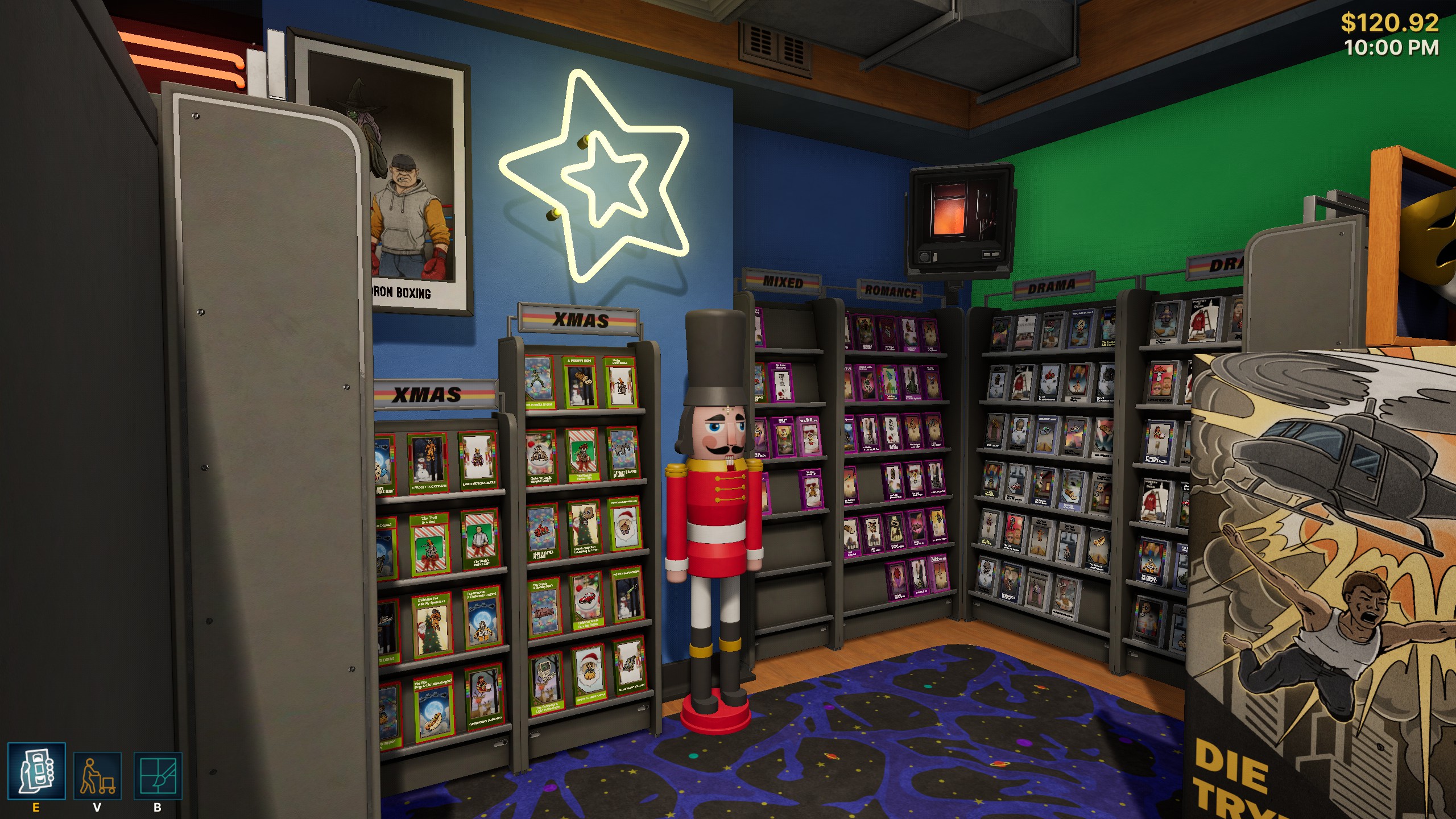
Ho ho ho, Merry Xmas.
Credit: Blood Pact Studios
Ho ho ho, Merry Xmas. Credit: Blood Pact Studios
The most significant improvement you’ll eventually unlock is the ability to hire staff, granting you some blessed relief from the drudgery of your daily in-game tasks (this probably says something about the nature of minimum wage employment, but I digress). The game makes some extremely vague gestures toward the idea of employee management, occassionally asking you to approve raises, let employees call out sick, wake them up when they fall asleep on the job, or risk their resignation by asking them to pick up the pace. But since you can fire an employee and hire a new one instantly without any apparent penalty, this bit of simulation feels more than a bit hollow.
Miles wide, inches deep
Employee management isn’t the only area where the game seems shallow. Overall, there just aren’t a lot of interesting business decisions to be made in Retro Rewind. You can’t set prices or late fees to try to maximize profits, for instance, or set up a budget for advertising to try to attract new business. And while the game says that things movie selection and decorations have some impact on how busy the store will get, there isn’t a lot in the way of granular feedback to determine what’s working and what isn’t.
There isn’t a lot to worry about in terms of time management or customer service, either. Each day’s in-game clock doesn’t even start until you flip on the “OPEN” sign, for instance, meaning you can spend as long as you want each morning restocking the shelves and ordering and placing new furniture without any penalty. And while customers can sometimes storm out when you insist on them paying a late fee, I never saw one leave because of a long wait to check out or because the movie they wanted wasn’t available.
Despite all the manual effort you need to put in, this video store business practically runs itself. While there are ly strategies for making profits a bit faster, there’ pretty much no risk of taking a loss as long as you do the bare minimum to stocking the shelves, checking out customers, and ordering new movies when you can afford to.
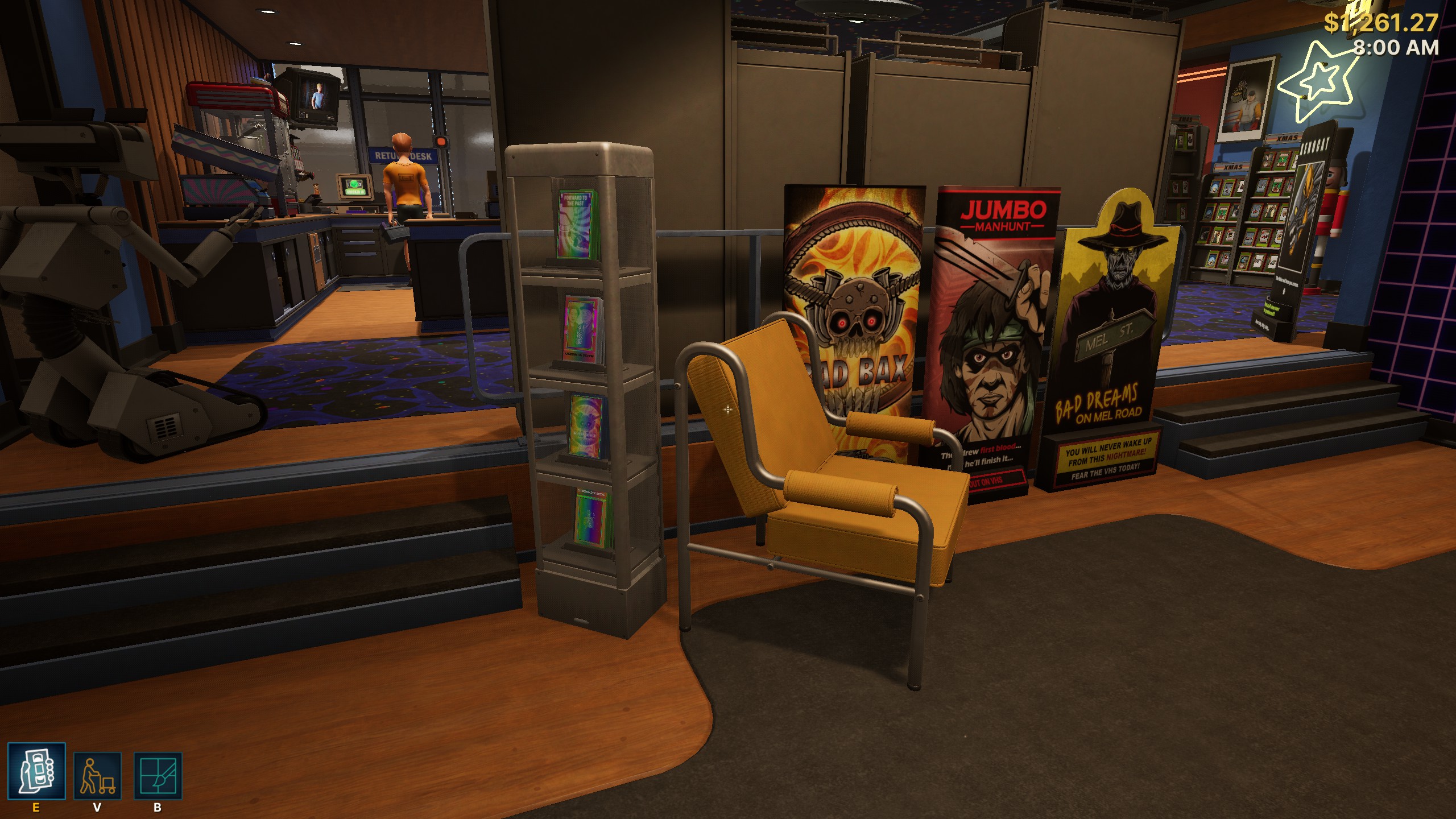
I to make my video store feel a home away from home…
Credit: Blood Pact Studios
I to make my video store feel a home away from home… Credit: Blood Pact Studios
With the business running more or less on autopilot, the game’s most interesting decisions become primarily cosmetic. I whiled away a lot of time just rearranging my space to allow for maximum customer flow and minimum time spent running across the aisles to restock different genres. I also enjoyed picking out just the right type of cheesy ’90s carpet for my floor and saving up for an animated robot statue to highlight the sci-fi section.
That could be enough for a certain type of player that just wants an excuse to recapture the era where you actually had to leave the house to rent a movie on a low-definition black rectangle. Retro Rewind is the kind of game that will keep your hands and brain minimally busy while listening to a podcast or watching some rerun on a background TV. Just don’t go in expecting a deep and complex business simulation.
Kyle Orland Senior Gaming Editor
Kyle Orland has been the Senior Gaming Editor at Ars Technica since 2012, writing primarily about the business, tech, and culture behind video games. He has journalism and computer science degrees from University of Maryland. He once wrote a whole book about Minesweeper.
Sumber Artikel:
Arstechnica.com