Buy Now
Multiple Buying Options Available
Rating:
8/10
WIRED
Fabulously clear and immersive sound. Potent bass. Stylish design that’s built for comfort. Gorgeous machined aluminum body. Good battery life. Wired and wireless hi-res audio with supported devices.
TIRED
Mid-tier noise canceling and transparency modes. No magnetic earpads. Pricier than most rivals.
Back in 2013, when I was just a bright-eyed, upstart tech reviewer, I encountered a pair of headphones so stylish, sweet-sounding, and luxurious that I still think about them. The brand was Bowers & Wilkins, and the headphones the P7, a wired pair of leather-clad beauties with sparkling folds of chrome that marked the brand’s first step into the over-ear genre.
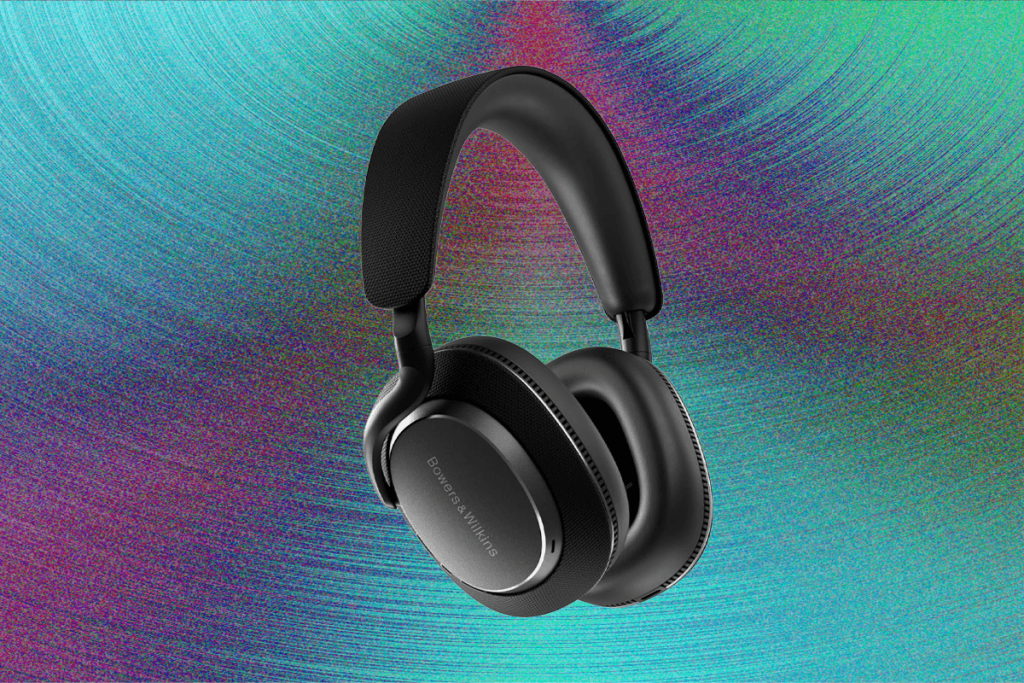
Everything has changed since then, especially the headphones market, but the fundamentals of special sound in a sleek and robust design have remained hallmarks of B&W. As with the previous Px7 iterations, the Px7 S3 offer modern features wireless connection with aptX lossless support, noise canceling and transparency modes, and an app for adjusting settings. Ostensibly, they compete with flagship travel models Bose’s latest QuietComfort Ultra and Sony’s WH-1000XM6, but they’re really a different kind of headphone for a different kind of listener, for an audiophile who wants to listen in the comfort of his or her home or studio.
The S3’s build quality sits a step above Bose and Sony, trading some of their daintier plastic for machined aluminum and tactile control keys. They step up similarly in performance, with more immersion and overall precision. In exchange, you’re paying a slightly higher premium and losing some noise-canceling skills. That makes the Px7 S3 less a fit for frequent cross-Atlantic commuters, and more an everyday companion for those who choose sound and style first.
Stronger Build

Photograph: Ryan Waniata
The moment you pull the Px7 S3 from the package, you’ll feel their robust build quality. The metal arms that extend from the headband are rock solid, while the flashy endcaps feel ready to take a good knock and keep ticking. Their best analogue might be Apple’s stalwart AirPods Max, but without the hefty weight or fully metal ear cups, and with a solid travel case in place of a rubbery bra. One other difference is that B&W’s latest models disappointingly lack breakaway magnetic earpads, making the components harder to replace.
Otherwise, the faux-leather pads are appropriately cushy, matched by thick headband padding for a comfy fit. At first, I found the clamping force too aggressive, and the band tended to weigh on my head over multiple hours, but both seemed to ease up over time for deeper comfort. The S3’s 300-gram weight drops a few grams from the Px7 S2, though they’re still over 40 grams heavier than rival Bose or Sony models.
Speaking of Sony, the control keys aren’t as effortlessly intuitive as Sony’s brilliant touch sensor system, but they soon became second nature. On the right cup, volume keys flank a multi-key for playback and calling, while the left cup harbors a power switch and a programmable key that defaults to ambient audio control. Also at the left is a USB-C charging port and audio interface, supporting up to 24-bit/96-kHz resolution. As with the Px7 S2, two hours of charging loads up an ample 30 hours of battery play time.
Within each ear cup is a version of the 40-mm bio-cellulose driver that has defined the Px7 series, now tuned to offer “richer detail, deeper bass,” and enhanced clarity over its predecessors. On the exterior are eight microphones for great call quality, updated hybrid noise canceling, and solid pass-through clarity to let you hear your environment.
B&W’s Music app makes it relatively simple to dive deeper into the settings, once you get past the busy home page that pushes curated playlists from streaming services Qobuz and Tidal. Helpful settings include a five-band EQ, multipoint audio control, and a wear sensor switch that controls auto-pause sensitivity. I found the auto-pause slightly unresponsive at first, but other S3 traits, it seemed to improve as the headphones wore in.
Sweeter Sound

Photograph: Ryan Waniata
As a weekend musician, my project occasionally puts out new music. For our latest EP mix, we used a local producer who’s worked with everyone from Elliott Smith to The Decemberists. The tracks were so clear that I seriously considered redoing the vocals. Listening to the Px7 S3 is a similar experience for your music. The drivers cut away background clutter and distortion so effectively, every instrument shines. The detail rises above anything I’ve heard in this class.
Instrumental entrances are strikingly swift, so that moments a tremolo guitar or synth bouncing between stereo channels flutter back and forth a trill from a fine concert pianist. Instrumental timbres rise to the surface with ease, especially noticeable in complex textures woody percussion or crunchy guitar tones that blaze with extra spark.
Tonally, the sound signature has a forward push in the upper frequencies that makes acoustic guitar and strings sound lighter. It’s a fun tweak that adds some style points. Bass is rich, pointed, and ramped up, so that I preferred to EQ it down a couple notches. Occasionally, deep hits still sound more assertive than expected, but the overall depth provides a grounded foundation for the smooth midrange and more whimsical higher frequencies.
Comparing songs Sgt Pepper’s “Good Morning,” the S3 stood above heavy hitters the Sony XM6 and AirPods Max, with more readily revealed sizzle and layering to moments the raucous horns in the right channel. Standout details key clicks at center right, or the puff of cymbals in the deep left register with added nuance, resulted in details I’d missed in multiple previous listens. The S3’s overall velocity is also more powerful than many models, so I rarely needed to raise the volume above the bottom quarter on my phone.
Whatever genre I played, the Px7 S3 provided a fun and stylish presentation without the need for synthetic effects spatial audio (though it does have it, if you want it). Fleetwood Mac’s “Landslide” is lavish and clear, cutting unwanted noise for vivid separation of the multiple guitars and splashy coloration. St. Vincent’s more modern “Digital Witnesses” explodes with breakneck synths bouncing between channels and bass that throws down a gauntlet of boom.
Nearly as impressive is how quietly the noise canceling works in concert with the performance, providing a stark canvas for the different musical scenes. Even so, as top rivals continue to ramp up their potency, the Px7’s noise canceling remains a step behind the best.
It’s perfectly fine for most scenarios, providing a moderate cocoon of silence across frequencies, but testing it inside and out of my treated studio revealed less efficacy at both ends of the spectrum than top models. Bose’s QC Ultra, Sony’s XM6, and even JBL’s sneaky good Tour One M3 all provided better suppression with less hum in my airplane drone test, while sharper sounds the hiss of my espresso maker’s milk frother sneak through more easily in the S3.
Again, the Px7 S3 aren’t built to provide the ultimate isolation from environmental sounds. They’re game for your everyday needs, but the end goal here is clear: better sound and a slicker design. On that front, the Px7 S3 are as accomplished and engaging as anything in their class.
Sumber Artikel:
Wired.com