

By James Halley – Apr 16, 2026 at 1:47PM EST
Key Points
-
This trio has typically outpaced the S&P 500 in economic downturns.
-
The three are healthcare leaders with plenty of size and diversity.
-
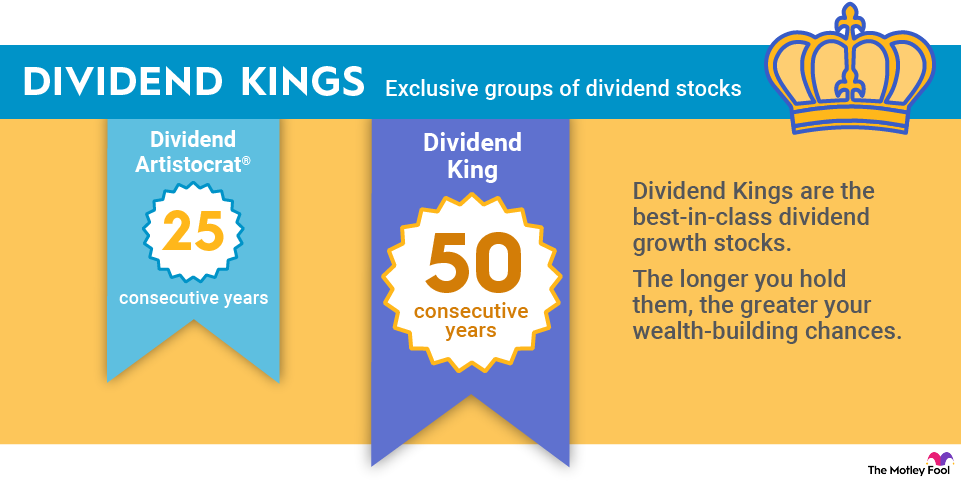
All three are Dividend Kings with an impressive history of payouts.
Johnson & Johnson, the classic survivor
The company is a defensive healthcare play. It has raised its dividend 63 consecutive years, including a 5% raise last year to $1.30 per quarterly , equaling a 2.19% yield at its current price.
While its 2023 spinoff of its consumer healthcare division into Kenvue trimmed its diversity a bit, it’s still a huge company. It operates in two segments, innovative medicines and medtech. The Kenvue spinoff has made Johnson & Johnson more profitable. In 2025, J&J reported a trailing net profit margin of 28.5%, a big jump from the 15.8% reported in 2024.
Expand

NYSE: JNJ
Johnson & Johnson
Today’s Change
(-1.84%) $-4.39
Current Price
$234.28
Key Data Points
Market Cap
$575B
Day’s Range
$232.19 – $238.50
52wk Range
$146.12 – $251.71
Volume
230K
Avg Vol
8.6M
Gross Margin
67.97%
Dividend Yield
2.18%
The company has 52 approved drug therapies and more than 67 approved medical devices. It doesn’t rest on its laurels, having spent more than $14.7 billion in research and development last year. J&J estimates that it will launch more than 10 medicines with $5 billion or more in annual sales by 2030, and by 2027, it expects that one-third of its medtech sales will come from products launched since 2022.
Johnson & Johnson is predicting 2026 revenue of $99.5 billion to $100.5 billion, up 6.2% at the midpoint, for its fifth consecutive year of revenue growth. It is also predicting adjusted operational earnings per (EPS) between $11.28 and $11.48, an increase of 5.5% at the midpoint.
Abbott Labs is built for adaptation
The company’s revenue is spread across four segments (diagnostics, devices, nutrition, and generics), ensuring that a downturn in one area rarely sinks the entire ship. Its ability to pivot is its greatest strength. During the 2020 downturn, it was one of the first companies to stabilize by rapidly developing COVID-19 testing kits, which offset the temporary decline in elective surgical device sales.
Expand

NYSE: ABT
Abbott Laboratories
Today’s Change
(-5.93%) $-6.02
Current Price
$95.54
Key Data Points
Market Cap
$177B
Day’s Range
$93.93 – $99.00
52wk Range
$93.93 – $139.06
Volume
1.1M
Avg Vol
12M
Gross Margin
52.72%
Dividend Yield
2.98%
Abbott has increased its dividend for 54 consecutive years, including a 6.8% increase, effective this year to $0.63, equaling a yield at its current price of around 2.38%. In 2025, the company reported sales of $44.3 billion, up 5.7%, and adjusted EPS of $5.15, up 10%. It said it expects 2026 revenue growth of 7% at the midpoint and adjusted EPS of $5.55 to $5.80, a 10% increase at the midpoint.
It sells thousands of products, including more than 1,500 generic medicines, which gives it an edge. When coronavirus testing sales declined as the pandemic ebbed, Abbott’s medical device products more than took up the slack, particularly its cardiovascular and diabetes tools.
Becton, Dickinson: Steady as the economy goes
It is the world’s largest manufacturer of basic medical supplies, such as needles and syringes. More than 90% of the medical device maker’s income is built from recurring consumables, mostly nondiscretionary medical necessities that hospitals and laboratories require daily, regardless of the broader macroeconomic climate or interest rate fluctuations. It has more than 33,000 patents.
By maintaining a dominant market in medication delivery and diagnostic testing, Becton, Dickinson has built a competitive moat that is difficult for rivals to replicate, especially as it shifts toward higher-margin connected care and biopharma services.
Expand

NYSE: BDX
Becton, Dickinson
Today’s Change
(-0.10%) $-0.15
Current Price
$155.37
Key Data Points
Market Cap
$44B
Day’s Range
$153.11 – $155.39
52wk Range
$127.54 – $187.35
Volume
95K
Avg Vol
2.7M
Gross Margin
46.07%
Dividend Yield
2.26%
It reported first-quarter 2026 revenue of $5.3 billion, up 1.6%, and GAAP EPS of $1.34, an increase of 28.8%. It is forecasting low single-digit revenue growth for 2026. The company has raised its dividend for 54 consecutive years, including a 0.009% increase in 2025 to $1.25 per , yielding 2.26% at its current price.
Built to survive hurdles
All three companies face regulatory and legal issues that could drag down their s.
Johnson & Johnson is facing more than 67,000 talc lawsuits, as well as a legal battle where the company seeks to block the U.S. government from negotiating prices for some of its top-selling drugs. Abbott is seeing escalating litigation and huge court judgments against it due to problems with its specialized baby formula. For Becton, Dickinson, it is still facing regulatory scrutiny from the Food and Drug Administration after settling lawsuits over concerns with its Alaris pump infusion sets and software.
The advantages all three are their huge size and scope, which continue to generate steady revenue growth and enough funds to handle lawsuits. These companies’ past ability to weather economic downturns also becomes a self-fulfilling prophecy, as investors will continue to turn to these stocks when economic clouds are on the horizon.
Their above-average dividends also help buoy their s, as income-oriented investors are more ly to hold these steady stocks for the long term.
Read Next
•By Jason Hall

•By Matt DiLallo
5 Best High Dividend Mutual Funds to Buy in 2026
•By Keith Noonan
Best Blue Chip Stocks to Buy in 2026: Should You Invest?

•By Jack Delaney
Better Buy Right Now: Johnson & Johnson Vs. Pfizer

The $100 Billion Pivot: Why Johnson & Johnson Is My Top Dividend King to Buy in 2026

Could Buying This Dividend Pharma Stock Today Set You Up for Life?
Stocks Mentioned

Johnson & Johnson
NYSE: JNJ
$234.22
(-1.86%)-$4.45

Abbott Laboratories
NYSE: ABT
$95.54
(-5.93%)-$6.02

Becton, Dickinson
NYSE: BDX
$154.92
(-0.39%)-$0.60
*Average returns of all recommendations since inception. Cost basis and return based on previous market day close.
Sumber Artikel:
Fool.com

