This is today’s edition of The Download, our weekday newsletter that provides a daily dose of what’s going on in the world of technology.
Future AI chips could be built on glass
Human-made glass is thousands of years old. But it’s now poised to find its way into the AI chips used in the world’s newest and largest data centers.
This year, a South Korean company called Absolics will start producing special glass panels that make next-generation computing hardware more powerful and efficient. Other companies, including Intel, are also pushing forward in this area.
If all goes well, the technology could reduce the energy demands of chips in AI data centers—and even consumer laptops and mobile devices. Read the full story.
—Jeremy Hsu
The must-reads
I’ve combed the internet to find you today’s most fun/important/scary/fascinating stories about technology.
1 The race is on to establish a globally recognized “AI-free” logo
Organizations are rushing to develop a universal label for human-made products. ()
+ A “QuitGPT” campaign is urging people to ditch ChatGPT. (MIT Technology Review)
2 Elizabeth Warren wants answers on xAI’s access to military data
The Pentagon reportedly gave it access to classified networks. (NBC News)
+ Here’s how chatbots could be used for targeting decisions. (MIT Technology Review)
+ The DoD is struggling to upgrade software for fighter jets. (Bloomberg $)
3 Models are applying to be the faces of AI romance scams
The “AI face models” are duping victims out of their money. (Wired $)
+ Survivors have revealed how the “pig butchering” scams work. (MIT Technology Review)
4 Meta is planning layoffs that could affect over 20% of staff
The job cuts could offset its costly bet on AI. (Reuters $)
+ There’s a long history of fears about AI’s impact on jobs. (MIT Technology Review)
5 ByteDance delayed launching a video AI model after copyright disputes
It famously generated footage of Tom Cruise and Brad Pitt fighting. (The Information $)
6 Cybersecurity investigators have exposed a huge North Korean con
The scammers secured remote jobs in the US, then stole money and sensitive information. (NBC News)
7 A Chinese AI startup is set for a whopping $18 billion valuation
That’s more than quadruple its valuation just three months ago. (Bloomberg $)
+ Chinese open models are spreading fast—here’s why that matters. (MIT Technology Review)
8 Peter Thiel has started a lecture series about the antichrist in Rome
His plans have drawn attention from the Catholic Church. (Reuters $)
9 Norway is fighting back against internet enshittification
It’s joined a global campaign against the online world’s decay. (The Guardian)
+ We may need to move beyond the big platforms. (MIT Technology Review)
10 How a startup plans to resurrect the dodo
Humans wiped them out nearly 400 years ago—can gene editing bring them back now? (Guardian)
Quote of the day
“I would build fission weapons. I would build fusion weapons. Nuclear weapons have been one of the most stabilizing forces in history—ever.”
—Anduril founder Palmer Luckey s his love of nukes with Axios.
One More Thing
We need a moonshot for computing
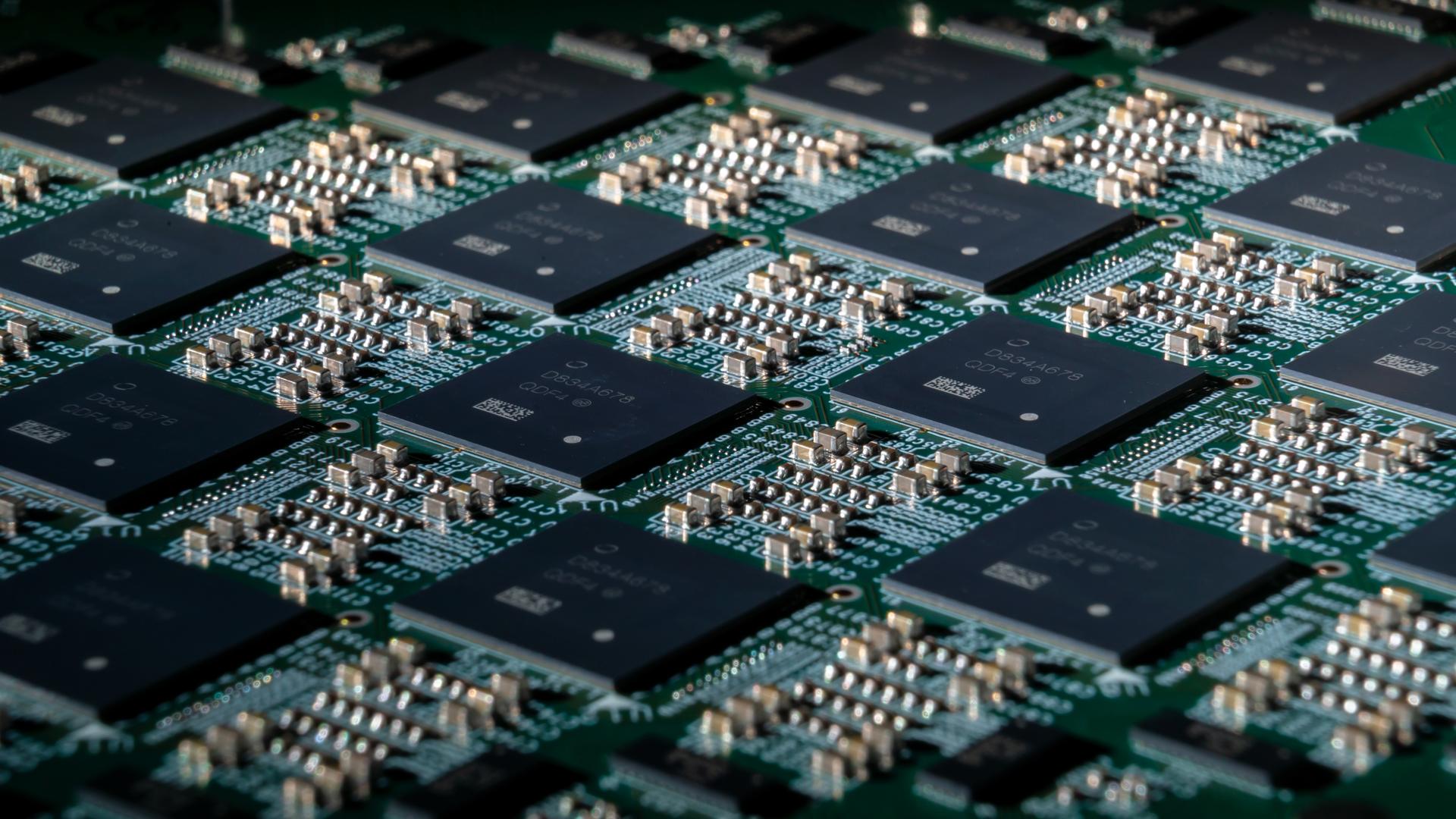
TIM HERMAN/INTEL
The US government is organizing itself for the next era of computing. Ultimately, it has one big choice to make: adopt a conservative strategy that aims to preserve its lead for the next five years—or orient itself toward genuine computing moonshots.
There is no shortage of candidates, including quantum computing, neuromorphic computing and reversible computing. And there are plenty of novel materials and devices. These possibilities could even be combined to form hybrid computing systems.
The National Semiconductor Technology Center can drive these ideas forward. To be successful, it would do well to DARPA’s lead by focusing on moonshot programs. Read the full story.
—Brady Helwig & PJ Maykish
We can still have nice things
A place for comfort, fun and distraction to brighten up your day. (Got any ideas? Drop me a line.)
+ A UPS delivery driver heroically escaped from two murderous turkeys.
+ Art’s love affair with cats is charmingly depicted in a new book.
+ The humble pea and six other forgotten superfoods promise accessible nutritional power.
+ is the Transatlantic tale of your favorite rapper’s favorite rapper.
Deep Dive
The Download
The Download: AI-enhanced cybercrime, and secure AI assistants
Plus: Instagram’s CEO Adam Mosseri has denied claims that social media is “clinically addictive”
By
The Download: 10 things that matter in AI, plus Anthropic’s plan to sue the Pentagon
Plus: The US DoD has been secretly testing OpenAI models for years
By
The Download: the future of nuclear power plants, and social media-fueled AI hype
Plus: more European countries are considering banning social media for under-16s
By
The Download: protesting AI, and what’s floating in space
Plus: The US government wanted to use Anthropic’s AI to analyze bulk data collected from Americans
By
Stay connected
Get the latest updates from
MIT Technology Review
Discover special offers, top stories, upcoming events, and more.
Enter your email
Thank you for submitting your email!
It looks something went wrong.
We’re having trouble saving your preferences. Try refreshing this page and updating them one more time. If you continue to get this message, reach out to us at customer-service@technologyreview.com with a list of newsletters you’d to receive.
Sumber Artikel:
Technologyreview.com