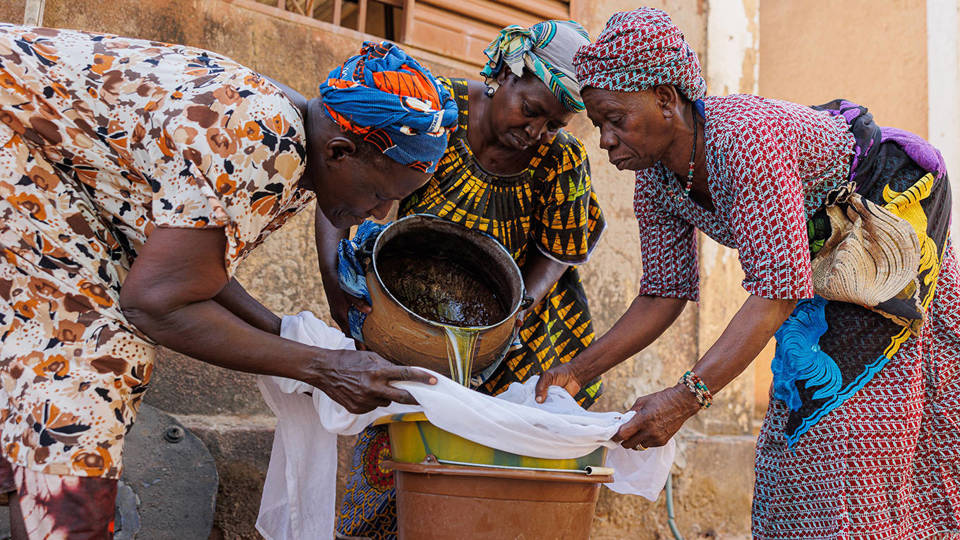
 Ousmane Makaveli/AFP via Getty Images
ing foreign-aid cuts in donor countries, many developing countries have implemented austerity measures, to the detriment of women’s jobs, services, and protections. But donors and policymakers can deliver d gains by investing in women’s rights organizations and embracing gender-based budgeting.
With the right strategies, policymakers can stem these losses and deliver d gains. But a major obstacle is that women’s rights organizations – which are best positioned to address gendered poverty and violence – face persistent funding gaps. When frontline groups lose flexible, multiyear core support, reform efforts fall short.

Winter Sale: 40% on a new PS subscription
For a limited time, you can gain greater access to Project Syndicate – including every new PS commentary, our entire suite of subscriber-exclusive content, the full PS archive, and more – starting at just $53.99 for your first year.
Subscribe Now
Providing grants to organizations that are working to dismantle barriers to decent work, economic participation, and social equality is a proven solution. With direct funding, these trusted community groups can co-design projects, respond quickly to emerging needs, ensure that essential services are maintained, support informal workers, and mobilize collective action that drives lasting structural change. This is what “give to gain” looks in practice.
Examples of such interventions abound. The African Women’s Development Fund supports rural women’s groups on the continent in contesting land grabs and building cooperatives to raise incomes. In Latin America and the Caribbean, Fondo de Mujeres del Sur supports domestic workers’ unions and income-generating cooperatives for former women inmates to improve access to labor rights and decent employment. The Women’s Fund Asia complements efforts by migrant and informal workers to organize for fair wages and social protection. The International Indigenous Women’s Forum finances campaigns to defend indigenous territory, sustain local economies, and preserve natural ecosystems.
These four women’s funds manage Leading from the South, a feminist philanthropic alliance dedicated to applying this grassroots model to solve challenges that traditional aid donors often overlook. By offering patient capital for core costs, LFS bolsters continuity, which is essential to philanthropic effectiveness. This allows local organizations to look beyond immediate needs, build on cross-border learning, systematize services, and turn pilot projects into policies.
To ensure that gender equity, protection, and justice are at the core of economic policy, donors must realign their investments accordingly. This means ensuring that women’s rights organizations, which currently receive well under 1% of official development assistance (and only 0.4% of all gender-focused aid in recent years), obtain a significant of the funding that is allocated for gender in the form of multiyear, flexible grants.
Adequate funding and platforms LFS, with their cross-border collaboration and grassroots infrastructure, can facilitate investment where it is needed most. For example, investment in Indigenous women’s leadership and economic autonomy is particularly important, given their critical role in safeguarding biodiversity and protecting land for future generations.
To this end, donors should condition their headline pledges on allocating certain percentages to core funding, Global South-led groups, and programs focused on delivering care, safety, and access to support. Frameworks for measuring the impact of gender-responsive budgeting should feature indicators that can show improved outcomes for gender-based violence, such as survivors’ uptake of income support and enforcement of safe workplaces.
Policymakers, for their part, must focus on institutionalizing gender-responsive budgeting. All ministries should adopt budget markers that show how spending advances gender equality; review the impact of government spending, with the results made public; and allocate a meaningful of tax revenue, and public spending more broadly, toward closing the care gap and expanding women’s access to assets. That means expanding benefits for survivors of domestic violence – such as income assistance, childcare, and safe transport – and categorizing them as essential services. Lastly, they should collaborate with feminist organizations to co-design policy and track outcomes.
The economic case for boosting investment in women’s rights organizations, and for ensuring that financing and budget decisions strengthen women’s safety and autonomy, has long been settled. According to the World Bank, every dollar spent on empowering adolescent girls in Africa could generate a tenfold return in terms of growth. Investing in women’s rights is not charity; it is a form of giving that generates outsize gains for all.
Françoise Moudouthe, CEO of the African Women’s Development Fund, also contributed to this commentary.
Help us strengthen our reporting on global health and development by taking a short survey.
Take Survey
Featured
-
Ayatollah Khamenei’s Deadly Legacy
Mar 1, 2026 Pegah Banihashemi
-
Stablecoins Are Raising New Risks for Emerging Markets
Feb 25, 2026 Eduardo Levy Yeyati
-
The Perils of a Power Vacuum in Iran
Mar 1, 2026 Stephen Holmes
-
Saving Innovation From the Anti-Vaxxers
Mar 2, 2026 Christopher Marquis
-
British Lessons About American Decline
Feb 27, 2026 Harold James
https://prosyn.org/OzrnWb0
It appears that you have not yet updated your first and last name. If you would to update your name, please do so here.
Please wait, fetching the form
Please wait, fetching the form
Please wait, fetching the form
Please wait, fetching the form
Please wait, fetching the form
Please wait, fetching the form
Please wait, fetching the form
Sumber Artikel:
Project-syndicate.org