
News broke in early October that Avista has selected Heddian to support its field communications modernization, showcasing what it can mean for utilities to upgrade connectivity while making the most of existing infrastructure. As energy companies face increasing pressure to do exactly that, it’s worth exploring further.
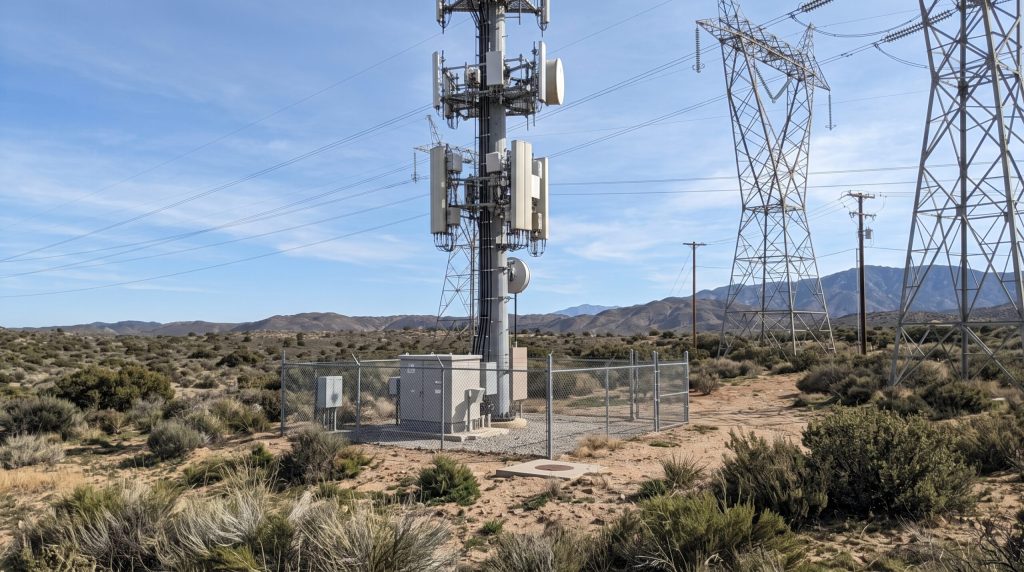
Serving electric and natural gas customers across eastern Washington, northern Idaho, and parts of Oregon, the architecture pairs the reach of commercial cellular networks with the security and operational control of private infrastructure. This hybrid model gives Avista a best-of-both-worlds foundation, allowing the utility to leverage public networks where coverage is strong while selectively deploying private LTE assets for high-reliability grid-edge applications that demand maximum control.
As Heddian CEO Joe Walsh noted in the release, this news shows that energy companies don’t have to choose between the security of private wireless and the footprint of public cellular. Instead, they can deploy integrated solutions that deliver both without the burden of building and managing private spectrum infrastructure entirely from scratch. We connected with Walsh to further break down what this hybrid architecture means for day-to-day field operations, why managing core communication networks as a service is becoming the new standard for critical infrastructure operators, and more.
Jeremiah Karpowicz: Tell us more about the distinctions between private and public communication frameworks. Is hybrid more advantageous or cost-effective than a 100% private network, or is it all about the context?
Joe Walsh: A fully private network gives a utility the most security and control, but the economics don’t work everywhere. Building towers, backhaul, and cell sites across an entire territory is a major investment, especially where commercial coverage already works. I don’t want utilities to let the perfect be the enemy of the good.
A hybrid network gives utilities real functionality now. It uses public carriers where they meet operational needs and private infrastructure where more coverage, control, or resilience is required, and it ties them together with a private core from Druid and a utility-controlled SIM. Just as important, it preserves the option to expand. Because authentication and routing run through a core the utility controls, adding private cell sites later extends the network instead of rebuilding it. A utility can grow toward full private LTE as its budget and needs allow. Even then, UtiliSIM lets commercial carriers remain a failover path, so hybrid is a resilience strategy at every stage.
One of my mantras in founding Heddian is that we need to meet utilities where they are and travel with them on their grid communications journeys.
What pushed Avista toward hybrid over point-to-point or public-only options?
Avista has always mentioned that they want to focus on applying the right solution based on operational need, location, reliability, and cost. Avista’s territory covers about 34,000 square miles across eastern Washington, northern Idaho, and parts of Oregon, and no single technology fits that much variety. Public-only leaves critical devices dependent on networks the utility doesn’t control. Fully private everywhere is hard to justify where commercial coverage is already good. Hybrid lets Avista decide location by location.
What does it mean for Heddian’s design to integrate with Avista’s legacy infrastructure without disrupting operations?
This is where meeting utilities where they are matters most. Many utilities have devices on carrier retail contracts today, and they shouldn’t have to wait for a network build to get value. For those devices, we use OneLayer to connect to them on the carrier networks, which gives visibility and security right away, until the devices are migrated to the hybrid network.
Migration starts with the SIM. Installing a UtiliSIM does mean a visit to replace the existing SIM, but it’s a one-time visit. After that, over-the-air updates are a key feature of UtiliSIM: we can change which networks the SIM uses, including moving the device to private LTE when the utility is ready, without rolling a truck again. That matters because every truck roll can sink the business case for a change.
The Druid core also changes the security and routing picture. Authentication happens on the utility’s own core rather than the carrier’s, so the utility controls which devices connect and how their traffic is routed, whether a device is on a commercial network or a private one. For utilities that want it, we also offer 24×7 monitoring and operational support that complements their own network and operations teams rather than replacing them.
How does upgrading field network bandwidth translate into measurable improvements in grid capacity?
Bandwidth doesn’t add capacity by itself, but secure, reliable, higher-capacity communications let a utility manage the grid more closely. First, reliability: a more dependable network means fewer gaps in the data and fewer devices dropping off when they’re needed most. Second, tighter monitoring of device load and health: when a utility can see how heavily equipment is loaded and whether it’s healthy, it can use more of the capacity it already has with confidence and catch problems before they become outages. That’s how communication turns into capacity, rather than building new wires to create margin.
It also helps utilities meet evolving regulatory requirements. For example, NERC’s PRC-028 requires disturbance monitoring and reporting for inverter-based resources, and better field communications make it easier to collect and deliver that high-resolution data from remote sites. With NERC and FERC now working on new standards for large loads data centers, I expect monitoring and data-sharing expectations to keep growing. A hybrid network can carry that data over commercial coverage where it’s strong and private infrastructure where more control is needed, with authentication on the utility’s own core and device-level security from OneLayer.
What lessons from the Avista deployment can other utilities use for their own field network roadmaps?
- Don’t treat public versus private as an either/or choice. Put the private control layer in first, then add private radio infrastructure where it pays off.
- Control your identity and routing layer. A utility-controlled SIM plus a core the utility controls means authentication, routing, and device management aren’t tied to one carrier or one type of network. Once the UtiliSIM is in place, a utility can change its communications options over the air without rolling a truck, and every truck roll can kill the business case for whatever change you’re contemplating.
- Phase the investment. Starting with connectivity and growing into private cell sites, more devices, and wider coverage keeps the roadmap flexible.
- Build security and device visibility in from day one. It’s much harder to retrofit later.
- Plan for operations, not just construction. Many utilities don’t want to run a telecom network themselves, so having the option of a partner that monitors and supports the network alongside their own teams reduces the burden.
Sumber Artikel:
Renewableenergyworld.com