
Edited by Paul Gerke
Capture rates are falling, and curtailment is rising across Europe’s leading renewable markets, and neither trend is reversing. In cannibalization-heavy solar markets, achieved prices are being systematically suppressed during peak generation hours. In grid-constrained wind corridors, curtailment is eroding revenue assumptions locked in at FID; in wind-driven volatility markets, extended low-wind periods are driving price spikes that expose revenue assumptions to structural unpredictability.
The mechanism differs by market and technology; the financial consequence is the same.
P50 revenue projections are being revised downward, available DSCR headroom is shrinking, and IRR outcomes are deteriorating even as LCOE continues to fall. Lenders are responding: debt sizing is being tightened on merchant-exposed assets, DSCR requirements are becoming more punitive, and risk premiums are moving. This is not a temporary market dislocation; it is structural repricing, and it is working through the capital stack.
Stronger Together?
The industry’s primary commercial response is hybridization – combining wind and solar with battery storage to reshape output, improve capture rates, and restore revenue quality. The logic holds across market types. In cannibalization-heavy solar markets, time-shifting generation from the midday glut into evening peak hours materially improves the achieved price per MWh. In grid-constrained corridors, co-located storage absorbs curtailed generation and redispatches it when network headroom exists, thereby recovering revenue that would otherwise be lost. In markets where extended low-wind periods send prices spiking, storage provides a hedge that a standalone wind PPA cannot. The commercial rationale is real, but the market is using the word “hybrid” to describe a range of structures with materially different implications for contracts, risk allocation, and bankability, and those distinctions matter enormously for what can actually be financed.
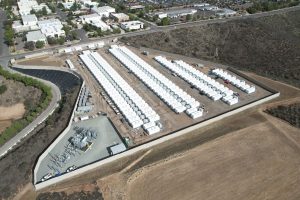
The dominant model in most markets today is co-location: a wind or solar asset and a battery sharing grid infrastructure but commercialized entirely separately. The storage asset optimizes independently across ancillary services, arbitrage, or capacity markets. The renewable asset operates under its own PPA or merchant exposure. These assets a fence line; they do not a revenue structure. Co-location improves portfolio economics and can simplify grid connection, but it does not address cannibalization or curtailment at the contract level. The offtaker is still buying pay-as-produced renewable power.
The genuinely integrated hybrid – where the battery is contractually deployed to reshape and time-shift output within a single PPA framework – is a structurally different proposition. Dispatch control needs to align across a hybrid PPA governing the shaped output and a separate optimization agreement covering time-shifted dispatch and residual merchant revenues. An emerging model in which an offtaker takes both assets in exchange for a single hybrid toll payment could simplify this, but while early dialogues are underway, executed examples remain rare. As it stands, optimization rights, charging restrictions, curtailment provisions, and storage revenue waterfalls all require bespoke definition.
Making Hybrid PPAs Work
Across Europe, the number of genuinely integrated hybrid PPAs that have been executed remains in single digits – a specialist tracking the market closely puts the figure at around three or four, each bespoke, with no settled clause framework and no standardized treatment of storage revenues. That same source notes: “It is a highly dynamic environment. Maybe in two months’ time it can look very different, but we are very early days for these structures, and there is a lot of complexity still to be sorted out.”
Lenders are underwriting these transactions case by case – scrutinizing revenue stacking strategies in ways that standalone asset financing simply does not require and raising DSCR thresholds accordingly. As one senior renewable energy banker observes, a further complexity specific to integrated structures is whether the battery is permitted to charge from the grid or only from the co-located renewable asset.
“In green storage formulations, where grid charging is excluded, lenders must sensitize renewable generation assumptions to determine what proportion of output satisfies the shaped PPA profile and what realistically remains available for merchant optimization,” the banker said.
Pricing these structures is equally unresolved. The value a battery delivers depends entirely on how and when it is dispatched, and until dispatch control, optimization rights, and revenue allocation are contractually defined, the premium a hybrid PPA can command cannot be reliably modeled, let alone benchmarked.
None of this undermines the structural direction. Solar cannibalization deepens as penetration increases. Viable wind sites are becoming scarcer, and grid constraints are worsening across most major markets. Corporate offtakers with 24/7 hourly matching requirements – the hyperscaler segment most visibly – represent a category of demand that pay-as-produced renewables cannot structurally serve. The commercial pull toward integrated hybrid structures is real, and it is building.
One developer active across multiple European markets is more direct about the pace of change: “Twelve months ago, we didn’t have any corporate on the table discussing hybrid PPAs. Nine months after our first close, we have around ten.” Not all will close. Some will revert to simpler structures, but the direction of travel is not in question.
What remains genuinely open is how the market gets from here to a repeatable, financeable investment product. How should lenders treat dispatch optimization rights without defaulting to treating all operational discretion as unfinanceable merchant exposure? Which risk allocation frameworks around curtailment, negative pricing, and performance guarantees are proving durable enough to treat as repeatable? How quickly does corporate demand accelerate as reference transactions accumulate and comprehension barriers fall?
About the Author

Alex Matthews is a freelance conference designer and producer specializing in finance, technology, cybersecurity, and governance within the energy sector. His work analyses commercial trends, market challenges, and shifting landscapes that shape the wider industry.
Sumber Artikel:
Renewableenergyworld.com