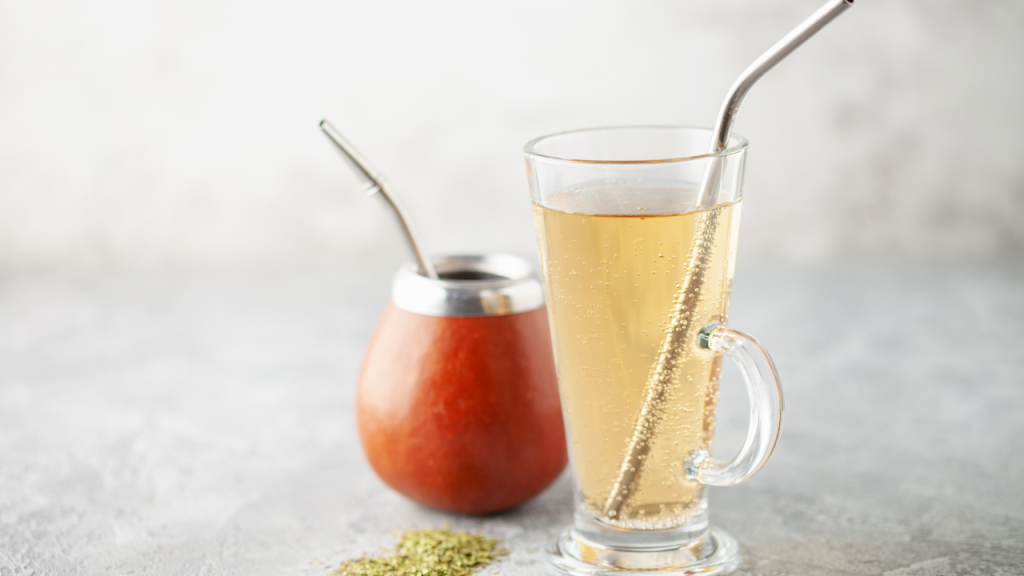
The World Cup has a way of turning local rituals into global demand almost overnight. We’ve seen it happen with beer, coffee, and tequila. In 2026, it may happen with yerba mate. Are the systems behind these traditions ready for what results from that visibility? Events the World Cup move culture, but they also accelerate consumption and ecological pressure. The 2026 tournament will be the largest in FIFA history. One peer-reviewed analysis projects it could generate nearly double the carbon footprint of any World Cup in the past decade. When traditions rooted in land, culture, and biodiversity suddenly go worldwide, we become responsible for protecting the ecosystems and communities that sustain them.
Mezcal producers spent a decade trying to thread this needle. Global recognition brought opportunity and pressure at the same time. In some regions, wild agave is being harvested faster than it can regenerate. Growth that doesn’t distribute evenly. It concentrates on land, on water, and on the communities closest to both. The World Cup compresses that timeline into a single summer.
THE CATEGORY I KNOW BEST
Yerba mate is a naturally caffeinated plant first cultivated by the Indigenous Guaraní people of South America. It is traditionally brewed in a gourd, passed around a circle. Across Argentina, Paraguay, Uruguay, and Brazil, mate is embedded in daily life, just as coffee is here in the United States. Yerba mate only grows in one ecosystem: the Atlantic Forest, one of the most biodiverse places on Earth, with 88% of its original canopy already gone. That’s not a coincidence; it’s the cost of centuries of demand without accountability.
I grew up on a farm in Wisconsin and watched conventional agriculture take a toll on both the land and my family. I came to this work already knowing what it costs when the relationship between land, product, and community breaks: when mate gets stripped of its context, grown as a monoculture, and sold without connection to the forest or people behind it. The plant survives. Everything that made it worth discovering doesn’t.
THE MOMENT WE’RE IN RIGHT NOW
When Argentina won the 2022 World Cup in Qatar, they reportedly brought more than 1,100 pounds of mate with them. Then Lionel Messi signed with Inter Miami, and suddenly mate was everywhere in Miami. This summer, the World Cup brings it to the rest of the country.
We’ve seen this movie before.
As Western demand for quinoa surged in the early 2000s, the market price tripled in less than a decade. Farmers rapidly scaled production. Soils depleted as crop rotation disappeared. Eventually prices climbed so high that quinoa became less accessible to many of the communities that had cultivated it for generations. Açaí ed a similar arc. Brazilian exports surged more than 14,000% in a single decade. In parts of the Amazon that should contain dozens of plant species per hectare, researchers now document near-monocultures, referring to it as the “açaí-ification” of one of the most biodiverse ecosystems on Earth.
The pattern is familiar: The world discovers a cultural product long before it understands the ecosystem and communities that sustain it.
THE PATTERN, AND HOW TO BREAK IT
Here’s what it looks when a category yerba mate grows faster than the values behind it: You source from a cheaper farm because supply can’t keep up. And you switch from shade-grown to sun-grown for faster yields, even though monoculture strips biodiversity and destroys the forest canopy. You renegotiate farmer contracts when margins tighten. The product still scales. The system behind it breaks.
The Women’s World Cup comes to Brazil next year, and the Olympics happen soon after. These moments aren’t going away and neither is the pressure they create. We’ve built our Yerba Madre business around the opposite logic. The 257 Indigenous and farmer families we work with across Argentina, Paraguay, and Brazil aren’t suppliers. They’re the communities that have stewarded this land for generations and our business only works if theirs do too. When the farmers thrive, the forest grows.
Breaking the cycle requires both sides. Brands need real relationships before the moment arrives: contracts that guarantee farmer income, sourcing developed with communities rather than imposed on them, and accountability written into the legal structure so it can’t be unwound when margins tighten. At Yerba Madre, that means paying farmers at least 25% above market price, guaranteeing living wages for harvest and processing crews, and protecting and restoring 55,000 acres of Atlantic Forest alongside the Indigenous communities that have stewarded it for generations. It’s been that way since we launched, and we recently doubled down by joining the Purpose Pledge, a third-party accountability framework we report against publicly. But brands can’t do it alone. Consumers need to get curious by asking where the products come from, who grows it, what they’re paid, and whether the people behind it are better off because we’re buying more of it.
The traditions worth discovering were built to last. Are the companies bringing them to you built the same way?
Ben Mand is CEO of Yerba Madre.
Sumber Artikel:
Fastcompany.com