

ByDave Knox,
Senior Contributor.
Forbes contributors publish independent expert analyses and insights.
Dave Knox is a writer focused on startups, tech, innovation, and CPG.
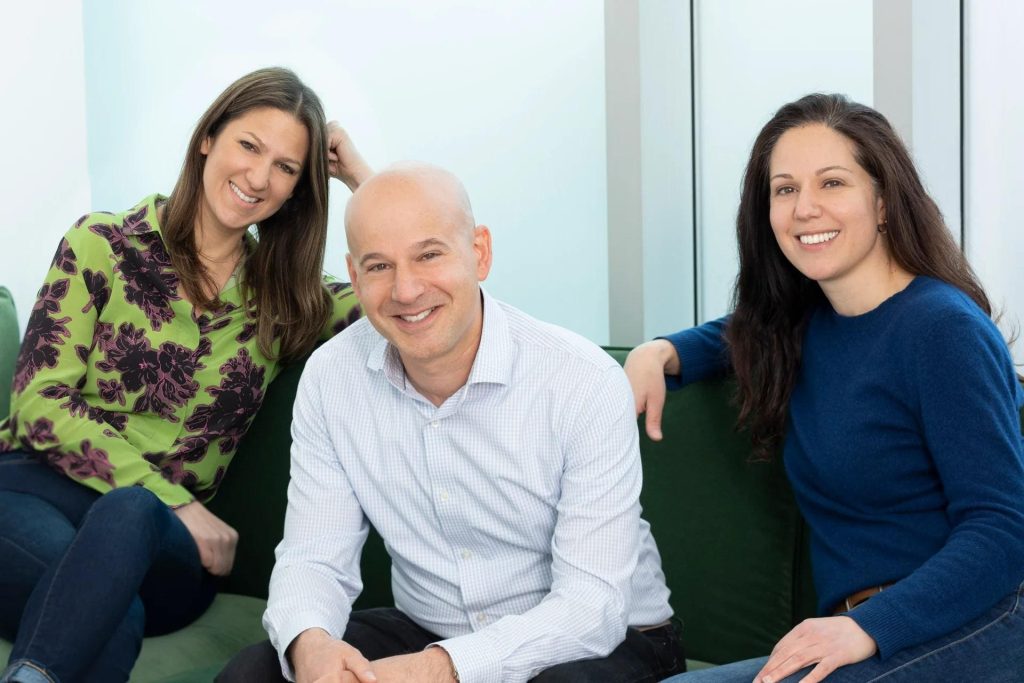
Nima Fotovat, along with his sisters Salma Fotovat and Sahba Fotovat, built an allergen-free, organic granola bar and bite brand, scaling to roughly 500,000 square feet of owned manufacturing and a recent partnership to serve MadeGood on every Delta flight. MadeGood
When Nima Fotovat launched MadeGood with his two sisters in 2014, the family took loans against every one of their homes to bet on an allergen-free snack their kids might actually want to eat. Twelve years later, the brand sits in tens of thousands of doors across North America, manufactures everything in-house at a roughly 500,000-square-foot facility, and recently won placement as a snack on every Delta flight. The story of how a second-generation entrepreneur built a category challenger by burning every boat is a master class in family business, vertical integration, and the discipline of staying agile at a thousand employees.
A Family Bet On An Allergen-Free Snack
Dave Knox: Let’s start with the origin story. What led you to launch MadeGood?
Nima Fotovat: I have to give credit to my kids. That’s the point at which the tension was observed. The kids want something tasty. Parents want to give them something healthy. And then there’s a third stakeholder, which is society, the classroom. If you have a kid with an allergy, everyone wants the classroom to be safe.
We were parents who wanted to give our kids the healthiest products possible, so we started packing lunch boxes with fruits and vegetables. We said we weren’t going to go near packaged goods. But we got a high return rate on those lunch boxes. As the kids were exposed to packaged cookies and granola bars, we lost that battle pretty quickly.
I’d been in the food business before. We grew up in a family business making food products, so I went to the supermarket, looked across the category, and concluded there was nothing that really hit the mark. My sisters and I started working on a recipe, testing it at home, bought some equipment, and rented a facility. From day one, we manufactured everything ourselves.
MORE FOR YOU
We also hired a couple of part-time marketers who’d worked for Big CPG, and they did desk research to make sure what we were thinking about had merit. We worked on positioning, then briefed an agency to figure out the design. We knew that as a startup without money for big awareness campaigns, our packaging had to work really hard on shelf for us. We intentionally went to a design agency that had very little experience with food. They were primarily doing cosmetics work, which is why our design has that pastel, colorful look you usually see in beauty. We brought that to the category 10 or .
We launched in Canada in January 2014. Our first sale happened when my wife took the product to an event, similar to a farmer’s market, and we started selling direct to consumers. Then we got into retail.
Knox: Founders often get warned away from starting a business with friends or family. You did it twice, with your sisters and your wife. What gave you the confidence, and what advantage do you think it’s created?
Fotovat: The foundation is trust. Not trust with money, trust with capabilities. I trust what my wife and my sisters bring in their areas of expertise, and vice versa. We’re not competing for ideas, or competing over who’s right or who’s wrong. We’re creating lanes. We each have a position, and no one’s going to play my position, and I’m not going to play theirs.
The other thing family brings is a level of commitment that’s unbelievable. They see you sleep on the production floor, they do things together with you, and it bleeds into the rest of your life as well. Maybe it’s a little bit too much, but you talk about the business at home, at dinner, on vacation. It becomes part of the DNA of the family.
Why They Built A Factory From Day One
Knox: Twelve years later, you have a production facility that’s nearly 500,000 square feet. Most snack brands outsource to a co-packer. What led you to own manufacturing and roll up your sleeves?
Fotovat: Three reasons. One, it was a know-how we had. My dad was an entrepreneur in confectionery who got into bars later, and my sisters and I worked there. We had intimate knowledge of how to make product.
Two, we have a major claim on our pack: allergen-free. I want to be able to sleep at night knowing we control the conversion of raw to finished goods in our own facilities. We’re obsessed with quality and food safety and making sure the promise on the package is kept.
Three, vertical integration is the long game. Our mission is access to good food, and being vertically integrated lets us pass that value to the consumer. Our products are certified organic, allergen-free, nutrient-dense. We have granola bites, which are unique and difficult to manufacture, and nobody co-packs them. It’s IP we built. We want to be able to not be too much of a premium and stay accessible to as many households as possible. In 14 years, we’ve had one price increase, and only because post-COVID supply constraints made it impossible to absorb the cost. Our internal game plan is to constantly create efficiencies through productivity so we can absorb any cost increase and keep improving the value equation for our consumers.
Knox: Your pack has a lot of logos on the side: organic, vegan, kosher, allergen-free, non-GMO, hidden veggies. How did you decide each of those constraints, and how did they force you to make a better product?
Fotovat: First and foremost, if it doesn’t taste good, my kids aren’t going to eat it, and they don’t care about any of the logos. The two dimensions behind everything else were inclusivity and health and nutrition. Inclusivity means avoiding allergens where possible, so we’re free from the top nine. On nutrition, my family believes in organic. From farm to table, it’s better for the farmer, for the planet, and for the consumer. We think organic can scale, and more people can have access to it. We also try to deliver products that aren’t empty calories, so we use whole grain oats and pack in real vegetables that you don’t taste.
There was no research priority list of which claim goes first. The test was: if I see my son going into the cupboard and picking a MadeGood bar, am I going to cringe and say “stop eating that,” or am I going to say it’s okay? It’s not an apple, and we’re not saying we’re as good as fresh fruits and vegetables, but it’s okay to have it. That was the test behind the whole product.
Onto Every Delta Flight
Knox: You recently got the news that Delta is bringing MadeGood onto every flight. How did that opportunity come together?
Fotovat: Delta learned about us and saw we could deliver something that has incredible taste, which matters because the product goes to every passenger. For the first time, it’s a choice almost every passenger can enjoy. If a passenger has a nut allergy, dairy allergy, or gluten allergy, we’re top-nine allergen-free. They also learned about our sustainability efforts and our organic certification, and it resonated with the Delta team. We could deliver at a cost model that worked for them. We’ve been on flight for a couple of months now. I love when people send me pictures of MadeGood chocolate chip granola bars on a Delta tray. Those are the moments that make all the pain and the effort worthwhile.
Knox: As a longtime Delta customer, I’m used to Cheez-Its, SunChips, Biscoff, and the occasional pretzels. How did you get MadeGood into a basket built around legacy snack brands?
Fotovat: Part of it is Delta’s visionary view of where the consumer is going. The consumer is looking for organic, looking for products that meet their dietary restrictions. So it’s less about us convincing them and more about Delta seeing what their passengers were looking for, and us being able to deliver against that. I don’t believe in selling. Selling isn’t a one-way thing. I’m a big believer in win-win. We had to deliver a solution that worked for Delta and the passengers, and I think we did that.
Staying A Challenger At 1,000 Employees
Knox: Fifteen years in, with tens of thousands of doors and Delta on board, how do you keep a challenger mindset when you’ve reached this scale?
Fotovat: It’s an internal mindset. As a company scales, and we’re a thousand employees now, you need systems and processes. You can’t just do things as quickly as a smaller company, and part of being a challenger brand is being agile. Part of our success to date, and what we want to keep going, is reading what the market needs, where the consumer is going, and what retailer partners want, and reacting to that quickly.
As you build and scale internal capabilities, they naturally create resistance inside the machine that is the company. The biggest challenge for challenger brands as they scale is how to remain nimble while having the systems, because without systems you’ll have chaos. It’s an AND equation, not an OR equation. How do you build systems, processes, and discipline while remaining agile and keeping the challenger mindset?
Knox: You came from a family of entrepreneurs. What lessons have you learned that differed from your father’s entrepreneurial journey?
Fotovat: The power of the consumer, and the power of the brand. Many businesses are very product-focused: can I sell a product to a customer, meaning a retailer? From day one, we started with the unmet consumer need and designed a whole business around that. The previous generation, my dad’s contract manufacturing business, was more about making product and selling product. A B2B model. I think we are generation 2.0 in terms of bringing that consumer marketing piece to the family legacy, where historically the family was around manufacturing and product.
Burn The Boats: A Founder’s Drastic Advice
Knox: A lot of entrepreneurs today aspire to build a fraction of what you’ve built. What advice do you give the founder who sees an opportunity in a category and wants to do things differently?
Fotovat: Your gut is great, but trust and verify. It doesn’t need to be expensive research. For us, we were assuming kids couldn’t bring nuts or allergens to school, but my kids didn’t have allergies. How true is that assumption across Canada and the U.S.? We didn’t do formal research; we called about 100 schools and asked what their policy was on allergens. We had the gut, we had some evidence, and we verified.
The second thing I see many entrepreneurs not have is experience. You don’t have to have experience building a business, but having it in the category matters. Being a marketer, working in CPG, working in retail, you have to bring something to the new business. Just waking up and saying I want to do this and I’m going to learn everything along the way is a very steep climb.
Once you have that, and you have capital from friends and family, then you’re ready to do something drastic. Burn all boats. Once you have the ingredients, there is no other option. Quit your job, put every penny into the business, don’t focus on anything else. If this thing fails, you sink with it. That’s drastic, and you don’t have to my advice. But if you don’t have a plan B, you don’t have a problem waking up at four in the morning figuring out a solution to your problems.
Knox: Did you recognize that mindset when you guys were launching MadeGood in 2014, or did you learn it along the way?
Fotovat: I think we saw it in the previous generation. When my dad started his business, the whole family was in it. There was no plan B. So when it came to the next generation, my parents had retired, and we went to them for funding. Friends and family. Each of us had our own homes, so we essentially got a loan against all of our homes. We had to build a factory, Dave. It’s not just building a brand. We had to pay employees, pay rent, pay the water bill, all those bills, while we waited for the brand to take.
If it hadn’t worked, we’d have moved into my parents’ house. That’s the level of drastic approach we had. But as I said, we had the ingredients, so I wasn’t as worried. I had the gut insight, we had verified it. We had extensive experience that came with a network of relationships with retailers and suppliers. We had capital, and the willingness to put in whatever we needed. Even though it was drastic, we made sure the probability of success was high. Don’t do something drastic when your probability of success is two percent. I’m not advising for that.
Knox: Looking forward, what’s in store for MadeGood?
Fotovat: We disrupted the category with bites. Our granola bites are a new shape and format for a legacy category that’s all bars, and essentially created a subcategory. Where I see us going is really owning that and delivering fun, taste, and nutrition to as many households as we can. We’re a private, family-owned business that really believes in values and how we do business, whether it’s taking care of people or being mindful of our impact on the planet. What gets us passionate is not just scaling MadeGood and the innovative products our granola bites, but doing it in a way that, selfishly, makes us feel good about ourselves and the work that we’re doing. I see a lot of opportunity ahead for the brand in Canada, the U.S., and beyond, and we have an incredible team. I’m honored every day to come to work with the team we’ve built. The possibilities are endless.
Editorial StandardsReprints & Permissions
Sumber Artikel:
Forbes.com

