

OnPoint Subscriber Exclusive

For much of the postwar era, European policymakers have prioritized stability and predictability over fostering breakthrough innovation. Today, as the United States and China compete for AI dominance, a stagnant Europe is struggling to regain its place at the technological frontier.
The geopolitical shocks of the past few years, particularly Russia’s invasion of Ukraine and US President Donald Trump’s assaults on the postwar order, have brought Europe’s economic and strategic vulnerabilities into sharp relief. But it is the race for AI supremacy between the United States and China that has made Europe’s lagging innovation and declining competitiveness impossible to ignore.
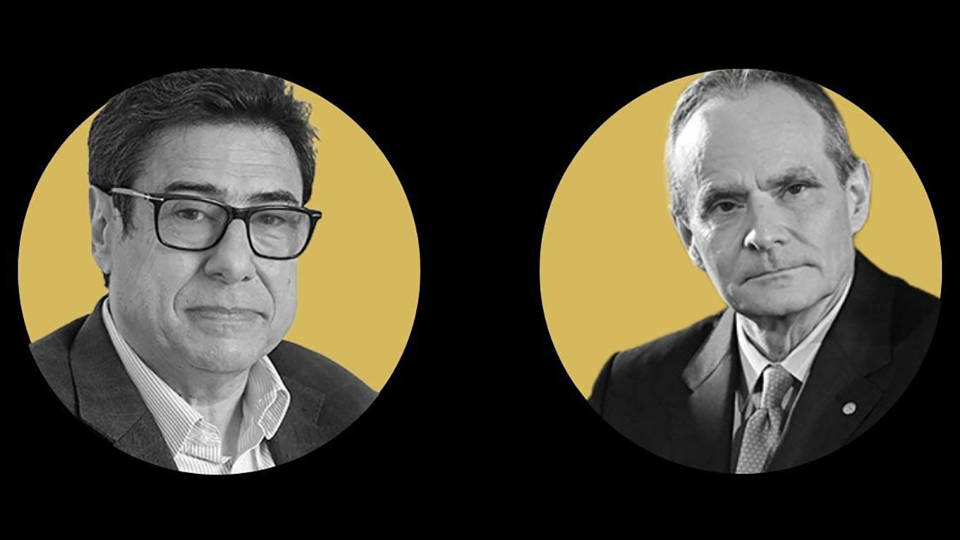
Against this backdrop, MIT’s Simon Johnson sat down with fellow Nobel laureate economist Philippe Aghion to examine what ails Europe and how to revive its dynamism. Their conversation addresses the costs of excessive regulation, the role of creative destruction in fostering competition, and the case for keeping AI out of the classroom. It has been edited for length and clarity.
Simon Johnson: Let’s start with your most famous contribution to economics, which is your theory of creative destruction. Can you explain it in non-technical terms?
Philippe Aghion: The term “creative destruction” was coined by Joseph Schumpeter to describe the process by which new technologies displace old ones. But when I was a student, there was no growth model that incorporated creative destruction, so Peter Howitt and I developed one. The basic idea was that growth is driven by successive generations of talented entrepreneurs who create firms and expand them.
Innovation is a cumulative process. You stand on the shoulders of those who came before you. At the heart of this process lies a fundamental tension: you need innovation rents to motivate investment in R&D, but yesterday’s innovators often attempt to use their market power to block new entrants who might subject them to creative destruction. Societies must therefore strike a balance between allowing talent to flourish and ensuring that today’s successful firms do not become barriers to the next generation of innovators.
From Pioneer to Laggard
SJ: This leads directly to the focus of this conversation: unlocking European dynamism. In your view, the European economy is troubled, or at least faces some major challenges.
PA: I wouldn’t say “troubled.” Europe is not on the verge of a major crisis. Instead, the danger is a long period of stagnation or sluggish growth.
Between 1945 and the late 1980s, per capita GDP in today’s eurozone was catching up with that of the US. Much of that growth came from rebuilding Europe’s capital stock, which had been devastated during World War II, and from catching up with the Second Industrial Revolution that transformed the US in the early 20th century.
But Europe has failed to make the transition from catch-up growth to frontier innovation. In particular, it has failed to harness the IT revolution because it lacks institutions that support frontier innovators. Instead, it remains stuck in mid-tech, incremental innovation, while the US and now China have moved into breakthrough, high-tech innovation. That, fundamentally, is Europe’s problem.
SJ: Whenever I visit France, I’m very impressed by your technology and infrastructure. The high-speed trains, for example, are fantastic. We don’t have those in the US.
And then there’s nuclear power. Nuclear energy held great promise after WWII, but most countries ultimately failed to make it viable. France stands out as an exception.
You mentioned the IT revolution. I remember very clearly how a friend in Paris in 1990 or 1991 showed me his Minitel terminal. At the time, Minitel was essentially a directory of businesses in the Paris region, but in retrospect, it was the first time I saw anything the internet.
While I understand your point about Europe struggling to become a frontier innovator after the mid-1980s, my question is: Where exactly were the frictions? Why didn’t Minitel evolve into the internet? And why did France fail to become a leader in breakthrough innovation?
PA: You’re absolutely right—and very generous —to point out France’s strengths. When it comes to transport technology, whether it is high-speed rail or even Airbus, France and Europe have achieved remarkable success.
And the same goes for nuclear energy. France, in particular, used to be a leader in nuclear power before political pressure from the Greens led us to step back from it. Now, however, France is rebuilding the sector. France was also a pioneer in biotech. The foundations of mRNA technology, for example, were developed at the Institut Pasteur.
Europe is still very strong in basic research. Despite severe underfunding, it still accounts for 25% of the scientific citations underlying breakthrough patents worldwide. Yet this research doesn’t translate into breakthrough innovations in Europe.
Mario Draghi’s 2024 report on European competitiveness, along with other reports I’ve been involved in, all ask the same question: Why is it that we consistently fail to turn those research breakthroughs into breakthrough innovations?
Creative Destruction Stops in Brussels
SJ: I recently spent some time in the Carnavalet Museum in Paris, and what really struck me was how innovative France was under the Third Republic. Many of the old structures, power centers, and oligarchies associated with Napoleon III were swept away, and new people, new ideas, and institutions emerged.
That seems a perfect example of creative destruction. The Paris Metro was at the technological frontier, and France was a scientific powerhouse in the early 20th century. The US won relatively few Nobel Prizes before 1940. The scientific leaders were, without question, Germany, France, and the United Kingdom—probably in that order.
So, France has a long tradition of innovation. But somehow it hasn’t fully connected to the modern era.
PA: You’re right. We lack what it takes to become true breakthrough innovators. Sometimes it happens when you’ve been great in the past: you rest on your laurels and live on your past accomplishments. That’s what happened to us. Of course, there are exceptions, aerospace, defense, and nuclear energy to some extent. But we allowed too many industries to leave France over the past 40 years.
One important difference between today and the early 20th century is that the European Commission didn’t exist then. I don’t want to bash the Commission, but it has often stifled innovation.
Postwar Europe was designed to ensure that France and Germany would never again go to war. The idea was that rules would force us to depend on each other rather than fight. European institutions were thus created to help us live peacefully, not to make us innovators.
We need rules, of course. But now we have too many. Since the 1980s, economic governance in Europe has been shaped by an approach that imposes strict limits on member states. For example, budget deficits cannot rise above 3% of GDP, regardless of whether spending goes toward pro-growth investments. Similarly, Europe constrained industrial policy in the name of competition policy, whereas the US and China have found ways to reconcile the two.
As a result, European rules have limited the ability of member states, including France, to move into breakthrough, high-tech innovation. The EU institutions in Brussels do many good things, but they are often a pain in the neck.
SJ: This brings us to the Draghi report. Draghi is a very distinguished economist, with a PhD from MIT, and enormous policy experience. His report offers a reform agenda that largely works within existing European structures. Given your view that Brussels stifles innovation, how much progress could really be made if its recommendations were fully implemented?
PA: I did not mean to suggest that everything coming out of Brussels is negative. For example, the creation of the European Research Council has been a tremendous success. I was able to build an innovation lab at the Collège de France thanks to ERC funding.

Two Nobel laureates on Europe’s innovation problem, creative destruction, and more
Philippe Aghion and Simon Johnson sit down for our next Insider Interview to discuss creative destruction, the rise of AI, and what it would take to unlock European dynamism.
Watch their conversation
Europe can also act effectively in moments of crisis. The COVID-19 pandemic is a prime example. The problem is that Europe tends to act only when there is a sense of emergency, and technological decline is not perceived as an emergency.
The Draghi report identifies many of the main issues. First, it argues that Europe needs a true single market to foster competition and reward successful innovators, and I agree. We don’t have one now. Each country has its own regulations on top of EU regulations—in Europe, that is known as “gold plating.” We also lack a genuine capital-markets union.
Second, we don’t have enough long-term funding for research. The ERC is great, but its grants typically last five years; we also need ten-year grants. Worse, we lack a financial ecosystem that encourages risk-taking: venture capital plays a much smaller role than in the US, as do insurers and pension funds.
Third, there is no European equivalent to the US Defense Advanced Research Projects Agency (DARPA) or its counterparts in areas biotech, energy, and infrastructure. These agencies represent a pro-competition form of industrial policy. In Europe, however, competition policy has often precluded any form of industrial policy.
That’s the ecosystem we are missing. The question is whether Europe can build one across 27 member states. My own view is that the most promising approach is a coalition of the willing, with Germany and France working together with any others that want to join. I would also add the UK, which brings powerful institutional investors and financial expertise to the table.
Europe’s Fear of Failure
SJ: A coalition of the willing makes a lot of sense to me, but let me offer a different perspective. During my recent trip to Paris, someone told me that part of the problem is that rich people in places Munich don’t invest in startups. Instead, they invest in real estate, fashion, or other established industries.
Admittedly, I was speaking mostly with prominent industry figures, but it does raise the question: What kinds of risk are wealthy Europeans actually willing to take? In the US, rich people climb over each other to invest in startups. Sometimes they get carried away, but there is a strong culture of backing new ventures. Europe seems to lack such a culture. Do you think that’s a fair critique?
PA: There is a lot of truth to this. Culturally, we do not encourage enough risk-taking. In France, at least when I was growing up, we were not taught that there is no shame in failure. If you failed, you’d be ridiculed and put in a dunce cap.
I don’t think you can have breakthrough innovation without accepting, and even encouraging, failure. In the US, you have a culture that says: If you failed, try again; fail better. That’s a good thing. Europe doesn’t have enough of that, and that’s partly cultural.
Consider the French data protection agency CNIL. I’m not saying we shouldn’t protect individuals—of course we should. But in the name of protection, CNIL has created excessive regulatory barriers for startups and venture capital firms, discouraging innovation. I met several venture capitalists in Silicon Valley three weeks ago, and they told me they would be very happy to invest in France, but there is simply too much red tape.
To change behavior, you need to change the institutions. But even when we have startups, they can’t grow due to a lack of venture capital and institutional investors. If we want more breakthrough innovation, we need to work on both fronts.
SJ: One aspect of your thinking that I find particularly interesting is your support for Denmark’s flexicurity model. You emphasize the need for dynamism on the business side—for more churn and creative destruction—but also the need to support workers through the transitions that .
PA: What’s remarkable about Denmark’s flexicurity model is that when someone loses a job, they receive 90% of their previous salary for two years, up to a certain income level. It allows firms to hire and lay off employees relatively easily—that’s the flexibility part—while providing workers with income insurance, retraining, and help finding a new job.
My colleague Alexandra Roulet studied the health effects of becoming unemployed in Denmark and found that losing your job has essentially no negative impact on one’s health, unin the US and many other countries.
I believe all countries should have such a system, especially in the age of AI. But this model works best when it is backed by a good education system that teaches people how to learn. We need schools without AI where students learn to read, write, concentrate on a book from beginning to end, and perform calculations on their own. Those skills matter because they teach people how to adapt. If we want to harness the power of AI and limit its negative effects, we need a strong education system and a strong flexicurity system.
Schumpeterian Politics
SJ: In your view, incumbents become a problem once they are too entrenched, especially if they are not investing in startups. That raises the question: What about taxation? I’m less interested in taxing people who are in the process of building new companies, so let’s focus on established billionaires. Should there be a tax on larger accumulated wealth, perhaps setting the effective tax burden closer to what high-wage earners face? And then, instead of simply redistributing that money, countries can use it to fund a European DARPA and pursue industrial policies that complement market competition.
In other words, if wealthy incumbents are not investing enough, should governments tax some of the wealth and redirect it toward innovation?
PA: you, I’m not in favor of taxing unrealized wealth. If you’re building a startup that is valued at billions of dollars but generates little to no cash flow, it’s not a good idea to tax that wealth as if it had already been realized, because doing so will impede the growth of potential unicorns.
That said, I’m not opposed to the idea that billionaires should contribute more. I had a very interesting dinner in Silicon Valley three weeks ago with several venture capitalists. They told me, “We’re billionaires, but we don’t think it’s right that our children should automatically become billionaires. They should have to prove themselves. They should inherit millions, not billions.” They were not particularly left-wing, but even they felt there was something wrong with the current system.
So, what should be done? One option is to encourage the creation of philanthropic foundations, along the lines of what Bill Gates has done. Or offer billionaires the opportunity to finance existing state institutions, particularly in education or health, if they want to avoid a bigger inheritance tax. I’m open to your idea, and to other approaches, Charles Ferguson’s idea of using large fortunes to help finance university tuitions and other public programs. I think these are creative ideas, and we should take them seriously.
SJ: Should we think of creative destruction as playing an important role not just in the economy, but also in politics? Is it possible that political systems can also become dominated by incumbents who try to keep new people from entering?
PA: It’s interesting that you say that, because I did some work with Alberto Alesina and Francesco Trebbi on political institutions that was very much about applying Schumpeterian ideas to politics.
The core trade-offs are very similar to those we see in economics. You want to reward innovators, yet you don’t want them to use their incumbency to block future innovation. wise, you want to give political leaders enough power to govern effectively while ensuring they do not abuse that power against minorities.
For example, if you rely solely on majority rule, governments can become unstable. But if you need a supermajority for everything, then nothing gets done. There’s a fundamental trade-off: the executive should be able to act, but you also need safeguards to protect minorities and preserve the possibility of turnover.
A Regulatory Giant, a Budgetary Dwarf
SJ: Viewed through the lens of creative destruction, do you think Brexit was a setback? Even though it may be easier for the European Union to make decisions without the UK, which was often an outlier, that friction may have actually been valuable, as it put pressure on existing institutions and Brussels elites.
PA: I wish that had been the case, but I’m not sure it was. What’s interesting is that the UK did not leave the EU entirely for bad reasons. One of its complaints was that the EU imposed too much red tape. There is some truth to that criticism. We often say that Europe is a regulatory giant and a budgetary dwarf, and the UK’s frustration reflected that reality. Too many rules in Brussels embodied the Hayekian view that member states’ room for policy maneuver should be limited as much as possible.
Of course, this argument was exploited by British politicians for their own purposes, and the British public was misled about the economic consequences of Brexit. Today, many people in the UK recognize that the costs have been much higher than they were led to believe. Still, Brexit reflected a desire for a Europe that facilitates rather than obstructs, a Europe that helps rather than hinders people who want to undertake new projects.
I hoped that Brexit would serve as a wake-up call. But the real wake-up call came later, from Vladimir Putin, from Donald Trump, and from the growing technological gap with the US and China. This is where the Draghi report comes in: its message is that Europe must catch up technologically to be respected. I wish Europe had recognized the problem sooner.
SJ: What’s your view of the euro? Is it an important part of Europe’s future? Is it necessary but not sufficient, or is it somewhat incidental to the broader challenges you’ve described?
PA: I think the euro is a good thing. During the pandemic, for example, the eurozone was able to borrow collectively, and that was very helpful. There is power in having a strong currency, especially when it is combined with innovation. The US has both, whereas Europe has a strong currency but doesn’t innovate enough. It is the combination of the two that gives you power and influence.
The euro has also helped us in other respects. Not long ago, the UK was on the verge of a major budgetary and financial crisis. In Europe, we are protected against that kind of shock.
But there is also a downside. The euro can act as an anesthetic, encouraging countries France to delay necessary budgetary adjustments and structural reforms because we know that we have the euro and that the European Central Bank is behind us. So, it’s a mixed blessing.
The New AI Gatekeepers
SJ: You’ve written quite extensively about AI, as has our good friend and colleague Daron Acemoglu. Both of you have approached the question in what I think is exactly the right way: starting at the level of tasks—what people do, what algorithms can do—and then working up from there to the macroeconomic implications.
But the two of you have come up with very different answers. Daron is quite pessimistic about AI’s implications for productivity growth, whereas you are much more optimistic. Can you explain in non-technical terms why you have a different view of AI’s economic impact?
PA: I believe AI has significant growth potential because it automates tasks related not only to the production of goods and services, but also to the production of ideas. AI makes it much easier to recombine old ideas and generate new ones.
In his 2025 Economic Policy paper, Daron argued that productivity growth depends on four factors: the of tasks exposed to AI, the of those tasks that can be profitably automated, labor’s of income, and the extent of labor savings. In my paper with Simon Bunel, we focused on AI’s role in automating tasks related to the production of goods and services. We ed the same methodology as Daron, but we interpreted the empirical evidence differently. We arrived at an estimate of roughly 0.7 percentage points of additional annual total factor productivity growth, whereas Daron’s estimate was around 0.07. So the disagreement is empirical, not conceptual.
What neither of us factored in at that stage is AI’s impact on the production of ideas. That is something that we are currently studying in Paris. The reason it matters is that these effects could be permanent. If AI makes innovation easier, it could permanently increase the rate at which new ideas are generated. We have not fully quantified the effects yet, but we believe this channel alone could add at least 0.2 percentage points to annual growth.
What I am less optimistic about is the ability of existing institutions, in particular competition policy, to adapt quickly enough. If we fail to maintain adequate competition, we could see a repeat of what happened during the IT revolution, when rapid growth was accompanied by the emergence of superstar firms Google, Microsoft, and Amazon, which ended up discouraging new entrants.
SJ: I’m glad you made that distinction, because it gets to the heart of the issue. You mentioned three firms—Google, Microsoft, and Amazon—that already had strong market positions long before AI arrived. But because they have been sufficiently nimble, they have also emerged as the dominant players in AI.
Of course, we do have some new entrants Anthropic, and Elon Musk is making a serious play in this domain. But I worry that these hyperscalers will become so entrenched that they end up stifling the process of creative destruction. I your idea of a competition-friendly industrial policy, but how do we achieve that when the incumbents have so much power? And how do you build competition into industrial policy?
PA: This is actually an area where Europe can be very helpful. The advantage of the EU is that it’s not captured by any single government.
But EU competition policy needs to become more innovation-oriented and should factor in the need for industrial policy in key areas such as defense, AI, biotech, and the energy transition. For example, we should promote data sharing, build on the Digital Markets Act, and extend its logic across the AI value chain. We should regulate AI, but not too much. We may even need to revise parts of the AI Act to ensure it doesn’t become a barrier to entry for new firms. But at the same time, we need to build AI infrastructure. Europe has enormous amounts of data, but we don’t have enough computing power to analyze what we have. That is where competition policy and DARPA-style industrial policy can complement each other, fostering competition and helping new unicorns emerge.
How China Escaped the Middle-Income Trap
SJ: China also went through a long phase of imitation and capital accumulation, from the 1970s up to the 2000s. Since then, however, it seems to have done something similar to what you are advocating in Europe: it pushed toward the technological frontier and invested heavily in innovation. L. Rafael Reif, former president of MIT, recently said that , in virtually every technology sector he s, China was lagging. Today, it is at the forefront of many of these sectors. Is China going to take over the world through some intelligent application of creative destruction?
PA: The idea of creative destruction is indeed very popular in China. I was there in November, and when you talk about it, people get very excited.
One thing that surprised me is that China has managed to reconcile industrial policy with a certain degree of competition. I did not predict that. I expected China to fall into a middle-income trap. Instead, it found a way to combine state support with competitive pressure.
One way it did that was by embracing what economists call yardstick competition: the government encourages regions and firms to compete against one another. More than a decade ago, I published a paper with Ann Harrison, Mathias Dewatripont, and Patrick Legros in which we used Chinese data to examine the effects of industrial subsidies. We found that when subsidies were given to several firms in the same field, the growth effects were much stronger. In other words, industrial policy was more effective when it was competition-friendly.
SJ: Competition may exist in the Chinese economy, but there’s much less creative destruction in the political sphere.
I wonder whether China may be automating too much. Wages are lower than they are in Europe or the US, and China already has a high degree of automation in manufacturing and is increasingly automating the gig economy as well. That may generate productivity gains, but what happens to the displaced workers? Because China’s model is so top-down and emphasizes capital accumulation, infrastructure, and computing power, I’m not sure it can create enough good jobs to keep people happy and sustain economic growth.
PA: There are many good jobs. The question is whether China will be able to steer people toward them. There will continue to be demand for plumbers and other craftsmen, as well as people who maintain and service robotics systems. You will also need cooks, nurses, and care workers—jobs that require soft skills, where you need humans. As people live longer, demand for those jobs will grow.
On the other hand, China is facing demographic decline. In that sense, an AI revolution is welcome, unless population decline is offset by more immigration. You need fewer people, more AI, or, ideally, both.
When Innovation Leaves Voters Behind
SJ: You’ve said many positive things about the US, and in some respects, it serves as a model for the policies you advocate. But under the second Trump administration, we have seen cuts to basic research. Universities are facing enormous pressure, both financially and ideologically. And there is also, in some parts of the political spectrum, a growing hostility toward science, scientists, and the idea that scientific expertise should help shape policy. All of this runs counter to the kind of innovation-driven economy you advocate. How much trouble is the US in?
PA: I once joked that the Trump administration must have read the Draghi report and felt sorry for Europe. If Europe can’t close the gap with the US by catching up, perhaps America has decided to close it by falling behind.
But seriously, I think something deeper is going on. In the US—and, to some extent, in France—many people feel that the system is not working for them and they turn to populist leaders. Part of the problem is that large segments of the US population were hurt by globalization and the IT revolution because they were not adequately prepared. Perhaps the most telling symptom was a rise in what Anne Case and Angus Deaton called “deaths of despair.” Politicians failed to take that crisis seriously, so many of those voters turned to the populist right.
We have a similar problem in France, where a segment of the population that feels left out and despised has turned to populist movements. We have to take this threat very seriously. The Democrats did not pay enough attention to these voters, and that’s why they lost the 2024 election.
SJ: One consequence of this in the US is a growing backlash against AI.
PA: That’s because the US doesn’t have the proper labor-market institutions. You need safety nets. Without them, you risk triggering an enormous backlash and fueling populism. Denmark is not grappling with the same threat—it has managed to contain populism by putting in place the right safety nets.
SJ: Your joke about the Draghi report is actually pretty much on target. The US seems to be ceding ground in several important areas, most notably the green transition. At the federal level, the US has largely abandoned the push for clean energy. Can Europe seize this opportunity and turn clean energy into a major European project?
PA: You’re right that the green transition is an area in which Europe could play a leading role, but we have to be realistic: China is already leading in many green sectors, including solar panels and electric vehicles. Europe needs to focus on finding areas where China is not yet dominant, or find ways to benefit from technology transfers.
There are areas where Europe has real strengths. Aside from nuclear energy, where France is strong, there are also opportunities in hydrogen, advanced nuclear technologies, and AI. But European countries must move quickly or risk being overtaken in other sectors as well.
Will AI Leave Developing Countries Behind?
SJ: Before we finish, I want to bring up the middle-income trap in the age of AI. It’s a difficult topic, and we may have to be a little more speculative here.
AI technology is highly capital-intensive, yet it is spreading rapidly, and with very little friction, to relatively labor-intensive middle- and lower-income economies. My concern is that those countries will automate simply because the technology is readily available. But it may not be the right technology for them, given their capital-labor ratios.
At the same time, the global trading system is changing. With US tariffs not going away anytime soon, I wonder whether AI could make it harder for middle- and lower-income countries to grow and raise living standards.
PA: I think you’re right. If these countries face tariffs while struggling to adapt to AI, they may fall into the middle-income trap. That’s why it is so important to subsidize the diffusion of AI in developing economies.
International institutions have an important role to play in helping less-developed countries adapt AI to their own circumstances so they can catch up more easily. Education will be a critical component of successful innovation policies as well, as research by Ufuk Akcigit shows.
Countries with strong education systems will be better positioned to deploy these new technologies. In economics, we call this “absorptive capacity.” What worries me is that we have benefited for decades from Branko Milanovic’s so-called “elephant curve”: global poverty and inequality have declined because large emerging countries, especially China and India, have been catching up with richer economies. Today, however, those countries face powerful headwinds: tariffs, the rapid spread of AI, and the difficulty of adapting to it. That matters not only to those countries, but to everyone else.
SJ: I still worry that AI may undermine education systems and critical thinking. Can AI help people become more human if it takes away their skills and demotivates them?
PA: That’s why school without AI is so important. Students need to learn how to read, write, and solve mathematical problems on their own. Schooling without AI means homework done at school, good teachers, and small classes. The danger is that we introduce AI too early and too aggressively into the education system, and we end up with a generation of intellectually atrophied people who can no longer think for themselves.
Featured
-
Negotiating With the Antichrist
Jun 10, 2026 Nina L. Khrushcheva
-
Where Is China’s Trillion-Dollar Trade Surplus Going?
Jun 9, 2026 Miao Yanliang
-
Autocracy Is Fueling Mexico’s Fiscal Deterioration
Jun 8, 2026 Guillermo Ortiz
-
Putting American Science on a MAGA Leash
Jun 4, 2026 Stephen Holmes
-
Europe’s Competitiveness Bogeyman
Jun 4, 2026 Daniel Gros
https://prosyn.org/lZyuhqN
It appears that you have not yet updated your first and last name. If you would to update your name, please do so here.
Please wait, fetching the form
Please wait, fetching the form
Please wait, fetching the form
Please wait, fetching the form
Please wait, fetching the form
Please wait, fetching the form
Please wait, fetching the form
Sumber Artikel:
Project-syndicate.org

