 Davide Bonaldo/SOPA Images/LightRocket via Getty Images
The foundations of Europe’s postwar peace and prosperity are beginning to fracture, yet the European Union still struggles to unite its increasingly divided member states around a common political project. The escalating climate crisis could provide the continent with the d purpose it has long lacked.
In the early 20th century, thinkers the Italian economist Luigi Einaudi saw federal republicanism as the only alternative to imperial domination and the fragility of the League of Nations. Support for federalism grew steadily during the interwar period, with Richard von Coudenhove-Kalergi’s 1923 book Pan-Europa and Philip Kerr’s 1935 essay “Pacifism Is Not Enough” both arguing that only a federalist system could deliver lasting peace.
A European federation nearly emerged in 1940, when Winston Churchill’s government proposed a full political union between the United Kingdom and France to contain Nazi Germany’s advance. The project collapsed after the French armistice, but its principal architect, Jean Monnet, would later become a prominent advocate of postwar integration, laying the groundwork for the Treaties of Rome, Maastricht, and Lisbon.

Introductory Offer: 30% on PS Digital
Subscribe now to gain greater access to Project Syndicate–including every commentary and our entire suite of subscriber-exclusive content–starting at less than $6 per month.
Subscribe Now
Today, as conflicts strain the foundations of Europe’s postwar prosperity, reigniting a federalist spark, the escalating climate crisis may prove to be the key to deeper European integration.
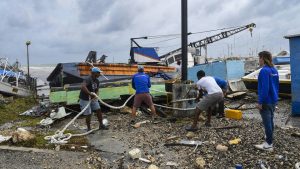
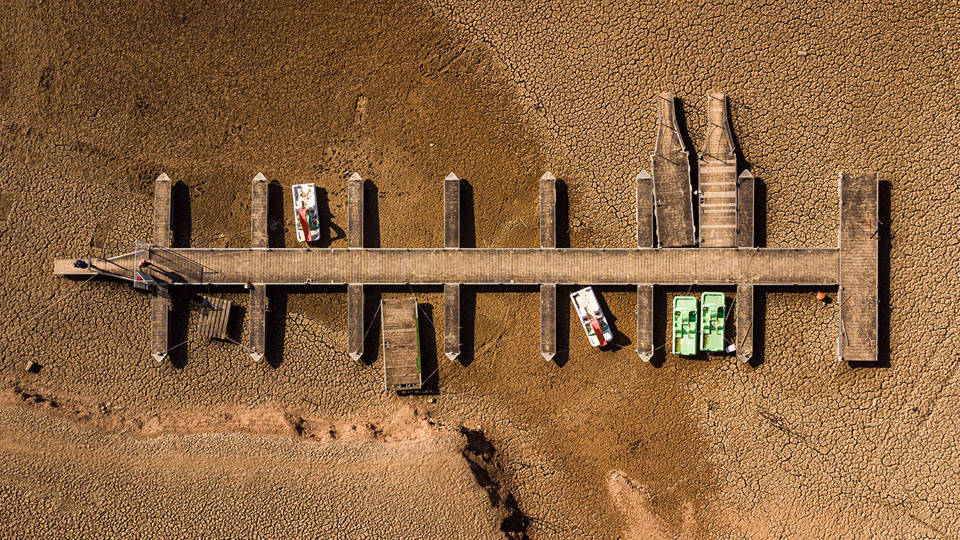
With global warming already exceeding 1.5°C, climate change is no longer a theoretical threat. According to the World Meteorological Organization, the European continent is warming twice as fast as the rest of the world. In 2025, devastating floods and droughts caused over €40 billion ($47 billion) in damage, leading Spain, Portugal, and Italy to spend billions rebuilding storm-ravaged regions. And as the crisis intensifies, adaptation costs are expected to rise further, making it a continental priority.
But this is not just about cost. Modern life hinges on our ability to engineer our environment. No one expects to wade through floodwaters on the way to work, or to sit in the dark for days, thanks to one of the 20th century’s defining achievements: infrastructure capable of converting environmental variability into the predictable conditions on which industrial society depends. For example, in 1900, the world had virtually no water-storage capacity, leaving populations and agriculture at the mercy of rainfall. Today, reservoirs totaling roughly 8,000 cubic kilometers capture nearly 20% of global river runoff.
In Europe, the pursuit of material security was also a political project. Suffrage spread alongside territorial engineering, rising from less than one-third of adult citizens in 1900 to 100% by the 1980s. Over the same period, public expenditure across the continent grew from roughly 10% of GDP—largely devoted to defense—to nearly 50%, financing critical infrastructure and social systems that delivered broad-based prosperity.
The landscape Europeans inhabit today—from power grids and roads to flood defenses—is the product of a political compact that fused democratic participation, economic development, and state capacity to shape the physical environment. Yet as climate extremes increasingly overwhelm systems built to contain them, that compact is beginning to fray, undermining the foundation for all other political objectives.
Placing the environment at the center of European integration, therefore, requires forging a political “we” not by identifying an external “them,” as so many national projects have done throughout history, but by confronting climate change collectively. Europe’s own history is a case in point: Dutch polders, Italian land reclamation, and Spanish water tribunals all emerged from centuries of collective efforts to manage the environment that helped shape the continent’s civic identity.
An environmental focus would also help define Europe’s broader purpose. As electrification, automation, defense, and large-scale infrastructure projects—from data centers to public transport—reshape the landscape, Europeans will have to decide what kind of continent they want to live in. The environment is a political construct sustained through state power and control over territory. Viewed through this lens, environmental policy could help reconcile competing imperatives—security, development, and welfare—within a single territorial framework.
This agenda requires institutions that connect local interests to continental priorities and exercise real territorial power. But while the US federal government levies taxes, commands a vast military apparatus, and owns nearly one-third of the country’s land, the EU has no independent taxation authority, lacks a standing military of its own, and does not even own most of the buildings from which it operates.
Still, the EU has approximated elements of federalism through agencies and treaty-based institutions, from the common market to the European Stability Mechanism, coordinating policy and pooling resources across member states. To tackle climate change, some European institutions, the European Investment Bank, must evolve into development agencies with the authority to plan, finance, and implement projects across the continent.
Embracing environmental stewardship could give the European project something it has long lacked: a common purpose rooted in the realities of everyday life. Amid escalating climate disruptions, protecting homes and businesses, securing water supplies, and keeping the lights on are no longer merely technical problems. They can—and must—become the civic foundation of a renewed European compact.
Featured
-
The Affordability Crisis Is About More than Prices
May 22, 2026 Carolina Alves
-
NATO Must Die
May 22, 2026 Yanis Varoufakis
-
Is China’s Confidence Justified?
May 25, 2026 Jayati Ghosh
-
A Cold Shower for the AI Mania
May 20, 2026 Raghuram G. Rajan
-
Why Are China’s Young People Fed Up?
May 21, 2026 Yi Fuxian
https://prosyn.org/moYfbWg
It appears that you have not yet updated your first and last name. If you would to update your name, please do so here.
Please wait, fetching the form
Please wait, fetching the form
Please wait, fetching the form
Please wait, fetching the form
Please wait, fetching the form
Please wait, fetching the form
Please wait, fetching the form
Please wait, fetching the form
Please wait, fetching the form
Please wait, fetching the form
Please wait, fetching the form
Please wait, fetching the form
Please wait, fetching the form
Sumber Artikel:
Project-syndicate.org