Close Banner

Author:
February 05, 2026
Registered Dietitian Nutritionist
Registered Dietitian Nutritionist
Molly Knudsen, M.S., RDN is a Registered Dietician Nutritionist with a bachelor’s degree in nutrition from Texas Christian University and a master’s in nutrition interventions, communication, and behavior change from Tufts University. She lives in Newport Beach, California, and enjoys connecting people to the food they eat and how it influences health and wellbeing.

Image by Jacob Lund / iStock
February 05, 2026
While aging is inevitable, the pace and degree of some of those changes (muscle strength, bone integrity, and cognitive function) aren’t fixed. Lifestyle habits, especially resistance training and nutrient intake, play a central role.
One supplement that continues to gain attention in this conversation is creatine. Long known for its role in sports performance, emerging research suggests it may also support key aspects of healthy aging.
A recent narrative review1 pulled together the current body of research on creatine supplementation and key indicators of aging. The key findings? Creatine has the potential to support muscle, bone, and brain health over time (especially for older adults).* Here’s what you need to know.
What is creatine & why does it matter for aging
Creatine is a naturally occurring compound stored primarily in skeletal muscle, with smaller amounts in the brain and other tissues. Its primary role is to help regenerate ATP (cellular energy) through the phosphocreatine system.*
That function becomes especially relevant with age. Aging is associated with gradual declines in mitochondrial efficiency and cellular energy production.
Tissues with high energy demands (muscle, bone-forming cells, and the brain) may be particularly sensitive to these shifts. By helping buffer and replenish ATP during periods of high demand, creatine has the potential to impact multiple systems involved in healthy aging.*
1.
Muscle mass & strength
Muscle mass can decline about 8% per decade after you turn 30 if your habits don’t keep up with your changing physiology. This loss affects strength, balance, and the ability to perform everyday tasks, making the preservation of lean muscle a cornerstone of healthy aging.
And while creatine is most known for helping athletes and avid gym goers build muscle, research shows time and time again it helps people of all ages and starting fitness levels build lean mass.
In a 12-month randomized controlled trial2 (RCT), adults in their late 50s took about 5-7 grams of creatine monohydrate a day combined with resistance training. This combo led to greater improvements in lower leg muscle density compared to placebo. Now, a year is a long time when it comes to an RCT, and it better reflects what consistent, real-world use looks over time.*
In addition, similar findings have been reported in women in their mid-60s. In a 12-week trial, women who strength trained and took creatine3 noticed greater gains in bench press strength and had more muscular arms and legs compared to those taking the placebo.*
Other studies using 5 grams per day with resistance training show comparable improvements in fat-free mass4 and upper- and lower-body strength.
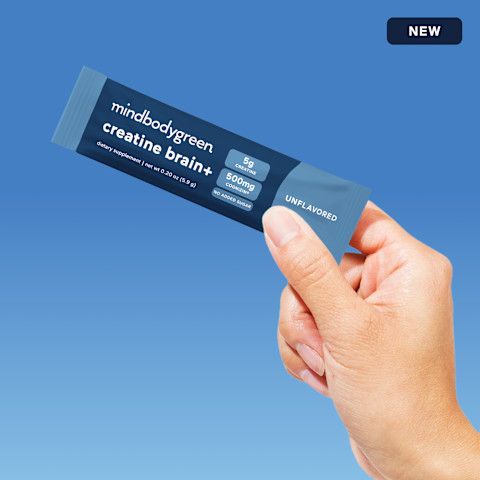
creatine brain+ with cognizin®
★ ★ ★ ★ ★
★ ★ ★ ★ ★
(7)
2.
Cognition
The brain needs a lot of energy to function optimally. More and more research shows that creatine can help the brain generate energy more efficiently, resulting in improved mental performance.*
- In healthy adults, six weeks of taking 5 grams5 of creatine monohydrate daily has been linked to improvements in working memory and reasoning tasks.*
- In adults over 60, higher dietary creatine intake6 has been positively correlated with performance on cognitive tasks.*
- One study found that it helps reduce mental fatigue7*
While these findings are promising, the authors emphasize that more long-term, large-scale trials in older populations are needed.
3.
Bone health
Healthy bones aren’t just about calcium and vitamin D. A growing body of research indicates that creatine supports bone health when used as part of a strength training program.*
Although bone contains small amounts of total body creatine stores, osteoblasts (the cells responsible for building new bone) have substantial energy demands. Creatine supports ATP buffering during these high-demand phases8.*
However, research on creatine for bone health benefits in humans is still emerging. Some trials report no significant changes in total body or lumbar spine bone mineral density, while others show improvements in femoral neck bone density or bone geometry (again, particularly when supplementation is paired with resistance training). Differences in study duration, dosage, and exercise protocols ly explain some of the variability.
How to supplement with creatine
To experience the full benefits, it is crucial to take creatine alongside a strength training program.* Plus, consistency is key. That means taking a research-backed amount of creatine every single day, not just on days you work out.
Most research supports a daily dose of 3 to 5 grams of creatine monohydrate (higher doses may be beneficial for more pronounced bone and cognitive benefits).* creatine brain+ is a great choice.
Each serving provides 5 grams of creatine and 500 milligrams of Cognizin ® citicoline. This specific type of citicoline has been clinically shown to promote long-term brain health while improving processing speed, attention span, and memory performance.*
The takeaway
Creatine is (rightfully) becoming recognized as a supplement that supports healthy aging and overall longevity. Taking it consistently along with regular strength training can help preserve muscle, enhance cognition, and support bone health.*
If you are pregnant, breastfeeding, or taking medications, consult with your doctor before starting a supplement routine. It is always optimal to consult with a health care provider when considering what supplements are right for you.
creatine brain+ with cognizin®
★ ★ ★ ★ ★
★ ★ ★ ★ ★
(7)
★ ★ ★ ★ ★
★ ★ ★ ★ ★
(7)
8 Sources
- https://www.tandfonline.com/doi/full/10.1080/30653495.2025.2565997#abstract
- https://pubmed.ncbi.nlm.nih.gov/24530883/
- https://pubmed.ncbi.nlm.nih.gov/23053133/
- https://www.tandfonline.com/doi/full/10.1080/30653495.2025.2565997#d1e290
- https://pubmed.ncbi.nlm.nih.gov/14561278/
- https://pubmed.ncbi.nlm.nih.gov/33866527/
- https://www.sciencedirect.com/science/article/abs/pii/S016801020200007X?via%3Dihub
- https://pubmed.ncbi.nlm.nih.gov/16025431/
Sumber Artikel:
Mindbodygreen.com